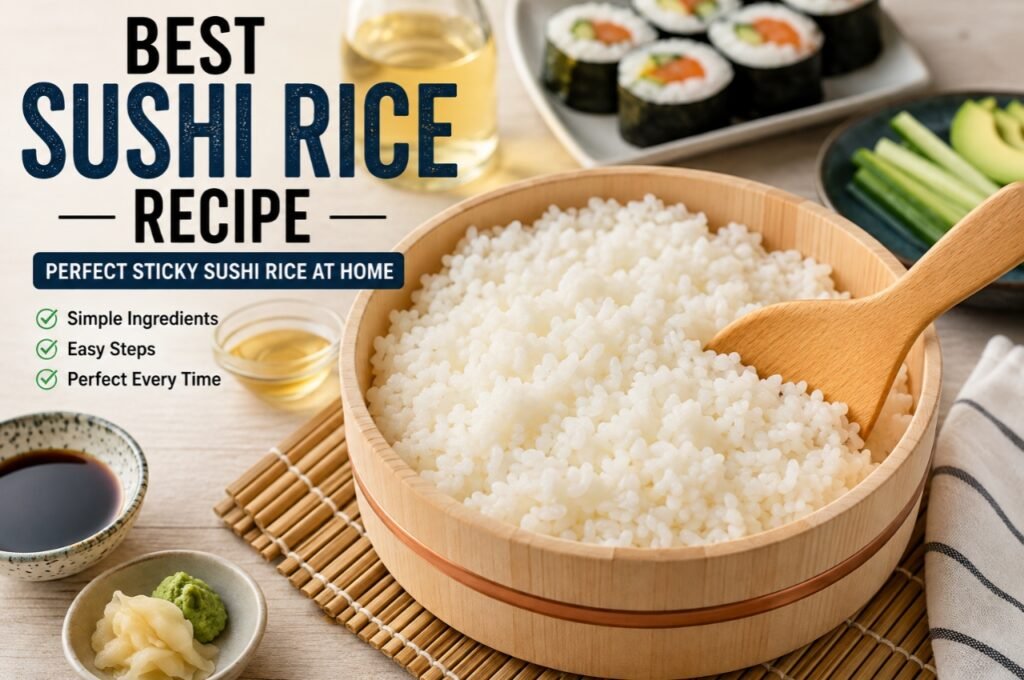

The best sushi rice recipe is the foundation of delicious homemade sushi. Good sushi rice should be tender, slightly sticky, glossy, and flavorful without becoming mushy. The secret is not simply cooking rice with water; it is choosing the right rice, washing it properly, using the correct water ratio, cooking it gently, and seasoning it with a balanced mixture of rice vinegar, sugar, and salt. This detailed guide explains exactly how to make sushi rice at home, whether you are preparing sushi rolls, nigiri, poke bowls, sushi burritos, or simple rice bowls. With a few basic ingredients and the right technique, you can make restaurant-style sushi rice in your own kitchen.
Best Sushi Rice Recipe
This best sushi rice recipe creates perfectly seasoned Japanese-style rice with a soft texture and enough stickiness to hold together when making sushi. It is simple enough for beginners but follows the important techniques that make sushi rice taste and feel special. The recipe works well on the stovetop, and you can also adapt the cooking method for a rice cooker.
Recipe Overview
| Recipe Detail | Information |
|---|---|
| Recipe Name | Best Sushi Rice Recipe |
| Cuisine | Japanese-inspired |
| Preparation Time | 10–15 minutes |
| Cooking Time | 20–25 minutes |
| Resting Time | 10–15 minutes |
| Total Time | About 45–55 minutes |
| Servings | 4–6 |
| Main Ingredient | Japanese short-grain sushi rice |
| Texture | Tender, glossy, and sticky |
| Difficulty | Easy |
| Best For | Sushi rolls, nigiri, bowls, and sushi burritos |
Why This Is the Best Sushi Rice Recipe
The best sushi rice recipe depends on several small details that make a major difference. First, short-grain Japanese rice contains enough starch to create the characteristic sticky texture needed for sushi. Second, washing the rice removes excess surface starch and helps prevent the finished rice from becoming overly gummy. Third, allowing the cooked rice to steam and rest gives the grains time to finish cooking evenly. Finally, adding seasoned vinegar while the rice is warm allows the flavor to spread throughout the grains without making them wet or heavy.
The ideal sushi rice should hold its shape when pressed together but should not resemble a paste. Each grain should remain recognizable, soft, and slightly chewy. When properly prepared, the rice should have a mild sweetness, gentle acidity, and subtle saltiness that complements fish, vegetables, seafood, tofu, and other sushi ingredients.
Ingredients for Best Sushi Rice Recipe
You do not need many ingredients to prepare excellent sushi rice. The quality and proportions of the ingredients are more important than having a long ingredient list.
Main Ingredients
| Ingredient | Amount | Purpose |
|---|---|---|
| Japanese short-grain sushi rice | 2 cups | Creates the classic sticky texture |
| Cold water | About 2 cups, adjusted as needed | Cooks the rice |
| Rice vinegar | 1/4 cup | Adds mild acidity and flavor |
| Granulated sugar | 2 tablespoons | Balances the vinegar |
| Fine salt | 1 teaspoon | Enhances the overall flavor |
Choosing the Right Rice
For the best sushi rice recipe, choose rice specifically labeled sushi rice, Japanese short-grain rice, or a suitable Japanese-style short-grain rice. Avoid using ordinary long-grain rice such as basmati or standard American long-grain rice because the texture will be very different. Long-grain rice tends to remain separate and fluffy, while sushi requires grains that can gently stick together.
Medium-grain rice can sometimes work, but short-grain Japanese rice generally produces the most reliable result. Look for clean, whole grains without an excessive amount of broken rice.
Choosing Rice Vinegar
Rice vinegar is important because it provides the characteristic flavor associated with sushi rice. Unseasoned rice vinegar is ideal because you can control the amount of sugar and salt yourself. If you use pre-seasoned sushi vinegar, check the label before adding sugar and salt because it may already contain them.
Sugar and Salt
Sugar provides a subtle sweetness that balances the acidity of the vinegar, while salt brings the flavors together. The goal is not to make sweet rice. The finished sushi rice should taste balanced and pleasantly seasoned.
How to Make Best Sushi Rice Recipe
Making the best sushi rice recipe is mainly about technique. Begin by measuring the rice accurately. Place the rice in a large bowl and cover it with cool water. Gently move the rice around with your fingers, then drain the cloudy water. Repeat this process several times until the water becomes much clearer.
After washing, drain the rice thoroughly. Letting the rice sit in a strainer for several minutes helps remove excess water and gives you more consistent cooking results.
Transfer the rice to a heavy-bottomed saucepan or rice cooker. Add the appropriate amount of water and allow the rice to soak for about 15–30 minutes before cooking if time allows. This soaking period helps the grains absorb water evenly.
Cook the rice according to your chosen method. If using a saucepan, bring the water and rice to a gentle boil, then immediately reduce the heat to low and cover the pot. Cook until the water has been absorbed. Do not repeatedly lift the lid because escaping steam can affect the cooking process.
Once the rice has finished cooking, remove it from the heat and leave it covered for about 10 minutes. This resting period is essential because the remaining steam continues to soften the grains.
While the rice rests, prepare the sushi seasoning. Combine rice vinegar, sugar, and salt in a small saucepan or microwave-safe bowl. Warm gently until the sugar and salt dissolve. Do not boil the mixture.
Transfer the warm rice to a wide bowl or shallow dish. Pour the seasoning evenly over the rice. Use a rice paddle or spatula to gently fold and cut through the rice rather than aggressively stirring it. This technique helps preserve the individual grains.
Allow the seasoned rice to cool to room temperature before making sushi.. Step-by-Step Instructions
Step 1: Measure the Rice
Measure 2 cups of Japanese short-grain sushi rice. Use a measuring cup and keep the measurement consistent because changing the rice-to-water ratio can affect the final texture.
Step 2: Wash the Rice
Place the rice in a bowl and add cold water. Gently swirl the rice with your fingers for several seconds. Drain the cloudy water. Repeat this process several times until the water is considerably clearer. The water does not necessarily need to become completely transparent.
Step 3: Drain the Rice
Place the washed rice into a fine-mesh strainer and allow it to drain for several minutes. This prevents extra washing water from affecting the intended cooking ratio.
Step 4: Soak the Rice
Transfer the drained rice to your cooking pot and add water. Let the rice soak for approximately 15–30 minutes. Soaking allows the grains to absorb water before cooking and can produce a more evenly cooked center.
Step 5: Cook the Rice
Cover the pot with a tight-fitting lid and bring the rice to a gentle boil over medium heat. Once boiling, reduce the heat to low. Cook until the water is absorbed and the rice is tender. Keep the lid closed during cooking.
Step 6: Rest the Cooked Rice
Turn off the heat and let the rice remain covered for about 10 minutes. Do not skip this step. Resting allows the remaining steam to distribute throughout the rice.
Step 7: Prepare the Sushi Seasoning
Mix 1/4 cup rice vinegar, 2 tablespoons sugar, and 1 teaspoon salt. Warm the mixture gently until the sugar and salt dissolve. Allow it to cool slightly.
Step 8: Transfer the Rice
Move the cooked rice into a wide, shallow bowl. A wooden sushi tub is traditionally used, but a large glass, ceramic, or wooden bowl also works.
Step 9: Add the Seasoning
Pour the vinegar mixture evenly over the warm rice. Do not pour everything into one small area because that can make some rice overly seasoned.
Step 10: Fold the Rice
Use a rice paddle or spatula to gently fold the seasoning into the rice. Use a slicing and folding motion rather than stirring in circles. Avoid crushing the grains.
Step 11: Cool the Rice
Let the seasoned rice cool until it reaches approximately room temperature. Sushi rice should be warm or room temperature when used, rather than refrigerator-cold.
Step 12: Use Immediately
Once cooled, use the sushi rice for your favorite sushi preparation. Cover it with a clean, slightly damp kitchen towel if you need to wait briefly before using it.
Best Rice-to-Water Ratio
Getting the water ratio right is one of the most important parts of the best sushi rice recipe. A common starting point is approximately 1 cup rice to 1 cup water, but the exact amount can vary according to the rice brand, cooking method, age of the rice, and whether the rice was soaked.
| Rice | Starting Water Amount |
|---|---|
| 1 cup sushi rice | About 1 cup water |
| 2 cups sushi rice | About 2 cups water |
| 3 cups sushi rice | About 3 cups water |
| 4 cups sushi rice | About 4 cups water |
Always check the cooking instructions for your particular rice because different varieties can require slightly different amounts of water.
Stovetop Method vs. Rice Cooker
Both methods can produce excellent sushi rice. A rice cooker is convenient because it automatically controls the cooking process, while the stovetop method gives you more direct control.
| Method | Advantages | Considerations |
|---|---|---|
| Stovetop | Simple and affordable | Requires attention to heat |
| Rice cooker | Convenient and consistent | Follow the manufacturer’s rice-water guidance |
| Instant Pot-style cooker | Fast and controlled | Cooking ratios may differ |
For beginners, a rice cooker can make the cooking stage easier, but the washing, seasoning, resting, and cooling steps remain important regardless of the cooking method.
Tips for Making the Perfect Best Sushi Rice Recipe
Use Short-Grain Rice
The foundation of excellent sushi rice is the rice itself. Japanese short-grain rice contains the right combination of starch and texture for sushi.
Wash Thoroughly
Washing removes excess surface starch and helps keep the rice from becoming excessively sticky or heavy. Be gentle because vigorous rubbing can break the grains.
Do Not Skip Soaking
A short soaking period helps water penetrate the grains evenly. This can make the cooked rice more tender and consistent.
Keep the Lid Closed
Opening the lid repeatedly allows steam to escape and can lead to unevenly cooked rice. Keep the lid closed throughout cooking and during the resting period.
Rest the Rice
Resting is one of the easiest steps to overlook. Allowing the rice to sit covered after cooking helps redistribute moisture and improve texture.
Season While Warm
Warm rice absorbs the vinegar seasoning more effectively than cold rice. Add the seasoning soon after cooking and resting.
Do Not Overmix
Aggressive mixing can crush the grains and create a gummy texture. Use a gentle cutting and folding motion.
Cool Naturally
Do not put freshly seasoned sushi rice directly into the refrigerator if you intend to make sushi soon. Cold rice becomes firm and is harder to shape.
Keep It Covered
If the rice is sitting before use, cover it with a clean damp towel. This helps prevent the surface from drying out.
Taste Before Making Sushi
Taste a small amount after seasoning. If necessary, adjust the vinegar, sugar, or salt slightly. The exact balance is a matter of personal preference.
Common Mistakes to Avoid
Using the Wrong Type of Rice
Using long-grain rice is one of the biggest mistakes. The grains will not have the same sticky texture required for sushi.
Adding Too Much Water
Excess water can produce mushy rice. Follow the instructions for your rice variety and adjust only when you understand how that particular rice behaves.
Adding Too Little Water
Too little water can leave the rice hard or undercooked. If the center of the grain remains firm, the rice may need more moisture or a better soaking period.
Skipping the Washing Process
Unwashed rice can become excessively sticky and heavy. Washing is a simple step that can significantly improve texture.
Cooking on High Heat the Entire Time
High heat can cause water to evaporate too quickly, potentially leaving the rice undercooked while the bottom becomes overly firm.
Opening the Lid During Cooking
Every time you open the lid, steam escapes. This can interfere with the cooking process.
Stirring the Rice Aggressively
Sushi rice should be folded, not mashed. Rough handling can break the grains and produce an undesirable texture.
Using Too Much Vinegar
More vinegar does not necessarily mean better sushi rice. Excess vinegar can overpower the natural flavor of the rice and other ingredients.
Serving the Rice Too Cold
Cold sushi rice can become firm and lose its pleasant texture. Room-temperature rice is generally easier to shape and more enjoyable to eat.
Letting the Rice Dry Out
Uncovered rice can quickly develop a dry, hard surface. Keep it covered with a damp towel when waiting to use it.
How to Serve Best Sushi Rice Recipe
The best sushi rice recipe can be used in many different ways. Traditional sushi is one of the most popular options, but you are not limited to rolls.
For maki rolls, spread a thin layer of sushi rice over a sheet of nori, leaving a small border at the top. Add fillings such as cucumber, avocado, cooked seafood, or other preferred ingredients, then roll firmly.
For nigiri, shape a small amount of rice into an oval using damp hands. Place a thin slice of fish or another topping over the rice.
Sushi rice can also be served in bowls. Add cooked salmon, tuna, tofu, avocado, cucumber, carrots, edamame, sesame seeds, and nori for a quick sushi-inspired bowl.
Another easy option is a sushi burrito. Wrap seasoned sushi rice and your favorite fillings in a large sheet of nori.
For a simple snack, combine sushi rice with sliced vegetables, sesame seeds, and a small amount of soy sauce.
What to Serve With Best Sushi Rice Recipe
Sushi rice pairs well with a wide range of ingredients and side dishes. Traditional combinations often include raw or cooked seafood, vegetables, tofu, nori, pickled ginger, and wasabi.
Popular Sushi Rice Toppings
| Topping | Why It Works |
|---|---|
| Salmon | Rich and flavorful |
| Tuna | Mild and meaty |
| Cooked shrimp | Sweet and tender |
| Crab | Delicate and slightly sweet |
| Avocado | Creamy and mild |
| Cucumber | Fresh and crisp |
| Tofu | Plant-based and versatile |
| Tamagoyaki | Slightly sweet Japanese-style omelet |
| Edamame | Fresh and protein-rich |
| Sesame seeds | Nutty flavor and crunch |
| Nori | Adds savory seaweed flavor |
Sauces and Condiments
Soy sauce is a classic accompaniment, while wasabi adds heat and pickled ginger provides a refreshing contrast between bites. Spicy mayonnaise, sesame sauce, ponzu-style sauces, and teriyaki-inspired sauces can also work well in modern sushi bowls and rolls.
Sushi Bowl Idea
A sushi bowl is one of the easiest ways to use homemade sushi rice without learning how to roll sushi. Start with a bowl of seasoned rice. Add sliced cucumber, avocado, shredded carrot, edamame, cooked salmon or another preferred protein, and strips of nori. Finish with sesame seeds and a small drizzle of sauce.
This method is especially useful for beginners because you get all the familiar flavors of sushi without worrying about perfectly shaped rolls.
Quick Recipe Card
| Item | Details |
|---|---|
| Rice | 2 cups Japanese short-grain sushi rice |
| Water | About 2 cups, depending on rice |
| Vinegar | 1/4 cup rice vinegar |
| Sugar | 2 tablespoons |
| Salt | 1 teaspoon |
| Wash | Several times |
| Soak | 15–30 minutes |
| Cook | Covered over low heat after boiling |
| Rest | About 10 minutes |
| Season | While rice is warm |
| Cool | To room temperature |
| Serve | Sushi rolls, nigiri, bowls, or sushi burritos |
What is the best rice for sushi?
Japanese short-grain rice labeled sushi rice is generally the best choice. It becomes tender and pleasantly sticky when cooked correctly, allowing it to hold together for rolls and nigiri.
Can I use regular white rice for sushi?
Regular long-grain white rice is not recommended because it has a different starch structure and texture. If possible, use Japanese short-grain sushi rice for the best results.
Why is my sushi rice too sticky?
Sushi rice is supposed to be sticky, but excessive gumminess can result from too much water, insufficient washing, overcooking, or aggressive stirring after cooking.
Should sushi rice be rinsed?
Yes. Rinsing removes excess surface starch and helps produce cleaner, more defined grains while maintaining the desired sticky texture.
Should sushi rice be soaked before cooking?
Soaking for about 15–30 minutes can help the rice absorb water evenly and produce a more consistent texture. It is particularly useful when cooking rice on the stovetop.
Can I use apple cider vinegar instead of rice vinegar?
Apple cider vinegar can be used in an emergency, but it has a stronger and different flavor. Rice vinegar is preferred for an authentic sushi-style taste.
Can I make sushi rice without salt?
Yes, but salt helps balance the seasoning and enhance the flavor. If you are reducing sodium, you can use less salt.
How long does homemade sushi rice last?
For best quality, sushi rice should ideally be used the same day. If leftovers remain, refrigerate them promptly in an airtight container and consume them within a few days while following safe cooked-rice storage practices.
Why does my sushi rice taste bland?
Bland sushi rice may need slightly more seasoning. Taste the rice after adding the vinegar mixture and make small adjustments to salt, sugar, or vinegar rather than adding a large amount at once.
Can I use sushi rice for poke bowls?
Yes. Sushi rice works particularly well in poke-style bowls because its sticky texture holds toppings and sauces nicely.