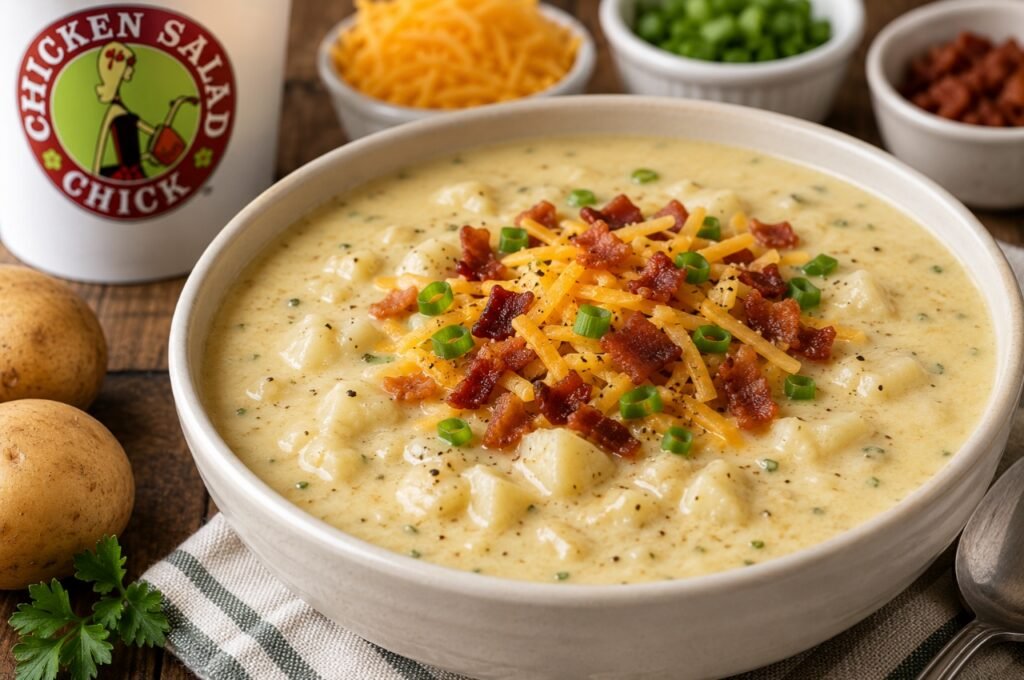

The best part of this Chicken Salad Chick Potato Soup Recipe is that you do not need complicated ingredients or advanced cooking skills. With potatoes, broth, dairy, vegetables, butter, and a few seasonings, you can create a warm and creamy potato soup right in your own kitchen. It is filling, flavorful, and easy to customize.
What Is Chicken Salad Chick Potato Soup?
Chicken Salad Chick Potato Soup is a creamy potato soup inspired by the comforting soup served at Chicken Salad Chick. The soup is known for its smooth, hearty consistency, tender potato pieces, creamy flavor, and mild seasoning. While restaurant recipes are not generally published as exact formulas, this homemade version captures the same comforting style without claiming to be the restaurant’s official recipe.
A good copycat Chicken Salad Chick Potato Soup Recipe starts with potatoes cooked until tender in a flavorful broth. The soup is then made creamy with milk, cream, or another dairy ingredient. Butter and seasonings add richness, while optional toppings such as cheese, green onions, bacon, or sour cream can make the bowl even more satisfying.
Unlike some chunky potato soups, this version can be made partially smooth for a creamy texture while still leaving small pieces of potato throughout the soup. That combination gives the soup a homemade feel and makes it especially comforting on cold days.
Why You’ll Love This Chicken Salad Chick Potato Soup
There are many reasons to make this Chicken Salad Chick Potato Soup Recipe at home. First, it uses everyday ingredients that are easy to find in most grocery stores. You do not need specialty spices, expensive ingredients, or complicated equipment to prepare it.
Another advantage is its flexibility. You can make the soup thicker or thinner depending on your preference. You can also adjust the amount of cream, add extra vegetables, include cheese, or top each bowl with your favorite garnishes.
The soup is also excellent for meal preparation. A large pot can provide several servings, making it useful for family dinners, packed lunches, or leftovers. The flavors can become even more developed after the soup rests in the refrigerator.
Quick Recipe Overview
| Recipe Detail | Information |
|---|---|
| Recipe Name | Chicken Salad Chick Potato Soup Recipe |
| Cuisine Style | American-inspired comfort food |
| Preparation Time | 15 minutes |
| Cooking Time | 30–40 minutes |
| Total Time | About 45–55 minutes |
| Servings | 6–8 |
| Difficulty | Easy |
| Main Ingredient | Potatoes |
| Texture | Creamy and hearty |
| Best For | Lunch, dinner, cold weather, meal prep |
Ingredients for Chicken Salad Chick Potato Soup
The ingredients for this Chicken Salad Chick Potato Soup Recipe are simple, but each one contributes to the final flavor and texture. Using fresh ingredients and properly seasoning the soup throughout cooking will give you the best result.
| Ingredient | Amount | Purpose |
|---|---|---|
| Russet or Yukon Gold potatoes | 2½–3 pounds | Main ingredient and body |
| Yellow onion | 1 medium | Adds savory flavor |
| Celery | 2 stalks | Adds freshness and depth |
| Garlic | 2–3 cloves | Adds aromatic flavor |
| Butter | 3 tablespoons | Creates richness |
| Chicken or vegetable broth | 5 cups | Soup base |
| Whole milk | 1½ cups | Creaminess |
| Heavy cream | ½ cup | Rich texture |
| All-purpose flour | 3 tablespoons | Helps thicken the soup |
| Salt | 1–1½ teaspoons | Enhances flavor |
| Black pepper | ½ teaspoon | Adds mild heat |
| Garlic powder | ½ teaspoon | Extra savory flavor |
| Onion powder | ½ teaspoon | Adds depth |
| Dried parsley | ½ teaspoon | Optional seasoning |
| Sour cream | 2–3 tablespoons | Optional extra creaminess |
| Shredded cheddar cheese | As desired | Optional topping |
| Green onions | As desired | Optional garnish |
| Cooked bacon | As desired | Optional topping |
Choosing the Best Potatoes
Potatoes are the star of this Chicken Salad Chick Potato Soup Recipe, so choosing the right variety makes a noticeable difference. Russet potatoes create a soft, fluffy texture and naturally help thicken the soup. Yukon Gold potatoes have a naturally buttery flavor and hold their shape slightly better.
You can also combine the two varieties. Using mostly Yukon Gold potatoes with some Russet potatoes gives you a balance between creamy texture and recognizable potato pieces.
Choosing the Dairy
Whole milk creates a creamy soup without making it excessively heavy. Heavy cream adds extra richness and produces a more luxurious texture. If you prefer a lighter soup, you can reduce the heavy cream and use additional milk.
For the smoothest result, avoid adding very cold dairy directly to a boiling soup. Let the milk and cream come closer to room temperature before adding them, and keep the heat moderate while incorporating them.
How to Make Chicken Salad Chick Potato Soup
Making this Chicken Salad Chick Potato Soup Recipe is straightforward. Start by preparing the vegetables and potatoes. Sauté the onion, celery, and garlic in butter until fragrant and tender. This first step creates the flavorful foundation of the soup.
Next, add the flour and stir it into the butter and vegetables. This creates a simple roux that helps thicken the soup. Slowly add the broth while stirring to prevent lumps.
Add the diced potatoes and seasonings, then allow everything to simmer until the potatoes become fork-tender. Once the potatoes are cooked, add the milk and cream and continue cooking gently.
For a creamy texture, mash some of the potatoes directly in the pot or use an immersion blender briefly. Do not completely puree the soup unless you want an entirely smooth consistency.
Step-by-Step Instructions
Step 1: Prepare the Potatoes
Wash and peel the potatoes if desired. Cut them into small, evenly sized cubes. Pieces around ½ to ¾ inch work well because they cook relatively quickly and are easy to eat with a spoon.
Try to keep the potato pieces similar in size. If some pieces are very large and others are tiny, they will cook at different rates, which can result in some potatoes becoming mushy while others remain firm.
Step 2: Prepare the Vegetables
Dice the onion and celery into small pieces. Mince the garlic. Keeping the vegetables relatively small helps them blend naturally into the creamy soup.
If you prefer a very smooth soup, cut the vegetables especially finely. If you enjoy more texture, slightly larger pieces are perfectly acceptable.
Step 3: Melt the Butter
Place a large heavy-bottomed pot or Dutch oven over medium heat. Add the butter and allow it to melt without letting it become dark brown.
Add the onion and celery. Cook for approximately 4–5 minutes, stirring occasionally, until the vegetables begin to soften.
Step 4: Add the Garlic
Add the minced garlic and cook for about 30–60 seconds. Garlic can burn quickly, so keep an eye on it and stir continuously.
The mixture should smell fragrant but should not become dark or bitter.
Step 5: Make the Thickening Base
Sprinkle the flour over the vegetables and butter. Stir continuously for approximately 1–2 minutes.
Cooking the flour briefly removes its raw taste and allows it to combine with the butter. This simple roux will help create the creamy consistency associated with a classic potato soup.
Step 6: Add the Broth
Slowly pour the broth into the pot while stirring. Adding the liquid gradually helps prevent flour lumps from forming.
Continue stirring until the broth is smooth. Scrape the bottom of the pot gently to incorporate any flavorful bits from the vegetables.
Step 7: Add Potatoes and Seasonings
Add the diced potatoes, salt, black pepper, garlic powder, onion powder, and dried parsley if using.
Bring the soup to a gentle simmer. Avoid an extremely vigorous boil because aggressive boiling can cause the potatoes to break apart too quickly and can make dairy-based soup more difficult to manage later.
Step 8: Cook Until the Potatoes Are Tender
Cover the pot partially and simmer for approximately 15–20 minutes, or until the potatoes can easily be pierced with a fork.
Cooking time depends on the size of your potato pieces. Check them regularly instead of relying only on the clock.
Step 9: Create the Creamy Texture
Once the potatoes are tender, reduce the heat. Use a potato masher to mash some of the potatoes directly in the pot.
For a smoother texture, use an immersion blender for a few short pulses. Do not over-blend because excessive blending can make potato soup sticky or gluey.
Leaving some potato pieces intact gives the soup a pleasant homemade texture.
Step 10: Add Milk and Cream
Slowly stir in the whole milk and heavy cream. Keep the heat low and allow the soup to warm gently.
Do not let the soup boil aggressively after adding the dairy. Gentle heating helps maintain a smooth texture.
Step 11: Adjust the Seasoning
Taste the soup carefully. Add additional salt, pepper, garlic powder, or onion powder if needed.
Remember that toppings such as cheese and bacon can also add salt, so avoid over-seasoning before serving.
Step 12: Simmer Gently
Allow the soup to cook for another 5–10 minutes over low heat. Stir occasionally.
If the soup becomes thicker than you want, add a little extra broth or milk. If it seems too thin, allow it to simmer gently for a few additional minutes.
Step 13: Serve
Ladle the hot soup into bowls and add your favorite toppings. Cheddar cheese, green onions, crispy bacon, sour cream, or chopped parsley can all work beautifully.
Serve immediately with bread, crackers, sandwiches, or a fresh salad.
Tips for Making the Best Potato Soup
Use evenly diced potatoes for consistent cooking. This simple step makes a major difference because all the pieces should become tender at approximately the same time.
Do not rush the vegetable sautéing process. Cooking the onion and celery in butter before adding the broth builds a deeper flavor base.
Season gradually rather than adding all the salt at once. Potatoes absorb seasoning, but broth and toppings may already contain sodium.
For extra creaminess, mash a portion of the cooked potatoes instead of adding excessive amounts of cream. Potatoes themselves can naturally thicken the soup.
Use moderate heat after adding dairy. A hard boil can negatively affect the texture of creamy soups.
Taste the soup near the end of cooking. Your potatoes, broth, butter, and dairy may vary in saltiness, so final seasoning should always be based on taste.
If you want restaurant-style smoothness, blend more of the soup. If you prefer a rustic homemade soup, mash only a small portion and leave most of the potatoes chunky.
Common Mistakes to Avoid
One common mistake is cutting the potatoes into very large pieces. Large chunks take longer to cook and can make the soup inconsistent. Smaller, evenly sized pieces are easier to manage.
Another mistake is boiling the soup too aggressively. A gentle simmer is enough to cook the potatoes while keeping the soup under control.
Adding cold milk directly to extremely hot soup can sometimes affect the texture. Let the dairy warm slightly before adding it and reduce the heat.
Over-blending is another problem. Potatoes contain starch, and excessive blending can create a gummy or gluey consistency. Blend only until you achieve the texture you want.
Do not forget to taste before serving. Even a well-designed recipe may need a little extra salt or pepper depending on the broth and ingredients you use.
How to Serve Chicken Salad Chick Potato Soup
Serve this Chicken Salad Chick Potato Soup Recipe hot in individual bowls. A small amount of shredded cheddar cheese can melt beautifully over the top, while chopped green onions add freshness.
For a richer presentation, add a spoonful of sour cream and a few pieces of crispy bacon. A sprinkle of parsley can also provide color and a fresh finish.
If you are serving the soup to guests, prepare the toppings separately and allow everyone to customize their own bowl. This makes the meal more interactive and allows people to choose the flavors they enjoy.
The soup is especially comforting during cool weather, but its creamy flavor makes it suitable throughout the year.
What to Serve With Potato Soup
Potato soup can be a complete meal on its own, but side dishes make it even more satisfying. Crusty bread is one of the easiest choices because it can be dipped into the creamy soup.
A simple green salad is another excellent option. Fresh lettuce, cucumber, tomatoes, and a light dressing provide contrast to the richness of the soup.
A chicken salad sandwich can also make a delicious pairing, particularly if you are serving this soup as part of a casual lunch.
| Side Dish | Why It Works |
|---|---|
| Crusty bread | Perfect for dipping |
| Garlic bread | Adds savory flavor |
| Green salad | Provides freshness |
| Dinner rolls | Soft and comforting |
| Grilled cheese | Classic soup pairing |
| Chicken salad sandwich | Great for lunch |
| Crackers | Simple and crunchy |
| Roasted vegetables | Adds color and texture |
How to Store and Reheat Potato Soup
Allow leftover soup to cool slightly before transferring it to an airtight container. Place the container in the refrigerator rather than leaving the soup at room temperature for an extended period.
Properly refrigerated potato soup is best enjoyed within about 3–4 days. Before reheating, check the appearance and smell of the leftovers. When in doubt about food safety, discard them.
For reheating, place the soup in a saucepan over low to medium-low heat. Stir frequently and heat until steaming hot throughout.
If the soup has thickened considerably in the refrigerator, add a small amount of milk or broth while reheating. Stir until the original consistency returns.
You can also reheat individual servings in the microwave. Use a microwave-safe bowl, cover it loosely, heat in short intervals, and stir between intervals for more even heating.
Can You Freeze Chicken Salad Chick Potato Soup?
You can freeze potato soup, but creamy potato soups may change texture after freezing and thawing. Dairy can sometimes separate, while potatoes may become softer than they were when freshly cooked.
For the best texture, consider preparing the potato and broth portion ahead of time and adding the dairy after thawing and reheating. This method can help maintain a smoother consistency.
If you freeze the completed soup, allow it to cool appropriately before placing it into freezer-safe containers. Leave a little space at the top because liquids expand when frozen.
Thaw frozen soup in the refrigerator whenever possible. Reheat it gently over low heat and stir frequently. If separation occurs, whisk the soup gently while reheating and add a small amount of milk or broth if necessary.
For best quality, use frozen soup within approximately 2–3 months.
Easy Variations and Substitutions
This Chicken Salad Chick Potato Soup Recipe is easy to customize. If you prefer a vegetarian version, use vegetable broth instead of chicken broth and make sure all other ingredients are vegetarian-friendly.
For a lighter version, replace some or all of the heavy cream with additional milk. The soup will be less rich but can still have a pleasant creamy consistency.
For extra protein, add cooked shredded chicken. This turns the soup into a more substantial meal and makes it useful for leftover roasted or rotisserie chicken.
You can also add vegetables such as carrots, corn, peas, or chopped spinach. Keep in mind that additional vegetables can change both the texture and cooking time.
Cheese lovers can stir in shredded cheddar near the end of cooking. Add it gradually over low heat and stir until melted.
For a smoky variation, top each bowl with crispy bacon and a small amount of smoked cheddar.
If you enjoy spicy food, add a pinch of cayenne pepper, crushed red pepper flakes, or diced jalapeño. Start with a small amount because the creamy base can make spicy flavors surprisingly noticeable.
Ingredient Substitution Table
| Original Ingredient | Possible Substitute | Result |
|---|---|---|
| Russet potatoes | Yukon Gold | Creamier, buttery texture |
| Heavy cream | Half-and-half | Lighter richness |
| Whole milk | 2% milk | Slightly lighter soup |
| Chicken broth | Vegetable broth | Vegetarian-friendly option |
| Butter | Olive oil | Different flavor and dairy-free option |
| Cheddar cheese | Monterey Jack | Mild, creamy topping |
| Sour cream | Plain Greek yogurt | Tangy, protein-rich topping |
| Fresh garlic | Garlic powder | Convenient alternative |
How to Make the Soup Extra Creamy
The secret to a creamy Chicken Salad Chick Potato Soup Recipe is not simply adding more cream. The potatoes themselves can provide much of the desired body.
Mashing some cooked potatoes releases starch into the broth, naturally thickening the soup. This method allows you to create a rich texture without making the soup excessively heavy.
A roux made with butter and flour also contributes to the creamy consistency. Be sure to cook the flour briefly before adding the liquid so the finished soup does not taste floury.
For an especially smooth soup, blend a portion with an immersion blender. Stop once the desired consistency is reached.
How Thick Should Potato Soup Be?
The ideal thickness depends on personal preference. Some people enjoy a soup that is thick enough to coat the spoon, while others prefer a thinner, brothier consistency.
If your soup is too thick, gradually add warm broth or milk. Stir after each addition until the desired consistency is reached.
If the soup is too thin, allow it to simmer gently for a few minutes. You can also mash additional potatoes to naturally thicken the soup.
Avoid adding a large amount of flour directly to finished soup because it can create lumps. If additional thickening is necessary, a small cornstarch slurry can be used carefully.
Can You Make This Potato Soup in a Slow Cooker?
Yes, a slow cooker can be used for a variation of this recipe. Add the potatoes, onion, celery, broth, and seasonings to the slow cooker and cook until the potatoes are tender.
For better flavor, sautéing the onion, celery, and garlic in butter before transferring them to the slow cooker is recommended.
Add the milk and cream toward the end of cooking rather than leaving dairy in the slow cooker for many hours. Once the potatoes are tender, mash some of them and then stir in the dairy.
Cook gently until heated through and serve with your preferred toppings.
Can You Make Potato Soup Ahead of Time?
Yes, potato soup is a convenient make-ahead meal. Preparing it several hours before serving can actually make meal planning easier.
If you are preparing the soup ahead, store it in the refrigerator after it has cooled appropriately. Reheat it gently and adjust the consistency with broth or milk before serving.
If you are making it for a dinner party, prepare the base earlier in the day and finish the seasoning and dairy shortly before serving. This approach can help maintain a fresh creamy texture.
Best Toppings for Chicken Salad Chick Potato Soup
Toppings are an easy way to customize your Chicken Salad Chick Potato Soup Recipe. Classic options include shredded cheddar cheese, crispy bacon, green onions, sour cream, and fresh parsley.
For additional texture, add homemade croutons or toasted bread cubes. Their crunch contrasts nicely with the creamy soup.
You can also add cracked black pepper or a small sprinkle of paprika for extra visual appeal.
Nutrition Considerations
The nutritional value of potato soup depends on the exact ingredients and portion size. Using heavy cream, butter, cheese, and bacon will make the soup richer and higher in calories, while using more broth, milk, and vegetables can create a lighter version.
Potatoes provide carbohydrates and several nutrients, while dairy ingredients contribute protein and calcium. If you add chicken, the protein content will increase.
For specific dietary needs, calculate nutrition using the exact brands and quantities you use. This is especially important if you need to monitor sodium, calories, carbohydrates, or dairy intake.
Is Chicken Salad Chick Potato Soup actually made with chicken?
A potato soup inspired by Chicken Salad Chick does not necessarily need chicken as its main ingredient. This copycat-style version focuses on creamy potatoes and vegetables, while cooked chicken can be added if you want extra protein.
How do I make potato soup thicker?
Mash some of the cooked potatoes directly in the pot. You can also simmer the soup gently to reduce excess liquid or use a small amount of thickening slurry when necessary.
Why did my potato soup become gummy?
Over-blending potatoes can release too much starch and create a sticky texture. Blend only part of the soup and stop as soon as you reach the desired consistency.
Can I add cheese to potato soup?
Absolutely. Cheddar, Monterey Jack, Colby, or a mild cheese blend can work well. Add cheese gradually over low heat and stir until smooth.
How long does homemade potato soup last in the refrigerator?
For best quality and food safety, properly refrigerated leftovers are generally best consumed within 3–4 days.
What can I use instead of flour?
You can rely on mashed potatoes for natural thickening or use a small cornstarch slurry. For a gluten-free version, make sure the broth and other packaged ingredients are also labeled gluten-free if required.
How can I make the soup less rich?
Reduce the heavy cream and use additional milk or broth. You can also limit butter and high-fat toppings while increasing vegetables.
What makes this potato soup creamy?
The combination of tender potatoes, mashed potato starch, a butter-and-flour base, milk, and cream creates the creamy consistency.