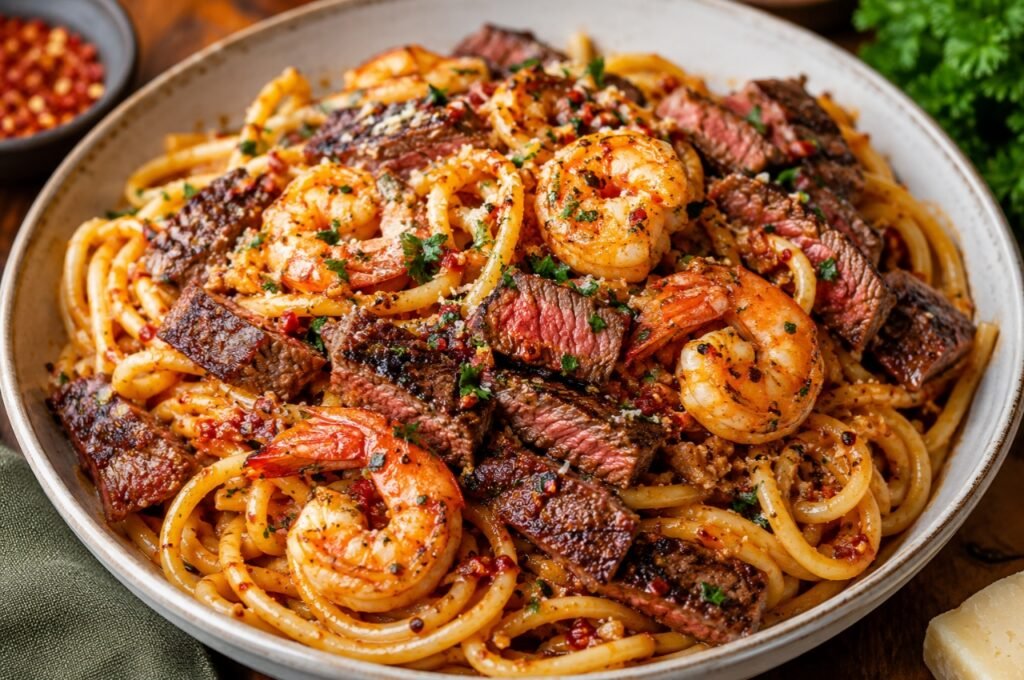

If you love rich pasta dishes with tender steak, juicy shrimp, creamy sauce, and a little spicy kick, this Calabrian Steak and Shrimp Bucatini Recipe is a perfect choice for dinner. It combines hearty seared steak and succulent shrimp with thick bucatini pasta coated in a flavorful Calabrian chili sauce. The result is a restaurant-style meal that feels special but is surprisingly easy to prepare at home. Calabrian chili peppers bring fruity heat, garlic adds savory depth, and Parmesan gives the sauce a smooth, salty finish. This recipe is ideal for date-night dinners, weekend meals, family gatherings, or whenever you want something more exciting than ordinary spaghetti.
What Is Calabrian Steak and Shrimp Bucatini?
Calabrian Steak and Shrimp Bucatini is a hearty Italian-inspired pasta dish made with tender pieces of steak, sautéed shrimp, bucatini pasta, garlic, Parmesan cheese, butter, and Calabrian chili peppers. The Calabrian chili is the ingredient that gives this pasta its signature spicy, slightly fruity flavor. Bucatini is particularly enjoyable here because its thick, hollow shape holds onto the sauce while providing a satisfying bite.
The dish brings together land and sea in one skillet-style pasta meal. The steak contributes a rich, meaty flavor, while shrimp provides a naturally sweet and delicate contrast. A buttery chili-garlic sauce ties everything together without overpowering the main ingredients. Pasta water is also important because its starch helps emulsify the sauce and allows it to cling beautifully to every strand of bucatini.
This Calabrian Steak and Shrimp Bucatini Recipe is flexible enough for home cooks. You can adjust the amount of chili paste according to your preferred spice level, substitute another cut of steak, or use a different long pasta if bucatini is unavailable.
Why You’ll Love This Calabrian Steak and Shrimp Bucatini Recipe
There are many reasons to add this pasta recipe to your regular dinner rotation. First, it combines steak and shrimp, creating a satisfying meal with two different sources of flavor and texture. The contrast between juicy shrimp and seared steak makes every bite interesting.
Another reason to love this Calabrian Steak and Shrimp Bucatini Recipe is the sauce. Calabrian chilies have a distinctive combination of heat, fruitiness, and mild acidity. When combined with butter, garlic, Parmesan, and pasta water, they create a sauce that tastes complex without requiring a long list of ingredients.
The recipe is also excellent for entertaining. Most of the preparation can be done before cooking, and the steak and shrimp cook quickly. Once the pasta is ready, everything comes together in one pan.
Recipe at a Glance
| Category | Details |
|---|---|
| Recipe | Calabrian Steak and Shrimp Bucatini |
| Cuisine | Italian-inspired |
| Preparation Time | 20 minutes |
| Cooking Time | 25 minutes |
| Total Time | About 45 minutes |
| Servings | 4 |
| Main Protein | Steak and shrimp |
| Pasta | Bucatini |
| Flavor | Spicy, savory, garlicky, creamy |
| Difficulty | Easy to moderate |
| Best For | Dinner, date night, entertaining |
Ingredients for Calabrian Steak and Shrimp Bucatini
The following ingredients make a balanced and flavorful Calabrian Steak and Shrimp Bucatini Recipe. Fresh ingredients will give you the best result, but several components can be substituted when necessary.
| Ingredient | Amount | Purpose |
|---|---|---|
| Bucatini | 12 oz | Main pasta |
| Boneless steak | 10–12 oz | Rich, meaty flavor |
| Large shrimp | 12 oz | Sweet, tender seafood |
| Calabrian chili paste | 1–2 tbsp | Spicy fruity flavor |
| Garlic | 4 cloves | Aromatic base |
| Unsalted butter | 3 tbsp | Richness and sauce |
| Olive oil | 2 tbsp | Searing and cooking |
| Parmesan cheese | ½ cup, grated | Savory creaminess |
| Heavy cream | ½ cup | Optional creamy texture |
| Pasta water | ½–1 cup | Helps create the sauce |
| Lemon juice | 1 tbsp | Brightness |
| Italian parsley | 2 tbsp, chopped | Fresh finish |
| Salt | As needed | Seasoning |
| Black pepper | As needed | Seasoning |
| Red pepper flakes | Optional | Extra heat |
Choosing the Steak
A tender steak is best for this recipe because it cooks quickly and remains pleasant alongside the pasta. Sirloin, ribeye, strip steak, or tenderloin can all work. Sirloin is a practical option because it is flavorful without being excessively fatty. Ribeye produces a richer result, while tenderloin gives you exceptionally tender pieces.
Choosing the Shrimp
Use large or jumbo shrimp whenever possible. Larger shrimp are easier to sear without overcooking. Fresh shrimp are excellent, but high-quality frozen shrimp can also work. If using frozen shrimp, thaw them completely and pat them dry before cooking.
Choosing Calabrian Chili Peppers
Calabrian chili paste is the defining ingredient. It usually has a pleasantly spicy, fruity flavor rather than a one-dimensional heat. Start with a smaller amount if you are sensitive to spice. You can always add more later.
How to Make Calabrian Steak and Shrimp Bucatini
Making this Calabrian Steak and Shrimp Bucatini Recipe is easier when you organize the ingredients before starting. Cut the steak into bite-size pieces, peel and devein the shrimp, mince the garlic, grate the Parmesan, and chop the parsley.
Cook the bucatini until just shy of al dente. Before draining, reserve plenty of pasta water. Season and sear the steak in a hot skillet, then remove it. Cook the shrimp briefly on both sides and remove them as well. In the same skillet, build the Calabrian chili sauce with butter, garlic, chili paste, and pasta water.
Add the cooked bucatini to the sauce and toss until glossy. Stir in Parmesan and cream if using. Finally, return the steak and shrimp to the pan and toss gently until everything is warmed through.
The key is not to overcook the proteins. Steak can become tough and shrimp can become rubbery if they stay in the pan too long.
Step-by-Step Instructions
Step 1: Prepare the Steak
Pat the steak dry using paper towels. Moisture on the surface can prevent proper browning. Cut the steak into strips or bite-size pieces and season generously with salt and black pepper.
Allowing the steak to sit for several minutes after seasoning gives the surface time to absorb some of the seasoning.
Step 2: Prepare the Shrimp
Peel and devein the shrimp if necessary. Pat them very dry. Season lightly with salt and pepper. Avoid adding too many strong seasonings because the Calabrian sauce should remain the main flavor.
Step 3: Boil the Bucatini
Bring a large pot of salted water to a rolling boil. Add the bucatini and cook according to the package directions, but aim for al dente texture.
Before draining, reserve at least 1 cup of pasta water. This starchy water is one of the most important ingredients in the sauce.
Step 4: Sear the Steak
Heat olive oil in a large skillet over medium-high heat. Once the skillet is hot, add the steak in a single layer. Avoid overcrowding the pan because that can cause the meat to steam instead of sear.
Cook until browned on the outside and cooked to your preferred level. Depending on the size of the pieces, this may take only a few minutes. Transfer the steak to a plate.
Step 5: Cook the Shrimp
Add a small amount of oil or butter to the same skillet if necessary. Place the shrimp in a single layer. Cook until they become pink and opaque, turning once.
Large shrimp usually require only a few minutes. Transfer them to the plate with the steak as soon as they are cooked.
Step 6: Build the Sauce
Reduce the heat to medium. Add butter and minced garlic to the skillet. Cook the garlic briefly until fragrant, being careful not to burn it.
Add Calabrian chili paste and stir it into the butter and garlic. Cook for approximately 30 seconds to release its aroma.
Step 7: Add Pasta Water
Pour in about ½ cup of reserved pasta water and stir. Scrape the bottom of the skillet to loosen the flavorful browned bits left from the steak and shrimp.
If you are making a creamier version, add heavy cream at this stage and simmer gently.
Step 8: Add the Bucatini
Add the drained bucatini directly to the skillet. Toss continuously so the pasta becomes coated with the sauce. Add more pasta water a little at a time if the sauce looks too thick.
Step 9: Add Parmesan
Sprinkle grated Parmesan over the pasta while tossing. The cheese should melt into the sauce and create a silky coating.
Do not add all the pasta water at once. Adding it gradually gives you better control over the consistency.
Step 10: Return the Steak and Shrimp
Add the cooked steak and shrimp back to the skillet. Toss gently until everything is evenly distributed and heated through.
Avoid aggressive stirring because shrimp can break apart and steak can lose its texture.
Step 11: Add Lemon and Parsley
Finish the pasta with fresh lemon juice and chopped parsley. The lemon adds acidity that balances the richness of the butter, Parmesan, and cream.
Taste the pasta and adjust salt, black pepper, and Calabrian chili paste as needed.
Step 12: Serve Immediately
Transfer the pasta to warm serving bowls. Finish with extra Parmesan, parsley, freshly cracked black pepper, and a small drizzle of olive oil if desired.
Serve immediately while the sauce is glossy and the proteins are tender.
How to Make the Calabrian Chili Sauce
The sauce is the heart of this Calabrian Steak and Shrimp Bucatini Recipe. Start with butter and olive oil in the same skillet used for the steak and shrimp. The browned bits left behind contribute extra flavor.
Add minced garlic and cook just until fragrant. Garlic should become aromatic without turning dark brown. Add Calabrian chili paste and stir thoroughly.
Next, add reserved pasta water. The water contains starch released by the pasta, which helps the butter and liquid combine into a smooth sauce. If you prefer a richer sauce, add heavy cream.
Parmesan should be added near the end rather than boiled aggressively. High heat can cause cheese to clump. Gentle tossing allows it to melt into the sauce.
For extra brightness, finish with lemon juice. The final sauce should be creamy and glossy but not excessively thick.
Tips for Making the Perfect Steak and Shrimp Bucatini
The quality of the final dish depends on a few simple techniques. First, make sure your skillet is properly heated before adding the steak. A hot pan creates better browning and prevents the meat from becoming gray and watery.
Do not overcrowd the pan. If necessary, cook the steak in batches. The same principle applies to shrimp.
Reserve more pasta water than you think you need. It is much easier to loosen a thick sauce than to fix a sauce that has become watery.
Use freshly grated Parmesan when possible because it melts more smoothly than many pre-shredded varieties.
Balance the spice gradually. Calabrian chili paste can vary in heat, so adding a little at a time gives you more control.
Finally, serve the pasta immediately. Bucatini continues absorbing sauce as it sits, so a sauce that looks perfect in the skillet can become dry if left for too long.
How to Cook Steak for Bucatini
Cooking steak correctly is especially important because small pieces cook quickly. Start by bringing the steak close to room temperature for a short period before cooking. Pat it thoroughly dry and season with salt and pepper.
Heat a heavy skillet until hot, then add a small amount of olive oil. Place the steak pieces into the pan without crowding them.
For bite-size pieces, sear each side until nicely browned. The exact cooking time depends on the thickness and your preferred doneness. If you prefer medium-rare steak, remove it from the pan sooner. For medium or well-done steak, cook it longer.
Remember that steak continues cooking slightly from residual heat after leaving the skillet. Because the steak will return to the pasta at the end, it is better not to overcook it during the initial sear.
Rest the cooked steak for a few minutes before returning it to the pasta. This helps retain its juices.
How to Cook Shrimp Without Overcooking
Shrimp cook much faster than steak, so timing matters. Large shrimp generally need only a few minutes in a hot skillet.
Look for visual signs rather than relying only on the clock. Raw shrimp are translucent and grayish, while cooked shrimp become opaque and pink with a curved shape.
Avoid cooking shrimp until they curl into a very tight circle. That can indicate they have been cooked too long and may become chewy.
Remove shrimp from the skillet as soon as they are cooked. They will be warmed again when added back to the finished pasta.
Patting shrimp dry before cooking is another important step. Excess moisture can lower the temperature of the pan and prevent good browning.
Best Pasta to Use for This Recipe
Bucatini is the ideal choice for this dish because it is thicker than spaghetti and has a hollow center. That hollow center allows sauce to cling to the pasta, creating a satisfying texture.
However, you can substitute other pasta shapes if needed.
| Pasta | Why It Works |
|---|---|
| Bucatini | Best overall choice; thick and sauce-friendly |
| Spaghetti | Easy substitute and widely available |
| Linguine | Excellent with seafood and creamy sauces |
| Fettuccine | Works well with richer sauces |
| Spaghettoni | Similar to spaghetti but thicker |
| Rigatoni | Holds chunky steak and sauce well |
| Penne | Practical alternative for shorter pasta |
If you want the most authentic experience for this particular recipe, use bucatini.
Common Mistakes to Avoid
Overcooking the Steak
Steak becomes tough when cooked too long. Since small pieces cook rapidly, keep a close eye on them.
Overcooking the Shrimp
Shrimp need only a short cooking time. Remove them from the pan once they are opaque and cooked through.
Skipping Pasta Water
Pasta water helps create a smooth, cohesive sauce. Without it, the butter and other liquids may not combine properly.
Burning the Garlic
Burned garlic becomes bitter and can overpower the Calabrian chili. Cook it gently for a short time.
Adding Too Much Chili
Calabrian chilies are flavorful but can be spicy. Start with a small quantity and increase it gradually.
Using Cold, Wet Steak
Wet steak will struggle to brown. Pat it dry before seasoning and cooking.
Overcrowding the Skillet
Too many ingredients at once can reduce the pan temperature and create steaming instead of searing.
Adding Parmesan Over High Heat
Very high heat can cause cheese to clump. Lower the heat and toss gently when adding Parmesan.
Making the Sauce Too Thick
Bucatini absorbs sauce quickly. Keep some pasta water available so you can adjust the consistency before serving.
What to Serve with Calabrian Steak and Shrimp Bucatini
Because this pasta is rich and filling, simple side dishes work best. A crisp green salad with lemon vinaigrette can provide freshness and acidity.
Garlic bread is another excellent choice. The bread can be used to soak up the remaining Calabrian sauce.
Roasted vegetables such as asparagus, zucchini, broccoli, or green beans also pair nicely with the dish.
Recommended Side Dishes
| Side Dish | Why It Pairs Well |
|---|---|
| Green salad | Adds freshness and crunch |
| Garlic bread | Perfect for soaking up sauce |
| Roasted asparagus | Light and slightly earthy |
| Steamed broccoli | Balances the richness |
| Roasted zucchini | Mild flavor complements the pasta |
| Bruschetta | Adds fresh tomato and acidity |
| Lemon-dressed greens | Brightens the entire meal |
If serving this pasta for a dinner party, keep the sides relatively light so the main dish remains the star.
How to Store and Reheat Leftovers
Allow leftover Calabrian Steak and Shrimp Bucatini to cool slightly before transferring it to an airtight container. Refrigerate within a reasonable time and use the leftovers within about 3 days for the best quality.
Bucatini absorbs sauce while refrigerated, so the leftovers may look drier than the original dish.
For stovetop reheating, place the pasta in a skillet over low to medium heat. Add a splash of water, milk, cream, or broth and toss gently until warmed through.
Microwave reheating also works. Place the pasta in a microwave-safe bowl, add a small splash of liquid, cover loosely, and heat in short intervals. Stir between intervals to distribute the heat.
Avoid reheating the shrimp and steak for longer than necessary. Excessive reheating can make both proteins tough.
Easy Variations and Substitutions
One of the best things about this Calabrian Steak and Shrimp Bucatini Recipe is how easily you can customize it.
Make It Extra Spicy
Increase the amount of Calabrian chili paste or add a pinch of crushed red pepper flakes. Add the heat gradually so the spice does not overwhelm the steak and shrimp.
Make It Milder
Use a smaller amount of Calabrian chili paste and increase the butter, Parmesan, or cream slightly. You can also add more pasta water to spread the chili flavor throughout the sauce.
Use Chicken
Replace the steak with thinly sliced chicken breast or boneless chicken thighs. Cook the chicken thoroughly before proceeding with the sauce.
Skip the Shrimp
If you do not eat seafood, simply leave out the shrimp and increase the steak slightly. The sauce remains flavorful without seafood.
Use Another Steak Cut
Sirloin, strip steak, ribeye, and tenderloin can all work. Choose the cut according to your budget and desired richness.
Add Vegetables
Spinach, cherry tomatoes, mushrooms, asparagus, roasted red peppers, or zucchini can be added for extra flavor and texture.
Make It Creamier
Add a little heavy cream to the Calabrian sauce. You can also increase the Parmesan for a richer consistency.
Make It Without Cream
Cream is not essential. Butter, Parmesan, Calabrian chili, and pasta water can create a delicious silky sauce without dairy cream.
Add Tomatoes
A few halved cherry tomatoes can add sweetness and acidity. Cook them briefly in the skillet before adding the pasta.
Add Fresh Herbs
Parsley is an excellent choice, but basil or a small amount of oregano can also work.
How to Make This Recipe More Flavorful
Building flavor in layers is the secret to a great Calabrian Steak and Shrimp Bucatini Recipe. Start by seasoning the steak and shrimp properly. Searing them in a hot skillet creates browned bits that become part of the sauce.
Cooking the garlic and Calabrian chili paste in butter allows their flavors to bloom. Adding pasta water afterward captures those flavors and transforms them into a smooth sauce.
Fresh lemon juice should be added near the end rather than at the beginning. Its acidity is most noticeable when added after the rich components have been combined.
Freshly grated Parmesan also makes a difference. It melts into the sauce and contributes saltiness and umami.
Finally, taste before serving. A final adjustment of salt, pepper, chili, or lemon juice can turn a good pasta dish into an excellent one.
How to Adjust the Sauce Consistency
The ideal sauce should coat the bucatini without becoming heavy or watery. If your sauce is too thick, add reserved pasta water one tablespoon at a time while tossing.
If the sauce is too thin, continue tossing the pasta over gentle heat for another minute or two. The pasta starch and Parmesan will naturally help thicken the sauce.
If you are using cream, remember that it thickens as it heats. Avoid adding too much cream at the beginning.
A glossy sauce that clings to the bucatini is the goal.
How to Make the Recipe Ahead of Time
This dish tastes best when served immediately, but some preparation can be done in advance. Steak can be trimmed and cut ahead of time, shrimp can be cleaned, garlic can be minced, Parmesan can be grated, and parsley can be chopped.
You can also prepare the side salad and other accompaniments before cooking the pasta.
For the best texture, cook the bucatini and sauce shortly before serving. Pasta tends to absorb liquid as it sits, and seafood is best when freshly cooked.
Calabrian Steak and Shrimp Bucatini Recipe Nutrition
The nutritional content of this dish depends on the exact ingredients and portion sizes. Steak and shrimp provide protein, while bucatini contributes carbohydrates. Butter, Parmesan, olive oil, and cream increase the fat content.
Adding vegetables or serving the pasta with a fresh salad can make the overall meal more varied and balanced.
For anyone tracking calories, the easiest ways to reduce calories are to use less butter, reduce cream, use a smaller portion of pasta, and increase vegetables.
Expert Tips for Restaurant-Style Results
For a restaurant-quality Calabrian Steak and Shrimp Bucatini Recipe, focus on high-quality ingredients and cooking order. The skillet should be hot enough to sear the steak, but the garlic should be cooked gently afterward.
Perfect Cooking Timeline
| Time | Task |
|---|---|
| 0–5 minutes | Prepare steak, shrimp, garlic, herbs, and cheese |
| 5–15 minutes | Boil salted water and cook bucatini |
| 10–15 minutes | Sear steak |
| 15–18 minutes | Cook shrimp |
| 18–23 minutes | Prepare Calabrian chili sauce |
| 23–27 minutes | Toss pasta with sauce and Parmesan |
| 27–30 minutes | Return steak and shrimp |
| 30 minutes | Garnish and serve |
This timeline can vary depending on your cooking equipment and ingredient preparation, but keeping the steps organized makes the recipe much easier to manage.
Can I use frozen shrimp for this recipe?
Yes. Frozen shrimp work very well as long as they are completely thawed before cooking. Pat them dry thoroughly so they sear instead of releasing excess water into the skillet.
Is Calabrian chili paste very spicy?
Calabrian chili paste has noticeable heat, but the intensity varies by brand. It also has a fruity, slightly tangy character. Start with a small amount and add more according to your preference.
Can I make Calabrian Steak and Shrimp Bucatini without cream?
Absolutely. Pasta water, butter, Parmesan, and olive oil can create a smooth sauce without heavy cream. This version allows the Calabrian chili flavor to stand out more clearly.
Can I make this recipe less spicy?
Yes. Reduce the amount of Calabrian chili paste and avoid additional red pepper flakes. You can increase the butter, Parmesan, or cream to soften the heat.
Why should I reserve pasta water?
Pasta water contains starch that helps emulsify the sauce and allows it to cling to the pasta. It also gives you control over the final consistency.
Can I add vegetables?
Yes. Spinach, cherry tomatoes, mushrooms, zucchini, asparagus, and roasted peppers all work well with the steak, shrimp, and Calabrian chili sauce.
What is the best way to reheat this pasta?
Reheat gently in a skillet with a small splash of water or broth. Toss frequently and stop heating as soon as the pasta and proteins are hot.