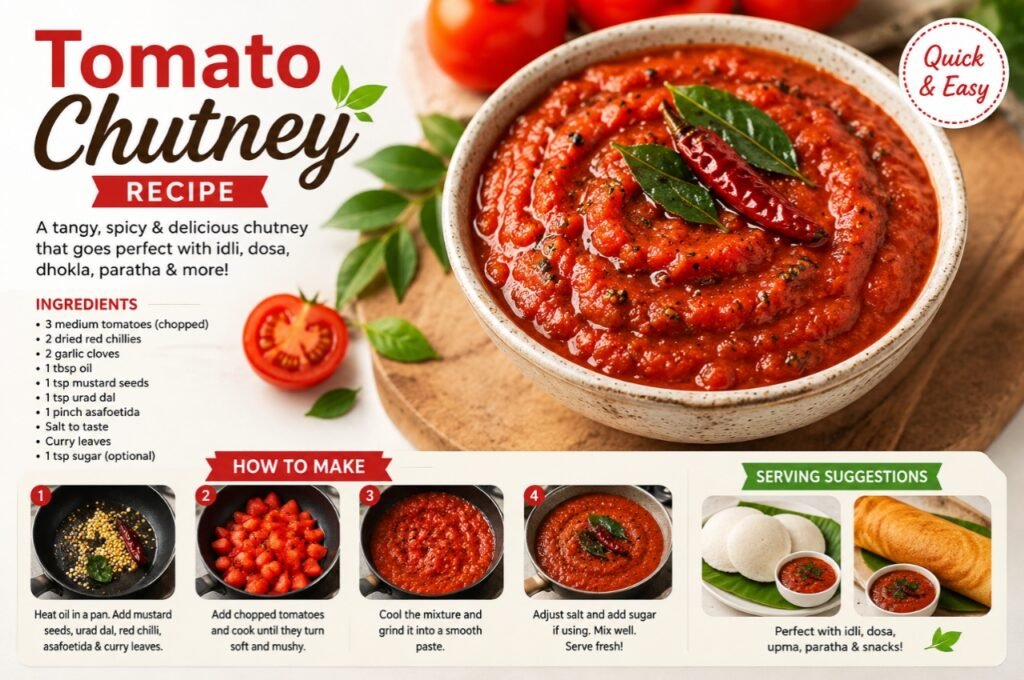

If you are looking for a flavorful, quick, and versatile side dish, this tomato chutney recipe is an excellent choice. Made with fresh ripe tomatoes, aromatic spices, ginger, lentils, dried red chilies, curry leaves, and a simple tempering, this chutney delivers a wonderful combination of tangy, spicy, savory, and slightly sweet flavors.
This easy tomato chutney is especially popular with South Indian breakfast dishes such as idli, dosa, uttapam, medu vada, and appe. It can also be served with pakoras, sandwiches, parathas, rice, and many other snacks. The best part is that you can prepare it with everyday ingredients and adjust the spice level according to your taste.
Whether you are making chutney for breakfast, lunch, dinner, or an evening snack, this tomato chutney recipe can become a dependable homemade favorite. The tomatoes provide natural tanginess, while roasted lentils, spices, and tempering create depth and aroma.
What Is Tomato Chutney?
Tomato chutney is a flavorful Indian condiment prepared primarily with fresh tomatoes and a combination of spices, herbs, lentils, chilies, and oil. It can be made in many different ways depending on the region, family tradition, and ingredients available in the kitchen.
In South India, tomato chutney is commonly known as thakkali chutney, with thakkali meaning tomato in Tamil. Different households prepare it with different combinations of onion, garlic, ginger, coconut, lentils, tamarind, or dried chilies.
This particular tomato chutney recipe focuses on ripe tomatoes, ginger, urad dal, dried red chilies, black pepper, and a fragrant tempering of mustard seeds and curry leaves. The tomatoes are cooked until soft before being blended, which helps remove their raw flavor and produces a smooth, balanced chutney.
Why You Will Love This Tomato Chutney Recipe
There are plenty of reasons to try this homemade tomato chutney recipe. First, it uses simple ingredients that are easy to find. You do not need complicated equipment or specialty ingredients.
The chutney is also quick enough for busy mornings. Once the ingredients are prepared, the tomatoes and spices can be cooked, blended, and finished with tempering.
Another advantage is flexibility. You can make the chutney thick for spreading or slightly thinner for serving with dosa and idli. You can also increase or reduce the chilies depending on how spicy you like your food.
The combination of tangy tomatoes, roasted urad dal, ginger, dried red chilies, black pepper, mustard seeds, and curry leaves gives the chutney several layers of flavor without requiring a long cooking process.
Tomato Chutney Recipe at a Glance
| Recipe Detail | Information |
|---|---|
| Recipe Name | Tomato Chutney Recipe |
| Cuisine | South Indian |
| Course | Side Dish / Condiment |
| Preparation Time | About 15–20 minutes |
| Cooking Time | About 10–15 minutes |
| Total Time | About 30 minutes |
| Servings | 3–4 |
| Difficulty | Easy |
| Main Ingredient | Fresh Tomatoes |
| Taste | Tangy, Spicy and Savory |
| Texture | Smooth to Slightly Coarse |
| Diet | Vegetarian and Vegan |
| Best Served With | Idli, Dosa, Vada, Uttapam and Snacks |
Ingredients for Tomato Chutney Recipe
The ingredients for this tomato chutney recipe are simple and mostly pantry-friendly. Fresh tomatoes are the star of the recipe, so choosing good-quality tomatoes makes a noticeable difference.
| Ingredient | Quantity | Purpose |
|---|---|---|
| Ripe tomatoes | 2 large or about 1½ cups chopped | Main ingredient |
| Oil | 1½ tablespoons | Cooking and tempering |
| Urad dal | 1 teaspoon | Adds nutty flavor and body |
| Dried red chilies | 2–3 | Adds heat and color |
| Ginger | 1 inch piece | Adds warmth and freshness |
| Black peppercorns | 4–5 | Adds gentle spice |
| Cloves | 1–2, optional | Adds aromatic depth |
| Asafoetida | A pinch | Adds savory aroma |
| Salt | As needed | Balances flavor |
| Water | 2–4 tablespoons | Helps with blending |
| Mustard seeds | ½ teaspoon | Tempering |
| Curry leaves | 7–10 leaves | Fresh South Indian aroma |
| Fenugreek seeds | 2–3 seeds, optional | Adds subtle bitterness and depth |
| Dried red chili | 1 | Tempering |
How to Choose Tomatoes for Chutney
The quality of the tomatoes has a major effect on the final flavor. For the best tomato chutney recipe, choose ripe, juicy, red tomatoes.
Avoid tomatoes that are very hard or completely unripe because they can produce an overly sharp and raw flavor. Slightly sweet-tart tomatoes are ideal because their natural acidity balances the spices.
If your tomatoes are extremely sour, you can balance the chutney with a tiny amount of sugar or another suitable sweetener. Add it gradually so that the chutney does not become sweet.
Step-by-Step Tomato Chutney Recipe
Step 1: Prepare the Ingredients
Wash the tomatoes thoroughly under running water. Pat them dry and chop them into medium-sized pieces.
Peel and chop the ginger. Break the dried red chilies into smaller pieces. If you prefer a milder chutney, remove some or all of the seeds from the chilies.
Keep the urad dal, black peppercorns, cloves, asafoetida, mustard seeds, curry leaves, and other ingredients ready before cooking.
Step 2: Roast the Urad Dal
Place a frying pan or sauté pan over low to medium-low heat. Add about 1 tablespoon of oil.
Add the urad dal and gently roast it. Stir continuously so the lentils cook evenly.
The urad dal should become lightly golden to deeper brown and develop a pleasant roasted aroma. Do not burn it because burnt lentils can make the chutney bitter.
Step 3: Add the Spices
Once the urad dal is roasted, add the dried red chilies, black peppercorns, ginger, and optional cloves.
Stir everything gently for several seconds. The dried chilies should become aromatic and slightly darker, but they should not burn.
This stage is important because gently frying the spices in oil releases their essential aromas and gives the finished tomato chutney recipe a richer flavor.
Step 4: Add the Tomatoes
Add the chopped tomatoes to the pan. Add a pinch of asafoetida and salt according to taste.
Mix everything well so the tomatoes become coated with the roasted spices and oil.
Cook the mixture over low to medium-low heat. Stir occasionally to prevent sticking.
Step 5: Cook Until the Tomatoes Become Soft
Continue cooking until the tomatoes become completely soft and mushy. This usually takes around 6–8 minutes, depending on the size and water content of the tomatoes.
Do not rush this stage. Properly cooked tomatoes create a much smoother and more pleasant chutney.
If the mixture begins sticking to the pan, add a small splash of water and continue cooking.
The tomatoes should no longer have a raw smell when they are ready.
Step 6: Cool the Mixture
Turn off the heat and allow the cooked tomato mixture to cool for a few minutes.
Avoid blending extremely hot food in a closed blender jar because steam can build pressure. Let the mixture become warm before transferring it to the blender.
Step 7: Blend the Tomato Mixture
Transfer the cooked tomato mixture to a blender or chutney grinder.
Add about 2 tablespoons of water and blend until smooth.
If you prefer a slightly coarse chutney, pulse the mixture instead of blending continuously.
Add a little more water if necessary, but avoid adding too much because a watery chutney can lose its rich texture and concentrated flavor.
Step 8: Prepare the Tempering
Heat about ½ tablespoon of oil in the same pan or a small tempering pan.
Add the mustard seeds and allow them to crackle.
Once the mustard seeds begin popping, add curry leaves, a few fenugreek seeds if using, a pinch of asafoetida, and one broken dried red chili.
Be careful because curry leaves can splutter when they come into contact with hot oil.
Cook briefly until the curry leaves become aromatic and slightly crisp.
Step 9: Combine the Chutney and Tempering
Add the blended tomato mixture to the tempering.
Mix thoroughly so the flavored oil and spices are evenly distributed throughout the chutney.
Cook for another 3–4 minutes over low heat. This short final cooking stage allows the tempering flavors to blend with the tomato mixture.
Taste the chutney and adjust salt or spice if necessary.
Step 10: Serve
Transfer the finished tomato chutney recipe to a serving bowl.
It can be served warm, at room temperature, or chilled depending on your preference and the dish you are serving.
Garnish with a few fresh curry leaves if desired.
What Does Tomato Chutney Taste Like?
A good tomato chutney should have a balanced combination of tanginess, spice, saltiness, and savory depth.
The tomatoes provide the main tangy flavor. Dried red chilies add heat and color, while ginger provides a fresh and slightly warm note.
Roasted urad dal adds nuttiness and body. Black pepper provides a gentle background heat, while mustard seeds and curry leaves in the tempering add the unmistakable South Indian character.
The final result should be flavorful without allowing one ingredient to overpower everything else.
How to Make Tomato Chutney Less Spicy
If you prefer mild food, reducing the amount of dried red chili is the easiest solution.
Choose a mild variety of dried red chili and remove the seeds if desired. You can also use fewer chilies than the recipe suggests.
Do not compensate for reduced chili by adding excessive black pepper because that can change the flavor profile.
For children or people who prefer very mild chutney, use a small amount of mild chili mainly for color and aroma.
How to Make Spicy Tomato Chutney
For a hotter version, increase the number of dried red chilies or use a naturally hotter variety.
You can also add a small amount of fresh green chili while sautéing the tomatoes.
However, increase the heat gradually. Extremely spicy chutney can hide the natural sweetness and acidity of the tomatoes.
A balanced spicy tomato chutney recipe should still allow you to taste the tomatoes and aromatic spices.
How to Make Tomato Chutney Without Onion
This recipe can easily be prepared without onion.
The combination of tomatoes, ginger, lentils, chilies, pepper, mustard seeds, and curry leaves creates plenty of flavor without requiring onion.
An onion-free tomato chutney is particularly useful when you want a quick condiment using only basic ingredients.
How to Make Tomato Chutney Without Garlic
Garlic is not necessary for this version.
Ginger provides a fresh aromatic note, while roasted lentils and spices provide depth.
If you normally make tomato chutney with garlic, you can add a small amount of chopped garlic while sautéing the ginger and chilies. However, the basic recipe remains flavorful without it.
Tomato Chutney Recipe Without Coconut
Many South Indian chutneys contain coconut, but coconut is not essential for a delicious tomato chutney.
This recipe gets its body from cooked tomatoes and roasted urad dal.
Skipping coconut also gives the chutney a stronger tomato flavor and makes it useful when you do not have fresh or frozen coconut available.
Tomato Chutney Recipe With Onion
For a richer and slightly sweeter variation, you can add onion.
Finely chop one small onion and sauté it after roasting the lentils and spices. Cook until the onion becomes soft before adding tomatoes.
Onion adds sweetness and body, making this variation especially delicious with dosa, uttapam, and crispy snacks.
Tomato Chutney With Garlic
Garlic is another popular addition.
Add two or three cloves of chopped garlic along with the ginger and dried chilies. Sauté until fragrant, then add the tomatoes.
Garlic gives the chutney a stronger savory character and works particularly well if you enjoy bold flavors.
Tomato Chutney With Tamarind
Tamarind can be added when you want a stronger sour flavor.
Because tomatoes already contain natural acidity, use tamarind carefully.
A small amount is generally enough. Too much tamarind can make the chutney excessively sour.
Tamarind is particularly useful when the tomatoes are naturally mild or sweet.
Tomato Chutney With Coconut
For a creamier version, add fresh or grated coconut while blending.
Coconut softens the sharp acidity of the tomatoes and creates a richer texture.
However, coconut-based chutney usually has a shorter storage life than a simple tomato chutney, particularly if fresh coconut is used.
Tomato Chutney Recipe for Dosa
Dosa and tomato chutney are an excellent combination.
The crisp texture of dosa works beautifully with the soft, tangy, spicy chutney.
For dosa, keep the chutney medium-thick rather than extremely watery. This makes it easier to scoop and prevents it from spreading too much across the plate.
Serve it alongside coconut chutney and sambar for a complete South Indian breakfast.
Tomato Chutney for Idli
Soft steamed idlis are another classic pairing.
The acidity of the tomatoes adds contrast to the mild flavor of idli.
For idli, you can make the chutney slightly smoother and moderately thick.
A warm serving of tomato chutney with freshly steamed idli makes a simple but satisfying meal.
Tomato Chutney for Vada
Crispy medu vada pairs wonderfully with spicy tomato chutney.
The crunchy outside and soft inside of the vada contrast with the smooth chutney.
You can serve the chutney alongside sambar or coconut chutney for a traditional South Indian-style breakfast or snack plate.
Tomato Chutney for Uttapam
Uttapam is thicker and softer than dosa, making it an excellent partner for tomato chutney.
The tangy chutney cuts through the richness of the vegetables and toppings used on uttapam.
Try serving it with onion uttapam, tomato uttapam, vegetable uttapam, or plain uttapam.
Other Foods to Serve With Tomato Chutney
This versatile tomato chutney recipe is not limited to idli and dosa.
| Food | Why It Works |
|---|---|
| Idli | Adds tangy and spicy flavor |
| Dosa | Complements crisp dosa |
| Medu Vada | Contrasts with crispy texture |
| Uttapam | Adds moisture and acidity |
| Pakora | Works as a flavorful dip |
| Paratha | Adds a spicy side element |
| Chapati | Makes a quick accompaniment |
| Bread Toast | Works as a savory spread |
| Rice | Can be served as a side |
| Upma | Adds freshness and spice |
| Pongal | Balances mild flavors |
| Appe | Excellent dipping accompaniment |
Tips for Making the Best Tomato Chutney Recipe
Use ripe tomatoes for the best flavor. Tomatoes that are naturally sweet-tart produce a more balanced chutney.
Cook the tomatoes thoroughly. Undercooked tomatoes can leave a raw taste and overly sharp aroma.
Roast the lentils carefully. They should become golden and aromatic but never black or burnt.
Control the heat while frying dried chilies. Chilies burn quickly and can make the entire chutney bitter.
Add water gradually while blending. It is much easier to thin a thick chutney than to correct a watery one.
Use tempering at the end. Mustard seeds and curry leaves release their aroma when fried in oil, and adding them at the end gives the chutney a fresh finishing flavor.
Taste before serving. Tomatoes vary greatly in sweetness and acidity, so the final seasoning may need small adjustments.
Common Mistakes to Avoid
One common mistake is using unripe tomatoes. They can make the chutney excessively sour and less flavorful.
Another mistake is burning the spices. Dried chilies, lentils, and mustard seeds need only brief cooking.
Adding too much water is also a common problem. A chutney should have enough moisture to blend easily but should remain thick enough to serve as a condiment.
Do not skip the cooking stage for the tomatoes. Cooking softens their texture and reduces the raw tomato flavor.
Finally, do not overuse cloves or fenugreek seeds. These ingredients have strong flavors and should be used sparingly.
How to Adjust the Consistency
If your chutney is too thick, add one tablespoon of warm water at a time and mix well.
If the chutney is too thin, return it to the pan and cook over low heat for a few minutes until some moisture evaporates.
For dosa and idli, a medium-thick consistency is usually convenient.
For spreading on toast or paratha, keep the chutney slightly thicker.
How to Balance Sour Tomato Chutney
If your tomatoes are particularly sour, the chutney may taste sharper than expected.
Start by adding a very small amount of sugar. Mix well and taste again.
You can also increase the amount of cooked tomato or adjust the seasoning.
Avoid adding a large quantity of sugar at once. The goal is to balance the acidity, not turn the chutney into a sweet sauce.
How to Store Tomato Chutney
Allow the chutney to cool before transferring it to a clean airtight container.
Refrigerate leftovers promptly.
A simple homemade tomato chutney is best consumed within a short period for freshness and quality. The exact storage life depends on the ingredients, handling, and refrigeration conditions.
If you add fresh coconut, onion, or other fresh ingredients, be especially careful with storage and use your judgment regarding freshness.
Always use a clean, dry spoon when serving stored chutney.
Can You Freeze Tomato Chutney?
Yes, tomato chutney can generally be frozen.
Allow the chutney to cool completely before transferring it to a freezer-safe container.
Freeze it in small portions so you only need to thaw the amount required for one meal.
Thaw it in the refrigerator or gently reheat it. If the texture changes slightly after freezing, stir well and adjust with a small amount of warm water if necessary.
Fresh tempering can also be added after reheating to refresh the aroma.
Tomato Chutney Recipe for a Large Family
The recipe can be increased easily.
If you double the recipe, increase the tomatoes and supporting ingredients proportionally.
However, spice levels should be adjusted according to taste rather than blindly doubled.
When preparing a larger quantity, use a wide pan so the tomatoes cook evenly and moisture can evaporate efficiently.
Is Tomato Chutney Vegan?
This basic tomato chutney recipe can be completely vegan because it uses tomatoes, plant-based oil, lentils, spices, ginger, and herbs.
If you are following a strict vegan diet, check packaged ingredients such as asafoetida because some commercially prepared varieties may contain additional ingredients.
Is Tomato Chutney Gluten-Free?
The basic ingredients used in this recipe are naturally gluten-free.
However, packaged spice blends and asafoetida can sometimes contain wheat-based additives.
If gluten avoidance is important, check ingredient labels carefully and use certified gluten-free products when necessary.
Tomato Chutney Nutrition
Tomato chutney can be a flavorful way to add vegetables and spices to a meal.
The nutritional profile depends on the exact ingredients and quantities used.
Tomatoes provide vitamins, minerals, water, and naturally occurring antioxidants. Lentils contribute some plant-based protein and fiber, while oil contributes fat and helps carry the flavor of spices.
Because homemade chutney recipes can vary significantly, nutrition information should be considered an estimate rather than a fixed value.
Yes. A thick tomato chutney can work as a flavorful side with rice, particularly alongside simple South Indian meals.
Quick Tomato Chutney Recipe Checklist
| Step | What to Do |
|---|---|
| 1 | Wash and chop ripe tomatoes |
| 2 | Heat oil |
| 3 | Roast urad dal |
| 4 | Add dried chilies and spices |
| 5 | Add ginger |
| 6 | Add chopped tomatoes |
| 7 | Season with salt |
| 8 | Cook tomatoes until soft |
| 9 | Cool slightly |
| 10 | Blend until smooth |
| 11 | Prepare mustard seed tempering |
| 12 | Add curry leaves and dried chili |
| 13 | Mix tempering with chutney |
| 14 | Simmer briefly |
| 15 | Adjust seasoning |
| 16 | Serve with your favorite dish |
What is a tomato chutney recipe?
A tomato chutney recipe is a flavorful Indian condiment made primarily with ripe tomatoes, spices, chilies, ginger, and herbs. It is commonly served with dosa, idli, vada, uttapam, and other Indian dishes.
How do you make tomato chutney at home?
To make tomato chutney at home, sauté spices, dried red chilies, ginger, and tomatoes until soft. Allow the mixture to cool slightly, blend it into a smooth or coarse paste, and finish with a tempering of mustard seeds and curry leaves.
Is tomato chutney spicy?
Tomato chutney can be mild, medium, or very spicy depending on the amount and type of chilies used. You can easily reduce the dried red chilies for a milder version.
Can I make tomato chutney without onion?
Yes, you can make tomato chutney without onion. Ripe tomatoes, ginger, dried red chilies, roasted lentils, mustard seeds, and curry leaves provide plenty of flavor.
What can I serve with tomato chutney?
Tomato chutney is delicious with dosa, idli, medu vada, uttapam, pongal, upma, pakora, paratha, chapati, rice, sandwiches, and toast.
Why does my tomato chutney taste bitter?
Burning dried chilies, urad dal, mustard seeds, or fenugreek seeds can make tomato chutney bitter. Roast these ingredients gently and remove them from the heat as soon as they become aromatic.
How long does homemade tomato chutney last?
Homemade tomato chutney should be stored in a clean, airtight container in the refrigerator and consumed while it remains fresh. Storage time depends on the ingredients, preparation, and refrigeration conditions.
Can I add tamarind to tomato chutney?
Yes, a small amount of tamarind can be added for extra tanginess. Since tomatoes are already acidic, use tamarind sparingly.
Is tomato chutney gluten-free?
The basic ingredients in tomato chutney are naturally gluten-free. However, check packaged asafoetida and spice products for possible wheat-based additives.
Can tomato chutney be used as a sandwich spread
Yes. A thick tomato chutney works well as a spicy, tangy spread for sandwiches, wraps, toast, and bread