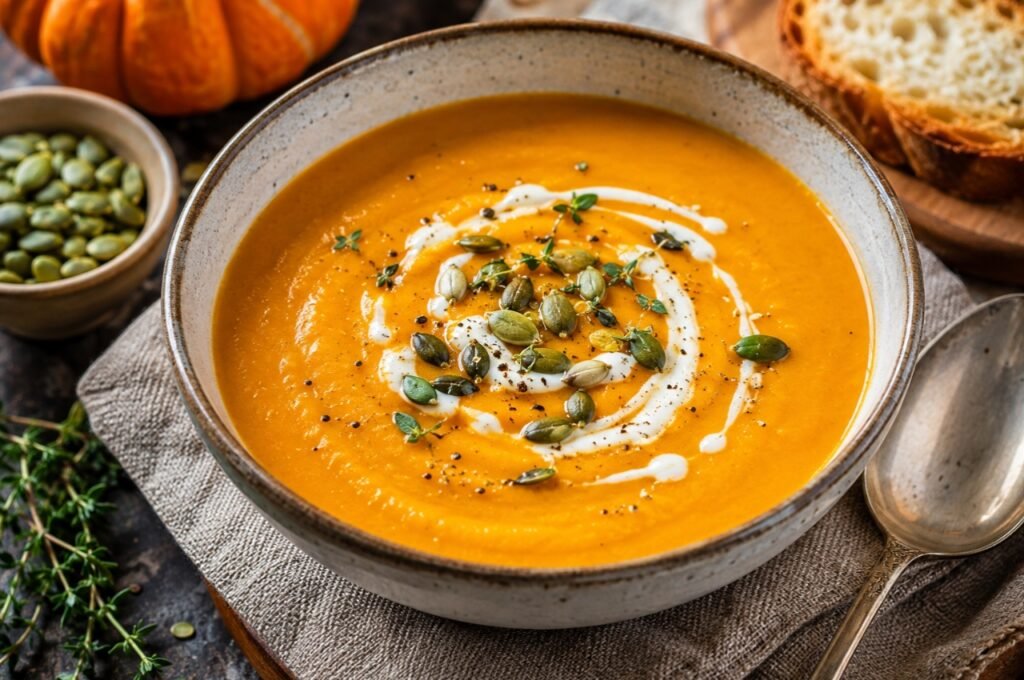

If you are looking for a cozy, nourishing, and easy homemade soup, this pumpkin soup recipe is a wonderful choice. It combines naturally sweet pumpkin with onion, garlic, vegetable stock, warm spices, and a touch of cream to create a smooth and comforting bowl of soup. The recipe is simple enough for a weeknight meal but delicious enough to serve as an elegant starter for a family dinner or holiday gathering.
This pumpkin soup recipe focuses on fresh ingredients and straightforward cooking techniques. Roasting the pumpkin first adds deeper flavor and brings out its natural sweetness, while blending the cooked vegetables creates the silky texture that makes pumpkin soup so satisfying. Roasted pumpkin is commonly used to create a richer, more concentrated flavor, while simmered versions offer a faster preparation method.
Pumpkin Soup Recipe at a Glance
| Detail | Information |
|---|---|
| Recipe Name | Pumpkin Soup Recipe |
| Preparation Time | 15 minutes |
| Cooking Time | 35–45 minutes |
| Total Time | About 50–60 minutes |
| Servings | 4–6 |
| Cuisine | American-inspired / Western |
| Course | Soup, Starter, Light Meal |
| Difficulty | Easy |
| Texture | Smooth and creamy |
| Main Ingredient | Pumpkin |
| Best Season | Fall, winter, and cool weather |
| Dietary Option | Vegetarian |
| Vegan Option | Use plant-based cream or coconut milk |
Why You Will Love This Pumpkin Soup Recipe
This pumpkin soup recipe is one of those comforting dishes that feels special without requiring complicated cooking skills. The pumpkin provides a naturally sweet and earthy foundation, while onion and garlic add savory depth. A little black pepper and warm spice balance the sweetness and give the soup a pleasant finish.
The recipe is also flexible. You can prepare it with fresh pumpkin, pumpkin purée, or a naturally dense winter squash. You can make it creamy with heavy cream, lighter with milk, or completely dairy-free with coconut milk or another plant-based alternative. Pumpkin soup can also be stored and reheated, making it useful for meal preparation. Several established recipes recommend refrigerating pumpkin soup for several days and freezing portions for longer storage.
Ingredients for Pumpkin Soup Recipe
Fresh Pumpkin
Fresh pumpkin is the star of this pumpkin soup recipe. Choose a small, sweet, dense-fleshed pumpkin rather than a large decorative carving pumpkin. Sugar pumpkins and other flavorful cooking pumpkins work especially well because their flesh tends to be less watery and more suitable for puréeing.
For four to six servings, use approximately 1.2 to 1.5 kg whole pumpkin before removing the seeds and skin, or around 800 g to 1 kg prepared pumpkin flesh.
Onion
One medium yellow or white onion adds savory flavor and natural sweetness. Cook it gently until soft rather than heavily browning it. This gives the soup a balanced flavor without overpowering the pumpkin.
Garlic
Garlic adds aromatic depth. Fresh garlic is especially good when roasted with the pumpkin because roasting softens its sharpness and creates a mellow, slightly sweet flavor.
Vegetable Stock
Vegetable stock provides the liquid foundation of the soup. Choose a good-quality low-sodium stock when possible so you can control the salt yourself. Chicken stock can also be used if you are not making a vegetarian version.
Olive Oil
Olive oil helps roast the pumpkin and garlic while adding a subtle richness. You can also use butter for a more traditional creamy flavor.
Cream
Heavy cream creates a richer and smoother pumpkin soup. It is optional, however, because well-cooked pumpkin can produce a naturally creamy texture when blended thoroughly.
Warm Spices
A small amount of nutmeg, cinnamon, ginger, smoked paprika, or chili can complement pumpkin beautifully. Do not use too much spice because the pumpkin should remain the main flavor.
Salt and Black Pepper
Salt enhances the natural sweetness of the pumpkin, while freshly ground black pepper provides a gentle contrast. Season gradually and taste before serving.
Ingredient Table
| Ingredient | Suggested Amount | Purpose |
|---|---|---|
| Fresh pumpkin | 800 g–1 kg prepared | Main ingredient |
| Onion | 1 medium | Savory sweetness |
| Garlic | 3–4 cloves | Aroma and depth |
| Vegetable stock | 4–5 cups | Soup base |
| Olive oil | 2 tbsp | Roasting and richness |
| Heavy cream | ½ cup | Creaminess |
| Nutmeg | ¼ tsp | Warm flavor |
| Ground ginger | ½ tsp | Gentle spice |
| Black pepper | ½ tsp | Balance |
| Salt | To taste | Enhances flavor |
| Pumpkin seeds | 2–3 tbsp | Optional topping |
| Fresh herbs | As needed | Garnish |
How to Make Pumpkin Soup Recipe
Step 1: Prepare the Pumpkin
Wash the pumpkin thoroughly and cut it in half. Remove the seeds and stringy interior using a sturdy spoon. Cut the pumpkin into manageable wedges or cubes.
If you want to roast the pumpkin, you can leave the skin on while roasting and scoop out the tender flesh afterward. This method can save preparation time and allows the oven to do much of the work.
Step 2: Roast the Pumpkin
Preheat your oven to about 400°F (200°C). Place the pumpkin pieces on a baking sheet with the onion and garlic. Drizzle with olive oil and season lightly with salt and pepper.
Roast until the pumpkin becomes completely tender and develops lightly caramelized edges. Depending on the size of the pieces, this usually takes around 25–40 minutes.
Roasting is an excellent way to make pumpkin soup because the dry heat concentrates the pumpkin’s natural sweetness. Similar roasted pumpkin soup methods use roasting before blending to create a deeper flavor.
Step 3: Make the Soup Base
Transfer the roasted pumpkin, onion, and garlic to a large saucepan or Dutch oven. Add vegetable stock and bring the mixture to a gentle simmer.
Cook for approximately 5–10 minutes so the ingredients combine and the flavors become more integrated.
Step 4: Blend Until Smooth
Turn off the heat and use an immersion blender to purée the soup directly in the pot. Blend until the mixture becomes smooth and creamy.
If using a countertop blender, work in small batches and avoid filling the blender too much because hot liquids can create pressure. Carefully blend until silky and return the soup to the saucepan.
Step 5: Add Cream and Seasoning
Return the soup to low heat. Stir in the cream, nutmeg, ginger, salt, and black pepper.
Do not aggressively boil the soup after adding cream. A gentle warming stage is enough to bring everything together.
Step 6: Adjust the Consistency
If the pumpkin soup is too thick, add additional vegetable stock a little at a time. If it is too thin, simmer it gently for a few additional minutes.
Remember that pumpkin soup can become thicker as it sits, so keeping a little extra stock available is useful when reheating leftovers.
Step 7: Taste and Serve
Taste the soup before serving and adjust the salt, pepper, or spices. Ladle the hot soup into bowls and finish with your favorite toppings.
Toasted pumpkin seeds, fresh herbs, a drizzle of olive oil, cream, yogurt, croutons, or freshly cracked black pepper can all work beautifully.
The Best Pumpkin for Pumpkin Soup Recipe
Choosing the right pumpkin can make a noticeable difference. Small cooking pumpkins, sugar pumpkins, butternut squash, and other dense winter squashes are generally better for soup than large decorative pumpkins.
Cooking pumpkins tend to have flesh with a more concentrated flavor and a better texture for blending. Some recipe developers specifically recommend pie pumpkins because they are sweeter and denser than watery carving pumpkins.
If your pumpkin contains a lot of water, the finished soup may become thinner than expected. You can compensate by using less stock initially and adding more after blending.
Can You Use Canned Pumpkin?
Yes. Canned pumpkin can make this pumpkin soup recipe much faster.
Choose plain pumpkin purée rather than pumpkin pie filling. Pumpkin pie filling usually contains sugar and spices intended for desserts, which can make a savory soup taste unbalanced.
Canned pumpkin also eliminates the work of cutting, peeling, roasting, and scooping fresh pumpkin. Several recipes use canned pumpkin successfully as a convenient shortcut for creamy pumpkin soup.
For a quick version, sauté onion and garlic, add stock and pumpkin purée, simmer briefly, blend if necessary, and finish with cream and seasonings.
Fresh Pumpkin vs Canned Pumpkin
| Feature | Fresh Pumpkin | Canned Pumpkin |
|---|---|---|
| Flavor | Fresh and naturally sweet | Consistent and convenient |
| Preparation | More work | Very easy |
| Texture | Depends on pumpkin variety | Usually smooth |
| Cooking Time | Longer | Shorter |
| Roasting Option | Excellent | Not required |
| Convenience | Moderate | Excellent |
| Best For | Rich roasted flavor | Quick weeknight soup |
How to Make Roasted Pumpkin Soup
A roasted pumpkin soup variation is especially flavorful. Instead of simmering raw pumpkin from the beginning, roast the pumpkin until soft and lightly caramelized.
The roasting process reduces excess moisture and intensifies the pumpkin’s natural sweetness. Onion and garlic can be roasted at the same time, creating a flavorful base that requires very little additional seasoning.
For even more depth, roasted pumpkin can be combined with ginger, chili, coriander, smoked paprika, or curry spices. Roasted pumpkin soup recipes frequently use herbs and spices to build layers of flavor without making the preparation complicated.
How to Make Pumpkin Soup Without Cream
You do not need cream to make a delicious pumpkin soup recipe.
The easiest approach is to blend fully cooked pumpkin with vegetable stock until completely smooth. The natural starches and fiber in the pumpkin provide body and thickness.
For additional richness, add a tablespoon of olive oil, a little coconut milk, or a small amount of plant-based cream.
This version is especially useful if you want a lighter or dairy-free pumpkin soup.
How to Make Vegan Pumpkin Soup
To make this pumpkin soup recipe vegan, use vegetable stock and replace butter and dairy cream with olive oil and unsweetened coconut milk or another plant-based cream.
Check the ingredients of your vegetable stock if you are preparing the soup for someone with strict dietary requirements.
Coconut milk adds a subtle tropical richness, while oat or cashew cream provides a more neutral creamy texture.
How to Make Pumpkin Soup Without a Blender
If you do not have an immersion or countertop blender, you can still make pumpkin soup.
Cook the pumpkin until extremely soft, then mash it thoroughly with a potato masher. The soup will have a more rustic texture rather than the perfectly smooth consistency produced by blending.
For an ultra-smooth result, pass the mashed soup through a fine sieve. This takes more time but can create a refined texture.
How to Make Pumpkin Soup Thicker
If your soup is too thin, there are several easy solutions.
First, simmer it uncovered for a few minutes to allow excess liquid to evaporate. Second, add more cooked pumpkin. Third, blend in a small amount of cooked potato or carrot.
Avoid adding large amounts of flour unless you specifically want a flour-thickened soup. Pumpkin itself provides plenty of natural body when properly cooked and blended.
How to Make Pumpkin Soup Thinner
If your pumpkin soup is too thick, simply add warm vegetable stock.
Add a small amount at a time and stir well before adding more. This gives you better control over the final consistency.
When reheating leftover pumpkin soup, you may also need to add extra stock or water because the soup can thicken during refrigeration.
How to Make Pumpkin Soup More Flavorful
A bland pumpkin soup usually needs better seasoning or more contrast rather than simply more ingredients.
Start with properly cooked onion and garlic. Roasting the pumpkin can provide another major layer of flavor. Then balance the natural sweetness with salt, black pepper, acidity, and mild spice.
A small splash of lemon juice or apple cider vinegar at the end can brighten the soup. Fresh ginger can provide warmth, while chili flakes can introduce heat.
A little smoked paprika can add depth, while nutmeg provides a classic warm note.
Best Toppings for Pumpkin Soup
Toppings can transform a simple pumpkin soup recipe into a restaurant-style dish.
Try toasted pumpkin seeds for crunch. A swirl of cream adds richness and visual appeal. Fresh parsley, cilantro, chives, sage, or thyme can provide freshness.
Croutons are another excellent choice because they contrast with the smooth soup. You can also add crispy onions, roasted chickpeas, chili oil, or a drizzle of good-quality olive oil.
For a more substantial meal, serve the soup with toasted sourdough, grilled cheese, garlic bread, or a fresh salad.
Pumpkin Soup Topping Ideas
| Topping | Flavor Contribution |
|---|---|
| Toasted pumpkin seeds | Nutty and crunchy |
| Fresh chives | Mild onion flavor |
| Parsley | Fresh and herbal |
| Crispy sage | Earthy and aromatic |
| Heavy cream | Rich and smooth |
| Coconut cream | Creamy and slightly sweet |
| Croutons | Crunchy and savory |
| Chili oil | Spicy and fragrant |
| Olive oil | Smooth and fruity |
| Roasted chickpeas | Crunchy and filling |
What to Serve With Pumpkin Soup
Pumpkin soup works well as a starter, lunch, or light dinner.
Crusty bread is one of the simplest pairings because it provides texture and makes the soup more satisfying. Grilled cheese is another excellent option, especially when the weather is cold.
For a balanced meal, serve pumpkin soup with a green salad containing fresh vegetables, seeds, or a tangy dressing.
If you are serving the soup as an appetizer, keep the portions smaller and pair them with roasted vegetables, baked chicken, sandwiches, or a main course.
Pumpkin Soup for Dinner
This pumpkin soup recipe can easily become a complete dinner when served with protein and carbohydrates.
Add a toasted cheese sandwich, roasted chickpeas, beans, lentils, grilled chicken, or crusty whole-grain bread. You can also serve a small salad alongside the soup.
The combination of smooth pumpkin, savory toppings, and crunchy bread creates a satisfying contrast.
Pumpkin Soup for Thanksgiving or Holiday Dinner
Pumpkin soup makes an excellent holiday starter because it can be prepared ahead of time and gently reheated before serving.
For an elegant presentation, serve small portions in warm bowls and garnish each one with a cream swirl, toasted pumpkin seeds, and fresh herbs.
If you are preparing the soup for a large gathering, keep the seasoning slightly restrained until the final reheating stage. Taste again before serving because the flavor can change as the soup sits.
Common Mistakes When Making Pumpkin Soup
Using the Wrong Pumpkin
Large carving pumpkins may produce a watery or less flavorful soup. Choose a dense cooking pumpkin when possible.
Adding Too Much Stock
Adding all the stock at once can make it difficult to control the consistency. Start with less and add more after blending.
Not Cooking the Pumpkin Enough
Undercooked pumpkin does not blend smoothly. The pumpkin should be completely tender before puréeing. Insufficiently cooked pumpkin is one common reason for gritty soup.
Overusing Spices
Pumpkin has a delicate natural flavor. Too much cinnamon, nutmeg, chili, or ginger can overpower it.
Boiling Cream
After adding cream, keep the soup gently heated rather than aggressively boiling it. Excessive heat can cause dairy-based soups to separate or become grainy.
Not Tasting Before Serving
Seasoning should always be checked at the end. Pumpkin varies in sweetness, and different stocks contain different amounts of salt.
Tips for the Best Pumpkin Soup Recipe
Use a flavorful cooking pumpkin for the best natural taste.
Roast the pumpkin when you want a deeper, sweeter flavor.
Cook onion until soft before adding the liquid.
Use low-sodium stock so you can control seasoning.
Blend thoroughly for a silky texture.
Add cream near the end and avoid prolonged boiling.
Balance sweetness with salt and a small amount of acidity.
Keep extra stock available for adjusting consistency.
Toast pumpkin seeds before using them as a topping.
Taste the soup again after reheating because its consistency and seasoning can change.
Can Pumpkin Soup Be Made Ahead?
Yes. Pumpkin soup is an excellent make-ahead meal.
Prepare the soup according to the recipe, allow it to cool appropriately, and refrigerate it in an airtight container. Many established recipes recommend storing pumpkin soup in the refrigerator for roughly four to five days, depending on the recipe and ingredients.
For best texture, you can also prepare the base ahead of time and add cream when reheating.
How to Store Pumpkin Soup
Allow the soup to cool appropriately before transferring it to a clean airtight container. Refrigerate promptly.
Keep the soup refrigerated and use it within the recommended storage period. When reheating, heat until thoroughly hot, stirring occasionally.
If the soup has become very thick in the refrigerator, add a splash of vegetable stock or water.
Can You Freeze Pumpkin Soup?
Yes, pumpkin soup generally freezes well, especially when it does not contain dairy.
Allow the soup to cool before placing it in freezer-safe containers. Leave some space at the top because liquid expands when frozen.
Freezing the soup in individual portions is convenient because you can thaw only what you need. Martha Stewart’s recipe guidance recommends freezing portions for longer storage and notes that soups without cream generally freeze better.
For the best texture, consider freezing the pumpkin soup before adding cream. Add fresh cream after thawing and reheating.
How to Reheat Pumpkin Soup
For refrigerated soup, reheat it gently on the stovetop over medium-low heat. Stir regularly to distribute the heat evenly.
You can also use a microwave, heating the soup in short intervals and stirring between intervals.
Frozen soup should ideally be thawed safely in the refrigerator before reheating. Avoid repeatedly cooling and reheating the same batch.
Pumpkin Soup Nutrition
Pumpkin is naturally rich in beta-carotene and provides dietary fiber and several vitamins and minerals. The final nutrition profile of pumpkin soup depends heavily on the ingredients used.
Adding heavy cream, butter, cheese, or large amounts of oil increases calories and fat. Using vegetable stock, pumpkin, herbs, and modest amounts of oil can create a lighter version.
If you need exact nutritional information for dietary or medical purposes, calculate it using the precise brands and quantities used in your kitchen.
Easy Pumpkin Soup Recipe Variations
Pumpkin and Carrot Soup
Add two peeled carrots with the pumpkin. Carrots enhance the natural sweetness and contribute a vibrant orange color.
Pumpkin Ginger Soup
Add fresh grated ginger for a bright, warming flavor. Ginger works especially well with the sweetness of roasted pumpkin.
Pumpkin Coconut Soup
Replace heavy cream with unsweetened coconut milk. Add a little curry powder or chili for a more aromatic version.
Spicy Pumpkin Soup
Add chili flakes, cayenne pepper, or fresh chili according to your preferred heat level.
Pumpkin Apple Soup
A small amount of tart apple can introduce acidity and natural sweetness. Choose an apple that is not overly sweet.
Pumpkin Curry Soup
Add mild curry powder, cumin, coriander, and coconut milk for a warming curry-inspired version.
Pumpkin and Potato Soup
Potato creates additional thickness and makes the soup more filling. It is useful when your pumpkin is naturally watery.
Pumpkin Lentil Soup
Add cooked red lentils for extra protein and a heartier texture. You may need additional stock as the lentils absorb liquid.
Quick Pumpkin Soup Recipe
If you are short on time, use canned pumpkin purée.
Sauté one chopped onion and two cloves of garlic in olive oil. Add approximately four cups of vegetable stock and two cups of plain pumpkin purée. Add salt, pepper, ginger, and a pinch of nutmeg. Simmer for about 10 minutes, blend if needed, and stir in a small amount of cream or coconut milk.
This shortcut version can be ready in approximately 20–25 minutes.
Restaurant-Style Pumpkin Soup Recipe
For a more elegant presentation, focus on texture and finishing ingredients.
Blend the soup until completely smooth, then pass it through a fine sieve if necessary. Adjust the consistency with warm stock.
Serve in warmed bowls with a small swirl of cream or herb oil. Add toasted pumpkin seeds in the center and finish with fresh herbs and freshly ground black pepper.
What is the best pumpkin for a pumpkin soup recipe?
Small cooking pumpkins, sugar pumpkins, and other dense-fleshed winter squash are excellent choices. They usually have better flavor and texture than large decorative pumpkins.
Can I make pumpkin soup with canned pumpkin?
Yes. Use plain pumpkin purée rather than pumpkin pie filling. Canned pumpkin is a convenient option when you want to prepare pumpkin soup quickly.
How do I make a creamy pumpkin soup recipe?
Blend the cooked pumpkin, onion, garlic, and stock until smooth. Add heavy cream, coconut milk, or another creamy ingredient at the end to create a rich and silky texture.
Can I make pumpkin soup without cream?
Absolutely. Pumpkin naturally becomes creamy when cooked and blended. Vegetable stock and a little olive oil are enough for a smooth dairy-free pumpkin soup.
Is pumpkin soup healthy?
Pumpkin provides fiber and several vitamins and minerals. The overall nutritional value depends on the ingredients used. A soup made with pumpkin, vegetables, vegetable stock, and moderate oil can be a lighter option.
Why is my pumpkin soup too watery?
Too much stock or a pumpkin with high water content can make soup thin. Simmer the soup uncovered to reduce excess liquid, or add more cooked pumpkin.
How can I make pumpkin soup thicker?
Simmer the soup uncovered for a few minutes, add additional cooked pumpkin, or blend in cooked potato or carrot. These methods can increase thickness without relying heavily on flour.
Can I freeze pumpkin soup?
Yes. Pumpkin soup generally freezes well. For the best texture, consider freezing the soup before adding cream and adding the cream after thawing and reheating.
How long does pumpkin soup last in the refrigerator?
Properly stored pumpkin soup can generally be refrigerated for several days. Keep it in a clean, airtight container and refrigerate it promptly.
Can I use butternut squash instead of pumpkin?
Yes. Pumpkin soup is ideal for preparing ahead. Store it properly in the refrigerator and gently reheat it before serving.
How do I make pumpkin soup without a blender?
Cook the pumpkin until very soft and mash it thoroughly with a potato masher. The soup will have a more rustic texture than a blended version.
How do I reduce the sweetness of pumpkin soup?
Add savory ingredients such as garlic, onion, vegetable stock, black pepper, and herbs. A small amount of lemon juice or vinegar can also help balance excessive sweetness.