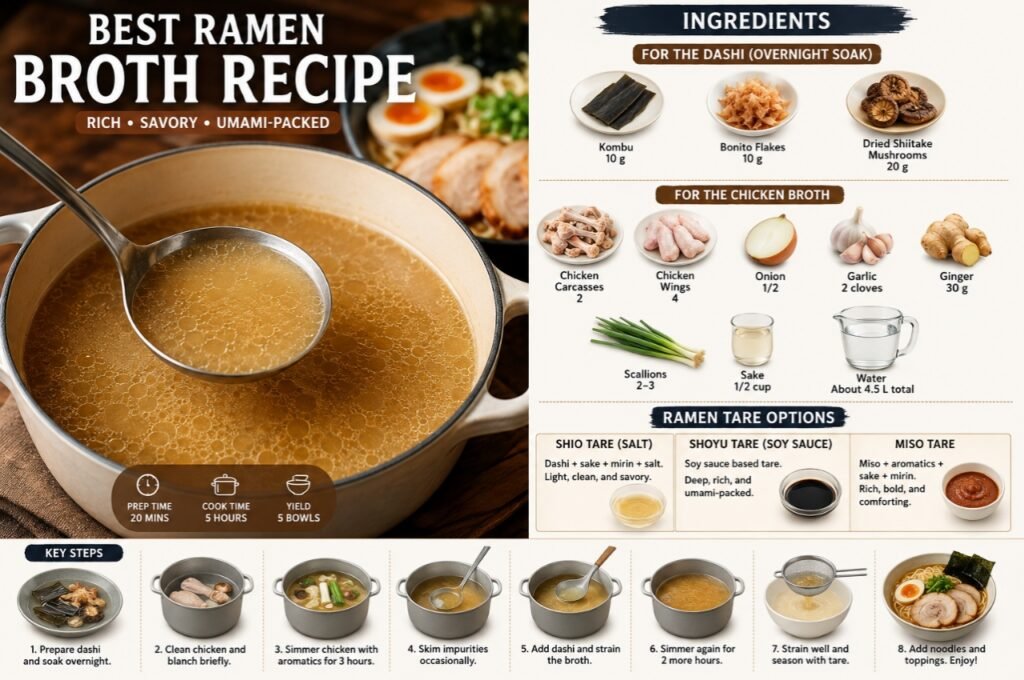

If you want to make restaurant-style ramen at home, the secret is not only the noodles or toppings—the real foundation is the broth. This best ramen broth recipe creates a deeply flavorful, savory, aromatic soup that can transform ordinary ramen noodles into a comforting homemade meal. A good ramen broth should have layers of flavor rather than tasting simply salty or watery. By combining chicken, aromatics, mushrooms, seaweed, and Japanese-style seasonings, you can build a broth with a satisfying umami character that works beautifully with noodles, eggs, vegetables, sliced meat, and other toppings.
Making ramen broth from scratch takes more time than opening a packet of instant soup, but the difference in flavor is significant. The longer cooking process allows the ingredients to release their natural flavors while gentle simmering develops a richer and more balanced taste. This recipe is designed to be approachable for home cooks while still giving you the flexibility to create shio, shoyu, or miso-style ramen at the end.
Why This Is the Best Ramen Broth Recipe
The best ramen broth is balanced. It should have savory depth, gentle sweetness, aromatic freshness, and enough seasoning to complement the noodles without overpowering them. This recipe uses a chicken-based foundation together with a simple dashi made from kombu, bonito flakes, and dried shiitake mushrooms. The combination gives the broth several layers of umami.
Chicken provides body and a naturally rich flavor, while aromatics such as onion, garlic, ginger, and scallions add fragrance. Kombu and bonito contribute the characteristic savory qualities associated with Japanese dashi, while dried shiitake mushrooms add another layer of earthy flavor. The result is a broth that can be enjoyed on its own or used as the base for a complete bowl of ramen.
Another advantage of this best ramen broth recipe is versatility. You do not have to make the same ramen every time. A single batch of broth can become a light shio ramen, a savory shoyu ramen, or a richer miso ramen depending on the seasoning base you choose.
What Is Ramen Broth?
Ramen broth is the flavorful liquid served with ramen noodles. Although it may look simple in the bowl, traditional ramen can involve several components that are prepared separately and combined just before serving. The broth is one part of that system, while tare provides concentrated seasoning and toppings add texture and additional flavor.
Different ramen styles use different foundations. Chicken broth is lighter and naturally savory, tonkotsu is made from pork bones and is famous for its creamy richness, and dashi-based broths can provide a cleaner but intensely umami flavor. Many home recipes combine ingredients from several traditions to create a practical broth with restaurant-style complexity.
For this best ramen broth recipe, the main foundation is chicken, supported by Japanese dashi ingredients. This approach produces a flavorful broth without requiring the extremely long boiling process associated with some traditional tonkotsu preparations.
Best Ramen Broth Recipe at a Glance
| Category | Details |
|---|---|
| Recipe Name | Best Ramen Broth Recipe |
| Cuisine | Japanese-inspired |
| Main Broth | Chicken and dashi |
| Flavor | Savory, aromatic, rich, umami |
| Preparation | About 20 minutes |
| Cooking Time | Approximately 5 hours |
| Dashi Soaking | Overnight for best flavor |
| Yield | About 5 bowls |
| Serving Size | Approximately 2 cups broth per bowl |
| Difficulty | Moderate |
| Best For | Ramen noodles, soups, meal prep |
| Storage | Refrigerate for short-term use or freeze for longer storage |
Ingredients for the Best Ramen Broth Recipe
For the Overnight Dashi
Kombu: Kombu is dried edible kelp and one of the most important ingredients in dashi. It contributes natural glutamate and gives the broth a deep savory quality.
Bonito flakes: Dried bonito flakes add a distinctive smoky, savory seafood note. They help make the broth taste more complex without requiring a large quantity.
Dried shiitake mushrooms: Shiitake mushrooms provide earthy umami and make the finished broth taste fuller.
Water: Use clean, good-tasting water because water makes up most of the broth.
For the Chicken Broth
Chicken carcasses: Chicken carcasses create a flavorful base and provide bones, connective tissue, and meat scraps that contribute body to the broth.
Chicken wings: Wings add meat and richness while remaining relatively easy to find at supermarkets.
Onion: Onion brings natural sweetness and helps balance the savory ingredients.
Garlic: Garlic gives the broth a warm aromatic character.
Fresh ginger: Ginger adds brightness and helps balance the stronger aromas from chicken and other ingredients.
Scallions: Scallions contribute a fresh, mild onion flavor.
Sake: Sake can help round out the flavor and complement the aromatics.
Water: Enough water is needed to simmer the chicken and vegetables gently.
Ingredient Table
| Ingredient | Purpose | Suggested Amount |
|---|---|---|
| Chicken carcasses | Main broth foundation | 2 |
| Chicken wings | Richness and flavor | 4 |
| Onion | Natural sweetness | 1/2 |
| Garlic | Aroma | 2 cloves |
| Fresh ginger | Freshness and balance | 30 g |
| Scallions | Aromatic flavor | 2–3 |
| Sake | Flavor balance | 1/2 cup |
| Kombu | Umami | 10 g |
| Bonito flakes | Savory depth | 10 g |
| Dried shiitake | Earthy umami | 20 g |
| Water | Cooking liquid | About 4.5 L total |
Step 1: Prepare the Dashi
The first part of this best ramen broth recipe is preparing the dashi. Place the kombu, bonito flakes, and dried shiitake mushrooms in a large container. Add the measured water and cover the container. Allow the ingredients to soak in the refrigerator overnight.
This slow soaking method is convenient because most of the work happens while you sleep. It also gives the ingredients plenty of time to release flavor into the water. If you are preparing ramen for dinner, you can make the dashi the previous evening.
Do not rush this step if you have time. The dashi is one of the elements responsible for the broth’s layered umami character.
Step 2: Clean the Chicken
Before cooking, rinse the chicken carcasses and wings thoroughly under cold running water. Remove any unwanted organs, visible blood, or debris. Proper cleaning is important because impurities can make the finished broth taste stronger than desired or cause excessive scum on the surface.
After cleaning, briefly poach the chicken in boiling water for around 30 seconds, or until the surface changes color. Drain the chicken and discard this initial cooking water.
This quick blanching step is particularly useful when you want a cleaner-tasting broth. It removes some surface impurities before the main simmering stage begins.
Step 3: Start the Chicken Broth
Place the cleaned chicken carcasses and wings in a large pot. Add the onion, garlic, ginger, scallions, sake, and fresh water. Bring everything to a boil over high heat.
Once the liquid reaches a boil, immediately reduce the heat. The goal is not a violent rolling boil. Instead, maintain a gentle simmer.
A gentle simmer is important because aggressive boiling can disturb the ingredients and create a cloudier broth. Cloudiness is not necessarily a sign of bad ramen, but if your goal is a cleaner chicken broth, controlled heat is helpful.
Step 4: Skim the Surface
As the chicken broth cooks, foam and impurities may rise to the surface. Use a spoon or fine skimmer to remove this scum periodically.
Do not stir the ingredients aggressively while skimming. Let the broth remain relatively calm. Continue cooking gently for approximately three hours.
During this stage, the chicken releases flavor into the water while the aromatics gradually soften and perfume the broth.
Step 5: Add the Dashi
After the chicken has simmered for about three hours, begin incorporating the prepared dashi. The dashi can be added gradually during the cooking process, with the remaining portion added after the main chicken simmer.
The combination of chicken broth and dashi is what makes this recipe particularly flavorful. Instead of relying on salt alone for intensity, you are creating complexity through multiple sources of natural savory flavor.
Once the dashi ingredients have done their job, strain the broth carefully. Remove the chicken bones and spent vegetables from the liquid.
Step 6: Continue Simmering
Return the strained broth to the pot and continue simmering gently for approximately two more hours. This additional cooking period allows the flavors to concentrate and blend.
Keep the heat low. You do not need a violent boil to make good ramen broth. In fact, excessive heat can cause unnecessary evaporation and make it difficult to control the final quantity.
The finished broth should be fragrant, savory, and noticeably more concentrated than the original cooking liquid.
Step 7: Strain the Broth
When the broth has finished cooking, strain it through a fine sieve. For an especially clean result, you can line the sieve with a clean kitchen towel or suitable filter.
Straining removes small particles and produces a smoother liquid. Allow the broth to settle briefly before portioning it.
At this point, you have a versatile chicken-dashi ramen broth that can be seasoned in different ways depending on the type of ramen you want to prepare.
The Secret to Great Ramen: Tare
One of the most important things to understand about ramen is that broth and tare are not necessarily the same thing. Broth provides the liquid foundation and much of the flavor, while tare is the concentrated seasoning component.
Three classic tare directions are shio, shoyu, and miso.
Shio Tare
Shio means salt, and shio ramen is generally associated with a lighter, cleaner seasoning profile. Combine dashi with sake, mirin, and salt. Stir until the salt dissolves.
For each bowl, add an appropriate amount of shio tare to the serving bowl before pouring in the hot ramen broth.
The result is a clean and savory ramen that allows the chicken and dashi flavors to remain prominent.
Shoyu Tare
Shoyu is Japanese soy sauce. Shoyu ramen has a deeper, darker, more savory flavor than shio ramen.
You can use a carefully prepared soy-based seasoning sauce as your tare. If you have leftover sauce from preparing chashu, it can be reduced and used as a flavorful seasoning base.
Add the shoyu tare to the bowl first and then pour the hot broth over it. Stir gently before adding the noodles and toppings.
Miso Tare
Miso ramen is known for its richer and more robust flavor. Miso paste provides saltiness, fermented depth, and a satisfying savory character.
A homemade miso tare can also include aromatics such as onion, garlic, ginger, scallion, sake, mirin, chili oil, and a small amount of natural peanut butter if desired.
If you use peanut butter, choose an unsweetened variety so that the flavor remains balanced. The peanut butter is not necessary for every miso ramen, but a small quantity can contribute richness and help create a creamy texture.
Cook the aromatic mixture gently, then incorporate the miso without aggressively boiling it. This helps preserve the character of the fermented paste.
How to Assemble a Bowl of Ramen
Once your broth and tare are ready, assembling ramen is simple.
First, cook your ramen noodles according to the package instructions or your homemade noodle recipe. Drain them thoroughly so excess cooking water does not dilute the broth.
Place your selected tare into a large ramen bowl. Pour in the hot broth and stir gently to combine. Add the cooked noodles and arrange your toppings.
Popular toppings include soft-boiled eggs, sliced chashu pork, scallions, nori, bamboo shoots, corn, mushrooms, spinach, sesame seeds, and chili oil.
The order is flexible, but keeping the tare and broth well mixed before adding toppings helps distribute the seasoning throughout the bowl.
Best Ramen Toppings
| Topping | Flavor Contribution |
|---|---|
| Soft-boiled egg | Creamy and rich |
| Chashu pork | Savory and meaty |
| Scallions | Fresh and aromatic |
| Nori | Lightly salty and oceanic |
| Bamboo shoots | Crunchy and earthy |
| Corn | Sweetness |
| Mushrooms | Earthy umami |
| Sesame seeds | Nutty flavor |
| Chili oil | Heat and fragrance |
| Spinach | Fresh vegetable flavor |
How to Make Ramen Broth More Flavorful
If your homemade broth tastes flat, do not automatically add a large amount of salt. First consider whether the broth needs more umami, aromatics, concentration, or seasoning.
Dashi is one of the easiest ways to add savory depth. Kombu, bonito flakes, and dried shiitake mushrooms can work together to create a much more complex flavor than chicken stock alone.
Another important factor is reduction. If your broth contains too much water, the flavors may taste diluted. Gentle simmering allows some water to evaporate and concentrates the remaining flavor.
Tare is another essential tool. Instead of seasoning the entire pot heavily, you can keep the broth relatively balanced and adjust individual bowls using shio, shoyu, or miso tare.
Fresh toppings also matter. A bowl of ramen can taste much more complete when it includes contrasting textures and flavors such as creamy egg, tender meat, fresh scallions, and crisp nori.
How to Make Clear Ramen Broth
For a clearer broth, focus on heat control and cleaning. Wash the chicken carefully and briefly blanch it before beginning the main cooking process. During the simmer, remove foam from the surface.
Avoid vigorous boiling. Strong agitation can break ingredients apart and release particles into the liquid.
Do not constantly stir the pot. Instead, allow the broth to simmer quietly while you periodically skim the surface.
Finally, strain the broth through a fine sieve before serving.
Remember that clear broth and flavorful broth are not identical goals. A cloudy broth can still be delicious. What matters most is the flavor, aroma, texture, and balance of the finished soup.
Can You Make This Ramen Broth in a Slow Cooker?
Yes. A slow cooker can be a convenient alternative when you do not want to watch a pot on the stove for several hours.
After cleaning and briefly poaching the chicken, place the chicken and aromatics into the slow cooker with the water and other broth ingredients. Cook on low until the flavors are fully developed.
The exact cooking time can vary according to your slow cooker, so monitor the liquid level and flavor as it cooks.
A slow cooker is especially useful for overnight or daytime preparation, but always follow safe food-handling practices and the manufacturer’s instructions for prolonged cooking.
Can You Make the Broth Ahead of Time?
Absolutely. In fact, making ramen broth ahead of time is one of the easiest ways to make homemade ramen practical.
Prepare a large batch and divide it into individual portions. Once cooled appropriately, refrigerate portions you plan to use soon and freeze the rest.
The referenced recipe recommends portioning approximately 500 ml of broth for each ramen bowl and notes that the broth can be refrigerated for a couple of days or frozen for about a month.
When you are ready for ramen, reheat the broth thoroughly, prepare fresh noodles, add tare, and assemble the bowl.
Ramen Broth Storage Guide
| Storage Method | Recommended Use |
|---|---|
| Refrigerator | Short-term storage |
| Freezer | Longer-term meal preparation |
| Individual portions | Best for convenience |
| Airtight container | Helps protect flavor |
| Flat freezer bags | Saves freezer space |
Always cool and store cooked broth promptly using appropriate food-safety practices. When reheating, bring the broth to a safe serving temperature before eating.
How to Freeze Ramen Broth
Freezing ramen broth in individual portions makes future meals extremely easy. Measure enough broth for one bowl into a freezer-safe container or bag, leaving appropriate space for expansion.
Label each portion with the date and broth type. If you make several versions, you can label them “chicken dashi,” “shoyu,” or another description.
When ready to use, thaw the broth safely and reheat it until steaming hot. Avoid repeatedly freezing and thawing the same batch because this can affect quality.
Can You Use Chicken Wings Instead of Chicken Carcasses?
Yes. Chicken wings are a useful substitute when chicken carcasses are difficult to find. Wings contain skin, bones, and connective tissue, which can contribute flavor and body to the soup.
You may need more wings to produce a similar quantity of broth, and the final flavor can be slightly different. The important thing is to use enough chicken to create a concentrated base rather than excessively diluting the broth with water.
Can You Make Vegetarian Ramen Broth?
Yes. To make a vegetarian version, replace the chicken with a combination of mushrooms, kombu, vegetables, and other plant-based umami ingredients.
Dried shiitake mushrooms are particularly useful because they provide substantial savory depth. Kombu can provide another important layer of umami.
For a vegan ramen, avoid bonito flakes and use plant-based ingredients such as mushrooms, kombu, roasted vegetables, miso, and sesame.
The cooking process will be different from the chicken-based version, but the same principle applies: build multiple layers of flavor instead of relying on salt.
How to Make Vegan Ramen Broth More Complex
A good vegan ramen broth does not need to be bland. Start with kombu and dried shiitake mushrooms. Add roasted onion, garlic, ginger, scallions, carrots, and other vegetables.
Miso can provide fermentation and savory depth, while toasted sesame paste or tahini can add richness. Chili oil can provide heat and aroma.
The goal is to create contrast. You want savory, sweet, earthy, spicy, and aromatic elements to work together.
Common Mistakes When Making Ramen Broth
Boiling Too Aggressively
One of the most common mistakes is turning the heat too high. A violent boil can make a clear chicken broth cloudy and can cause the liquid to evaporate too quickly.
Not Skimming
If you want a clean-tasting broth, take time to remove the foam that rises to the surface during the early stages of cooking.
Adding Too Much Salt
Salt is important, but ramen gets much of its flavor from the combination of broth and tare. Season gradually rather than making the entire pot extremely salty.
Using Too Much Water
If you add excessive water and do not reduce it sufficiently, the final broth may taste weak.
Cooking the Aromatics Too Aggressively
Aromatics should support the broth rather than dominate it. Use garlic, ginger, onion, and scallions in balanced quantities.
Overcooking the Noodles
Even the best ramen broth cannot rescue noodles that have become mushy. Cook noodles separately and serve immediately.
Tips for Restaurant-Style Ramen at Home
Use high-quality ingredients whenever possible. Fresh ginger, good-quality chicken, flavorful dried mushrooms, kombu, and fresh scallions can make a noticeable difference.
Prepare the broth in advance. This allows you to focus on the noodles and toppings when you are ready to eat.
Keep your tare separate from the main broth. This gives you greater control over seasoning.
Heat the serving bowl before assembling the ramen if possible. A warm bowl helps the soup stay hot.
Cook noodles just before serving. Ramen is best when the noodles have the right springy texture.
Do not overload the bowl with toppings. Too many toppings can hide the flavor of the broth.
Best Noodles for This Ramen Broth
Fresh ramen noodles are an excellent choice because they have a springy texture and absorb the broth well. However, dried ramen noodles can also work when fresh noodles are unavailable.
The thickness of the noodle can influence the final experience. Thin noodles pair nicely with lighter broths, while thicker noodles can stand up to richer seasonings such as miso.
If you make homemade noodles, aim for a firm texture because they will continue absorbing broth after they enter the bowl.
Best Protein Options
Chashu pork is one of the most recognizable ramen toppings, but it is not your only option.
You can use sliced chicken, shredded chicken, roasted pork, tofu, shrimp, or even leftover cooked meat.
For a quick weeknight meal, shredded rotisserie chicken can be particularly convenient. If you have cooked chicken left from making the broth, remove the usable meat from the bones and save it for ramen, fried rice, sandwiches, or soup.
Best Side Dishes to Serve With Ramen
Ramen can easily be a complete meal, but several Japanese-inspired side dishes pair beautifully with it.
Gyoza is an obvious choice because its crisp exterior and savory filling contrast with the soft noodles and hot broth.
Other options include steamed edamame, cucumber salad, Japanese-style fried chicken, rice balls, or simple vegetable sides.
Keep the side dishes relatively light if the ramen broth is rich.
Nutritional Considerations
The nutritional value of ramen depends heavily on the noodles, toppings, tare, and portion size. A broth made primarily from chicken, vegetables, and dashi can provide protein and flavorful nutrients, but the sodium level can increase significantly once soy sauce, miso, salt, and other seasonings are added.
If you want a lighter bowl, use less tare, add more vegetables, choose a moderate noodle portion, and include lean protein.
For a richer meal, you can add egg, chashu, sesame paste, or other toppings.
Because homemade ramen gives you control over the ingredients, it is easier to customize the bowl according to your preferences.
Quick Ramen Broth Recipe Checklist
| Step | What to Do |
|---|---|
| 1 | Prepare overnight dashi |
| 2 | Clean chicken carcasses and wings |
| 3 | Briefly blanch the chicken |
| 4 | Add chicken and aromatics to fresh water |
| 5 | Bring to a boil |
| 6 | Reduce to a gentle simmer |
| 7 | Skim the surface |
| 8 | Simmer for about 3 hours |
| 9 | Add prepared dashi |
| 10 | Strain the broth |
| 11 | Continue gentle simmering |
| 12 | Strain again |
| 13 | Prepare your preferred tare |
| 14 | Cook ramen noodles separately |
| 15 | Combine tare and hot broth |
| 16 | Add noodles and toppings |
| 17 | Serve immediately |
What is the best ramen broth recipe?
The best ramen broth recipe combines a flavorful chicken base with dashi ingredients such as kombu, bonito flakes, and dried shiitake mushrooms. This creates a rich, savory broth with plenty of umami.
How long does homemade ramen broth take to make?
A flavorful homemade ramen broth can take around 5 hours of gentle cooking, plus preparation time. Making the dashi ahead of time can make the process easier.
Can I make ramen broth ahead of time?
Yes. Ramen broth can be prepared ahead and stored in the refrigerator for short-term use or frozen in individual portions for convenient future meals.
What is the difference between ramen broth and tare?
Ramen broth is the main soup base, while tare is a concentrated seasoning sauce. Common tare styles include shio, shoyu, and miso.
Can I freeze homemade ramen broth?
Yes. Freeze the broth in individual portions in airtight, freezer-safe containers. This makes it easy to prepare a quick bowl of ramen whenever you want.
Why is my ramen broth cloudy?
Ramen broth can become cloudy when it is boiled aggressively or when ingredients release particles into the liquid. For clearer broth, blanch the chicken, skim impurities, maintain a gentle simmer, and strain the finished broth.
What toppings go best with ramen broth?
Popular toppings include soft-boiled eggs, chashu pork, chicken, scallions, nori, bamboo shoots, mushrooms, corn, sesame seeds, spinach, and chili oil.
Can I make a vegan ramen broth?
Yes. Use kombu, dried shiitake mushrooms, roasted vegetables, garlic, ginger, miso, and sesame-based ingredients to create a rich vegan ramen broth.