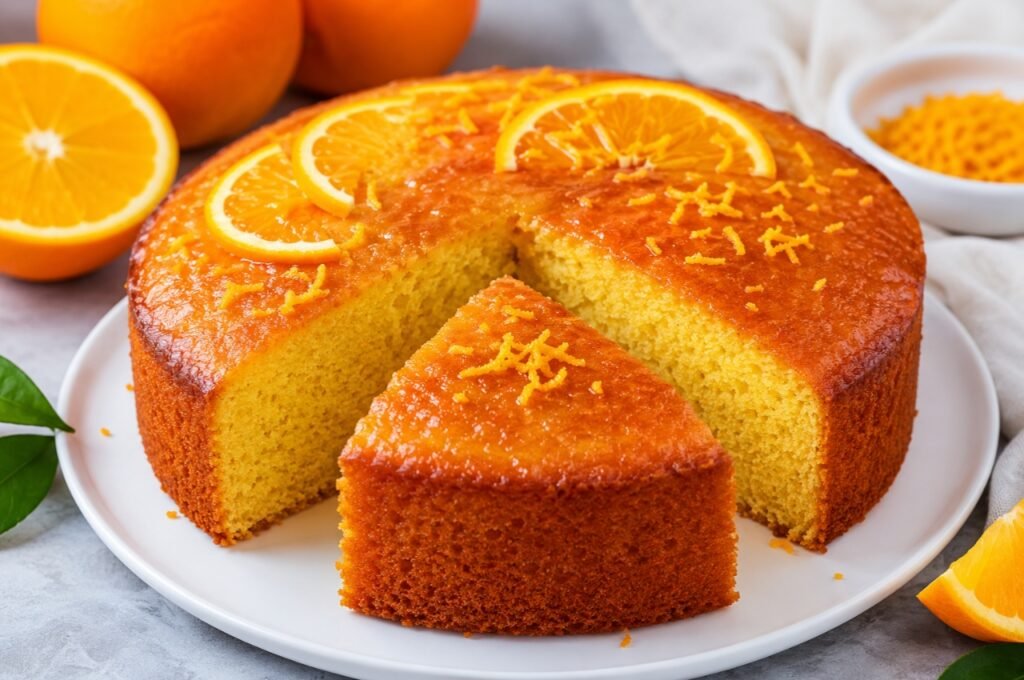

If you are looking for a simple dessert that tastes fresh, fragrant, and wonderfully homemade, this orange cake recipe is an excellent choice. Made with fresh orange juice and finely grated orange zest, this cake has a soft crumb, bright citrus flavor, and a delicious aroma that fills the kitchen while it bakes. It is easy enough for beginners, yet special enough to serve at birthdays, afternoon tea, family gatherings, holidays, or weekend celebrations. The combination of sweet cake and naturally tangy orange flavor makes every slice refreshing without being overly heavy.
This homemade orange cake recipe uses everyday baking ingredients and a straightforward method. Fresh orange juice provides moisture and natural citrus flavor, while orange zest contributes concentrated aromatic oils that make the cake taste much more intensely of orange. Many versions of orange cake use either juice, zest, or both; using both gives you a more balanced and noticeable citrus character. Current recipe references also commonly combine fresh orange juice and zest for a moist, flavorful cake.
Why You Will Love This Orange Cake Recipe
This orange cake recipe is designed to produce a tender, moist cake with a light texture and plenty of fresh orange flavor. You do not need complicated decorating skills or unusual ingredients. The cake can be served plain, dusted with powdered sugar, topped with a simple orange glaze, or decorated with thin orange slices. It is also versatile enough to bake in a round pan, loaf pan, or square baking pan, although baking time may need to change depending on the pan size.
The biggest flavor advantage comes from fresh oranges. Orange zest contains fragrant citrus oils, so it adds a stronger aroma than juice alone. Fresh juice provides acidity, moisture, and natural fruit flavor. Together, they create the characteristic taste that makes an orange cake recipe so appealing. Some whole-orange cakes go even further by using the fruit itself, while a traditional juice-and-zest cake gives you a cleaner and lighter citrus profile.
Orange Cake Recipe at a Glance
| Category | Details |
|---|---|
| Recipe Name | Orange Cake Recipe |
| Preparation Time | About 20 minutes |
| Baking Time | About 35–45 minutes |
| Total Time | About 1 hour 15 minutes |
| Servings | 8–10 slices |
| Difficulty | Easy |
| Cuisine | International |
| Main Flavor | Fresh Orange |
| Texture | Soft, moist and fluffy |
| Best Pan | 8-inch round or loaf pan |
| Oven Temperature | 175°C–180°C / 350°F–356°F |
| Main Ingredients | Flour, oranges, eggs, sugar, butter or oil, baking powder |
| Best For | Dessert, tea time, celebrations and family gatherings |
Ingredients for Orange Cake Recipe
The following ingredients make a soft and flavorful homemade cake. Measuring ingredients accurately is especially important when baking because the balance between flour, liquid, fat, sugar, and leavening affects the final texture.
| Ingredient | Quantity | Purpose |
|---|---|---|
| All-purpose flour | 2 cups | Provides structure |
| Granulated sugar | ¾ to 1 cup | Adds sweetness and tenderness |
| Unsalted butter | ½ cup | Adds richness and flavor |
| Eggs | 2 large | Helps bind and structure the cake |
| Fresh orange juice | ½ cup | Adds citrus flavor and moisture |
| Fresh orange zest | 1–2 tablespoons | Provides concentrated orange aroma |
| Baking powder | 1½ teaspoons | Helps the cake rise |
| Vanilla extract | 1 teaspoon | Enhances the overall flavor |
| Salt | ¼ teaspoon | Balances sweetness |
| Milk or yogurt | ¼ cup | Helps create a tender crumb |
Fresh oranges are the best choice when available because freshly grated zest and freshly squeezed juice provide a vibrant flavor. Several published orange cake recipes use fresh orange juice and zest as key flavor ingredients.
How to Choose the Best Oranges
The quality of the oranges can make a noticeable difference in an orange cake recipe. Choose oranges that feel heavy for their size because they generally contain plenty of juice. The skin should look reasonably firm and fragrant. If possible, choose fruit with a strong citrus aroma because the zest will contribute significantly to the cake.
Navel oranges are a convenient option because they are usually sweet, juicy, and easy to find. Other sweet oranges can also work well. If you are using the zest, wash the fruit thoroughly before grating the outer colored layer of the peel.
Avoid grating deeply into the white part of the peel, known as the pith. The pith can be noticeably bitter and may overpower the delicate sweetness of the cake. Whole-orange cake recipes handle the bitterness differently, sometimes cooking the entire fruit before blending it into the batter.
How to Make Orange Cake Recipe Step by Step
Step 1: Prepare the Oven and Cake Pan
Preheat your oven to 175°C–180°C (350°F–356°F). Proper preheating is important because cake batter needs immediate and consistent heat to rise correctly. Grease an 8-inch round cake pan and line the bottom with parchment paper. You can also use a suitable loaf pan if you prefer a rectangular orange loaf cake.
Do not put the batter into a cold oven unless the recipe specifically requires it. A properly preheated oven helps the baking powder activate at the right stage and supports an even rise.
Step 2: Prepare the Orange
Wash and dry the oranges. Before cutting them, grate the colored outer skin to obtain the zest. Use a fine grater or microplane and stop once you reach the white pith. Then cut the oranges and squeeze enough juice for the recipe.
Freshly grated zest is particularly valuable because the aromatic oils are concentrated in the peel. Adding zest directly to the sugar can also help release those oils, creating an even stronger orange aroma.
Step 3: Combine the Dry Ingredients
Add all-purpose flour, baking powder, and salt to a bowl. Whisk or sift them together so the leavening agent is distributed evenly throughout the flour.
This step helps prevent pockets of baking powder from forming in the finished cake. It also breaks up small lumps and makes it easier to combine the dry ingredients with the wet mixture without excessive mixing.
Step 4: Cream the Butter and Sugar
In a separate large bowl, beat softened butter and sugar until the mixture becomes lighter and creamy. This process incorporates air into the fat and contributes to the cake’s texture.
If you are using oil instead of butter, whisk the oil with the sugar according to the recipe method. Oil can produce a particularly moist cake, while butter gives a richer dairy flavor.
Step 5: Add the Eggs
Add the eggs one at a time, mixing well after each addition. Make sure the eggs are incorporated before adding the next one. Add vanilla extract and mix briefly.
If the mixture looks slightly separated, do not panic. The dry ingredients will help bring the batter together. Room-temperature eggs generally combine more easily with softened butter.
Step 6: Add Orange Juice and Zest
Add the fresh orange zest and orange juice to the wet mixture. Stir gently until incorporated. The batter should immediately become fragrant and citrusy.
For an especially aromatic orange cake recipe, rub the orange zest into the sugar before mixing the sugar with the butter or oil. This technique helps release citrus oils from the zest and can intensify the orange aroma.
Step 7: Add the Dry Ingredients
Gradually add the flour mixture to the wet ingredients. Alternate with milk or yogurt if using it. Mix just until the ingredients are combined.
Do not overmix the batter. Excessive mixing develops gluten, which can make a cake less tender and more chewy. Stop mixing as soon as you no longer see large streaks of flour.
Step 8: Transfer the Batter to the Pan
Pour the finished batter into the prepared cake pan. Use a spatula to spread it evenly. Gently tap the pan once or twice on the counter to remove unusually large air pockets, but do not repeatedly bang the pan.
Smooth the top so the cake has a more even surface after baking.
Step 9: Bake the Orange Cake
Place the cake in the center of the preheated oven and bake for approximately 35–45 minutes. The exact baking time depends on the pan, oven, and amount of batter.
Start checking toward the end of the suggested baking time. Insert a toothpick or thin skewer into the center. If it comes out clean or with a few moist crumbs, the cake is ready. Published orange cake recipes commonly use oven temperatures around 175°C–180°C and baking times that vary according to the style and pan used.
Step 10: Cool the Cake
Remove the cake from the oven and let it rest in the pan for approximately 10–15 minutes. Then carefully transfer it to a wire rack to cool completely.
Do not frost or heavily glaze the cake while it is extremely hot unless the recipe specifically calls for a warm glaze. Excess heat can cause frosting to melt or become runny.
How to Make a Simple Orange Glaze
A simple orange glaze can transform an everyday orange cake recipe into an elegant dessert. To make one, combine powdered sugar with a small amount of fresh orange juice. Add the juice gradually until you reach a thick but pourable consistency.
For additional orange flavor, add a small amount of finely grated zest. Once the cake has cooled, drizzle the glaze over the top and allow it to set for several minutes.
Another option is to brush a light orange syrup over the warm cake. Glazing a cake while it is still slightly warm can allow the citrus syrup to soak into the crumb and increase moisture and flavor. Orange cake recipes using glazes commonly combine orange juice with powdered sugar for a simple citrus topping.
Orange Cake Recipe Variations
Eggless Orange Cake
An eggless version is a great option for people who prefer baking without eggs. Yogurt, condensed milk, or another suitable egg replacement can provide moisture and structure. Eggless orange cakes often use orange juice and zest for flavor, with baking powder and baking soda helping the cake rise. Published eggless versions demonstrate that orange juice can be incorporated into a tender cake batter without eggs.
Orange Loaf Cake
For a loaf-style dessert, pour the batter into a lined loaf pan. The longer shape makes the cake easy to slice and convenient for breakfast or afternoon tea. Keep in mind that the depth of the batter can affect baking time, so test the center before removing the cake from the oven.
Orange Bundt Cake
A Bundt pan creates an attractive decorative shape without requiring complicated frosting. Orange Bundt cakes can also be decorated with glaze or powdered sugar. Published Bundt versions use orange juice and zest and bake the cake at approximately 180°.
Chocolate Orange Cake
Chocolate and orange are a classic flavor combination. Add unsweetened cocoa powder to the batter while reducing the flour by an appropriate amount. You can also add chocolate chips or finish the cake with a thin chocolate glaze.
Orange Almond Cake
Ground almonds can add richness, moisture, and a slightly nutty flavor. Replace part of the flour with finely ground almonds while keeping enough flour to provide structure.
Orange Coconut Cake
Add shredded coconut to the batter for a tropical variation. Orange and coconut work especially well together when the cake is served chilled or topped with a light citrus glaze.
Whole Orange Cake
A whole-orange cake uses much more of the fruit and can have a deeper citrus flavor. Some recipes boil the orange first to soften the peel and reduce harsh bitterness before processing it into the batter. King Arthur Baking’s whole-orange approach, for example, cooks the orange in sugar syrup before incorporating it into the cake.
Tips for the Best Orange Cake Recipe
Use fresh oranges whenever possible. Bottled juice can work in some recipes, but fresh juice generally gives the cake a brighter flavor.
Measure flour carefully. Too much flour can make the cake dry and heavy. For the most consistent results, weighing flour is preferable to packing it tightly into measuring cups.
Do not overmix. Once the flour is incorporated, stop mixing. This helps preserve a tender crumb.
Use room-temperature ingredients when the recipe calls for creamed butter. Room-temperature eggs and dairy generally combine more smoothly with softened butter.
Do not use too much orange zest. Zest adds powerful citrus aroma, but excessive zest can make the flavor harsh or bitter.
Avoid the white pith when zesting. The colorful outer layer contains the fragrant oils you want, while the white layer can add bitterness.
Do not open the oven repeatedly during baking. Opening the door too early can cause the cake to lose heat and potentially collapse.
Check the center before removing the cake. A golden surface does not necessarily mean the center is fully baked.
Let the cake cool before slicing. Cutting while extremely hot can make the crumb appear gummy or cause slices to break apart.
Common Mistakes When Making Orange Cake
One of the most common mistakes is using too much liquid. Orange juice adds flavor and moisture, but the quantity should match the amount of flour and other ingredients. Adding extra juice simply because you want stronger orange flavor can make the batter too loose.
Another mistake is using only orange juice and skipping zest. Juice provides citrus flavor, but zest contributes highly aromatic oils that can make the orange character much more noticeable.
Overmixing is another frequent problem. Once flour comes into contact with liquid, gluten development begins. For a soft cake, mix only until the ingredients are incorporated.
Baking at the wrong temperature can also affect the result. An oven that is too hot may brown the outside before the center is ready, while an oven that is too cool can leave the cake pale, dense, or uneven.
Finally, slicing the cake before it has cooled sufficiently can make it difficult to achieve clean slices.
How to Store Orange Cake
Store completely cooled orange cake in an airtight container at room temperature for a short period if your environment is cool and dry. For longer storage, refrigeration can help extend freshness, especially if the cake contains a perishable frosting or cream topping.
If refrigerated, allow the cake to sit at room temperature for a little while before serving so the crumb can soften and the citrus aroma can become more noticeable.
For longer storage, wrap individual slices or the whole unfrosted cake securely and freeze it. Thaw it gradually before serving. Whole-orange cake guidance from King Arthur Baking also recommends covered room-temperature storage for several days and freezing for longer storage.
How to Serve Orange Cake
This orange cake recipe is delicious on its own, but several toppings can make it even more special. Dust the cooled cake with powdered sugar for a simple presentation. Add a thin orange glaze for extra sweetness and citrus flavor. For celebrations, serve it with whipped cream, orange buttercream, cream cheese frosting, or mascarpone.
Fresh orange slices can be used as decoration, but dry the surface slightly before placing them on a frosted cake. Candied orange peel is another attractive option and gives the dessert a sophisticated finish.
For afternoon tea, serve thin slices with tea or coffee. For dessert, add vanilla ice cream or lightly sweetened whipped cream.
What to Serve With Orange Cake
| Serving Idea | Why It Works |
|---|---|
| Tea | Complements the citrus aroma |
| Coffee | Balances the cake’s sweetness |
| Vanilla ice cream | Adds cool creaminess |
| Whipped cream | Keeps the dessert light |
| Fresh berries | Adds tartness and color |
| Orange glaze | Intensifies citrus flavor |
| Powdered sugar | Simple and elegant |
| Chocolate sauce | Creates a chocolate-orange combination |
| Greek yogurt | Adds creamy tang |
| Fresh orange slices | Reinforces the fruit flavor |
Nutrition Information
The nutritional value of an orange cake recipe depends on the exact ingredients, portion size, frosting, and serving method. Butter, oil, sugar, flour, eggs, and glaze all contribute calories and other nutrients. For this reason, homemade cake should be treated as a dessert rather than a precise nutritional product unless the ingredients are calculated using a nutrition database.
A plain slice will generally contain fewer calories than a heavily frosted or glazed slice. Using less glaze, reducing sugar moderately, or serving smaller portions can change the overall nutritional profile.
Recipe Card: Easy Orange Cake Recipe
| Recipe Detail | Information |
|---|---|
| Course | Dessert |
| Preparation | 20 minutes |
| Baking | 35–45 minutes |
| Total | About 1 hour 15 minutes |
| Servings | 8–10 |
| Difficulty | Easy |
| Flavor | Sweet and citrusy |
| Texture | Soft and moist |
| Main Citrus | Fresh orange |
| Recommended Pan | 8-inch round pan |
Ingredients
2 cups all-purpose flour, ¾–1 cup granulated sugar, ½ cup softened unsalted butter, 2 large eggs, ½ cup fresh orange juice, 1–2 tablespoons fresh orange zest, 1½ teaspoons baking powder, ¼ teaspoon salt, 1 teaspoon vanilla extract, and ¼ cup milk or plain yogurt.
Method
Preheat the oven to 175°C–180°C. Grease and line an 8-inch cake pan. Whisk the flour, baking powder, and salt together. In another bowl, beat softened butter and sugar until creamy and lighter in texture. Add the eggs one at a time, followed by vanilla. Stir in fresh orange zest and orange juice. Gradually add the dry ingredients, alternating with milk or yogurt, and mix only until combined. Transfer the batter to the prepared pan and smooth the surface. Bake for approximately 35–45 minutes, or until a toothpick inserted into the center comes out clean or with a few moist crumbs. Cool in the pan for 10–15 minutes, then transfer to a wire rack. Once completely cool, serve plain, dust with powdered sugar, or finish with orange glaze.
Expert Tips for a Bakery-Style Orange Cake
For a bakery-style result, focus on consistency rather than adding unnecessary ingredients. Use fresh citrus, measure accurately, avoid overmixing, and bake at the correct temperature. The cake should rise gradually and develop an even golden surface.
A good trick is to combine the orange zest with sugar before adding the butter. Gently rubbing the zest into the sugar helps distribute the citrus oils. Another useful technique is to bring refrigerated ingredients closer to room temperature before mixing, particularly when the recipe uses creamed butter.
Do not overbake the cake simply because you want a darker crust. Once the center is set and a toothpick comes out clean or with a few moist crumbs, remove the cake. Residual heat will continue cooking it slightly as it cools.
If you want a particularly moist result, consider brushing the warm cake with a light orange syrup. Published recipes use orange syrup and glaze techniques to increase citrus flavor and moisture.
How to Make Orange Cake More Flavorful
The secret to a flavorful orange cake recipe is layering the citrus flavor instead of relying on one ingredient. Start with fresh zest, add fresh juice, and finish with an orange glaze. Each layer contributes something different.
Zest gives aroma, juice provides fruity acidity and moisture, while glaze adds concentrated sweetness and citrus flavor to the surface. You can also add vanilla because it rounds out the flavor and prevents the citrus from tasting too sharp.
For a more sophisticated dessert, add a small amount of cardamom. Whole-orange cake recipes sometimes pair orange with cardamom because the spice complements the floral character of citrus.
Why This Orange Cake Recipe Is Great for Beginners
This recipe does not require complicated pastry techniques. The ingredients are familiar, the batter is straightforward, and the cake can be served without elaborate decoration. Even if the top is not perfectly smooth, powdered sugar or a simple glaze can make the finished cake look attractive.
The recipe is also adaptable. You can use a round pan for a traditional cake, a loaf pan for easy slicing, or a Bundt pan for a decorative presentation. You can make it plain for everyday baking or add frosting and orange decorations for celebrations.
What is the best orange cake recipe for beginners?
The best orange cake recipe for beginners is one that uses simple ingredients, fresh orange juice, and orange zest. A basic butter-based cake is easy to prepare and does not require complicated decorating skills.
Can I use fresh orange juice in an orange cake recipe?
Yes, fresh orange juice is highly recommended. It gives the cake a brighter, more natural citrus flavor than many bottled juices. Fresh orange zest can make the orange flavor even stronger.
Why should I add orange zest to orange cake?
Orange zest contains aromatic citrus oils that provide a concentrated orange fragrance and flavor. For the best result, grate only the colorful outer peel and avoid the bitter white pith.
Can I make an orange cake recipe without eggs?
Yes. An orange cake can be prepared without eggs by using a suitable substitute such as plain yogurt or another tested egg replacement. The exact amount depends on the alternative used.
Why does my orange cake taste bitter?
Orange cake can taste bitter when too much white pith is included with the zest. The pith is the white layer underneath the orange peel, so use a fine grater and remove only the thin colored layer.
Can I add chocolate to an orange cake recipe?
Yes. Chocolate and orange are an excellent combination. Dark chocolate chips, chocolate chunks, cocoa, or a chocolate drizzle can all be used to create a richer chocolate-orange dessert.
What temperature should I bake an orange cake at?
A standard orange cake is commonly baked at around 350°F (175°C). However, oven temperatures and baking times vary, so use the recipe’s recommended temperature and check the cake with a toothpick before removing it.
Why did my orange cake sink in the middle?
A sunken center can result from underbaking, opening the oven too early, using too much liquid, inaccurate measurements, or overmixing. Make sure the oven is fully preheated before baking.
What type of oranges are best for orange cake?
Sweet oranges such as navel oranges are a good choice. Choose oranges that feel heavy for their size and have a fragrant peel. The best orange is one that tastes pleasant and fresh when eaten.
Can I make an eggless orange cake?
Yes. Replace butter with plant-based butter or neutral oil, use non-dairy milk, and replace eggs with a suitable vegan baking substitute. Fresh orange juice and zest provide plenty of citrus flavor.
How should I store homemade orange cake?
Store a plain orange cake in an airtight container at room temperature for a few days. If the cake contains cream cheese frosting, whipped cream, or another perishable topping, keep it refrigerated.
Can I make orange cake in a loaf pan?
Yes. The batter can be portioned into cupcake liners and baked as individual cakes. Cupcakes usually require less baking time than a full-size cake, so begin checking them early.