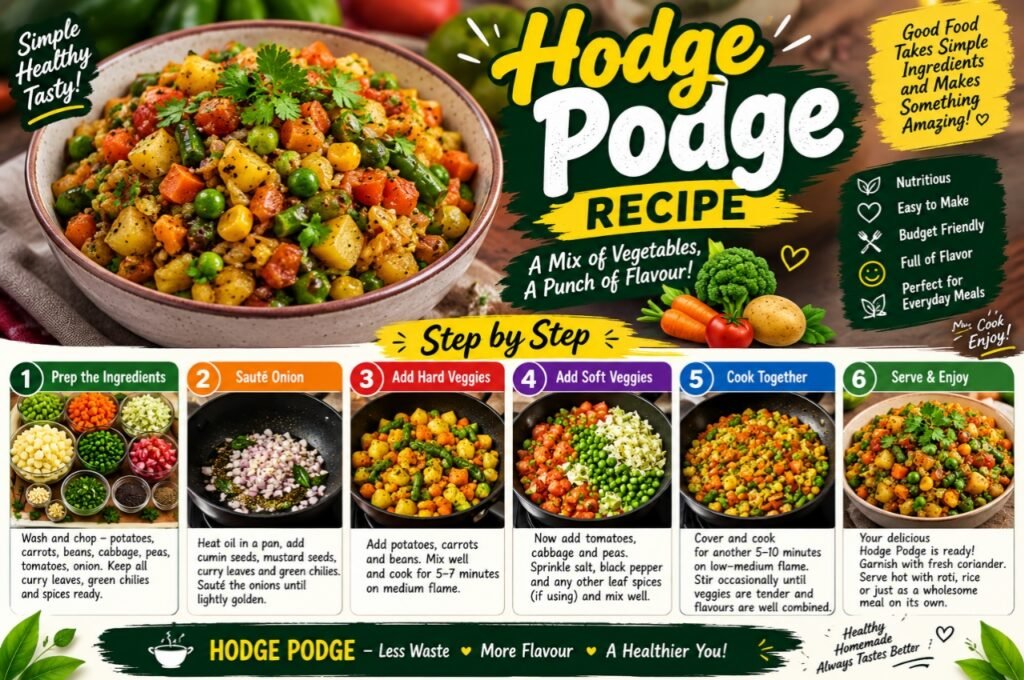

If you are looking for a comforting, simple, and delicious vegetable dish, this hodge podge recipe is a wonderful choice. Made with fresh seasonal vegetables, butter, cream, and simple seasonings, hodge podge is the kind of meal that feels both rustic and special. It is especially popular as a summer vegetable dish because it makes excellent use of young potatoes, carrots, green beans, and other fresh garden vegetables.
A traditional hodge podge recipe is associated with Nova Scotia and Atlantic Canadian home cooking. The beauty of this dish is its simplicity. There is no need for complicated sauces, unusual spices, or difficult cooking techniques. Fresh vegetables are gently cooked until tender and then finished with butter and cream to create a rich, silky coating.
The name “hodge podge” perfectly describes the dish because several vegetables come together in one pot. While there are traditional ingredients, many families have their own version. Some cooks add peas, corn, turnips, or cabbage, while others prefer a very simple combination of potatoes, carrots, and green beans.
What Is Hodge Podge?
Hodge podge is a creamy mixed vegetable dish traditionally prepared with fresh garden vegetables. The classic version generally includes new potatoes, carrots, green beans, butter, cream, salt, and pepper. The vegetables are cooked gently rather than heavily seasoned, allowing their natural flavors to remain the star of the dish.
Unlike a typical vegetable soup, hodge podge is not meant to be watery. The finished dish should have a creamy, buttery coating that clings lightly to the vegetables. The result is tender vegetables with a delicate sauce that tastes fresh, rich, and comforting.
A good hodge podge recipe also depends heavily on the quality of the vegetables. Young potatoes, fresh green beans, and tender carrots work particularly well because they cook quickly and have a naturally sweet flavor.
Why You Will Love This Hodge Podge Recipe
There are plenty of reasons to add this dish to your regular recipe collection. First, it is incredibly easy to prepare. Most of the work involves washing, trimming, and cutting the vegetables.
Second, the recipe is flexible. You can use whatever fresh vegetables you have available, making it an excellent option for cleaning out the garden or refrigerator.
Third, it is naturally comforting without requiring a long list of ingredients. Butter and cream provide richness, while the vegetables contribute sweetness, color, texture, and freshness.
Most importantly, this hodge podge recipe is a wonderful side dish for family dinners, summer gatherings, barbecues, and holiday meals.
Hodge Podge Recipe Ingredients
The following ingredients create a creamy and traditional-style version of hodge podge.
| Ingredient | Amount | Purpose |
|---|---|---|
| Baby or new potatoes | 1½ pounds | Provides the hearty base |
| Fresh carrots | 3–4 | Adds sweetness and color |
| Fresh green beans | 2 cups | Adds freshness and texture |
| Butter | 3 tablespoons | Creates richness |
| Heavy cream | ½–¾ cup | Makes the vegetables creamy |
| Salt | To taste | Enhances flavor |
| Black pepper | To taste | Adds mild seasoning |
| Fresh parsley | 1–2 tablespoons | Optional garnish |
| Fresh peas | ½–1 cup | Optional variation |
| Corn | ½–1 cup | Optional variation |
The quantities are flexible. Hodge podge is a forgiving dish, so you can adjust the vegetable proportions according to what you have.
How to Choose the Best Vegetables
Fresh vegetables make a noticeable difference in this recipe. Look for small new potatoes with smooth skins and no large blemishes. Baby potatoes are particularly convenient because they can be cooked whole or halved depending on their size.
Choose carrots that feel firm and crisp. Young carrots are especially good because they have a naturally sweet flavor and tender texture.
For green beans, select beans that are firm, bright, and free from excessive wrinkles. Fresh beans should snap easily when broken.
If you are adding peas, fresh peas are excellent when available, although frozen peas can work very well too. Corn can also be added for extra sweetness.
How to Make Hodge Podge Recipe
Step 1: Prepare the Vegetables
Wash all of the vegetables thoroughly. Scrub the potatoes and leave their thin skins on if you are using young new potatoes. Cut larger potatoes into smaller pieces so everything cooks evenly.
Peel the carrots if desired and cut them into bite-sized pieces. Trim the ends from the green beans and cut longer beans into manageable pieces.
The goal is to cut the vegetables into similar sizes so they finish cooking at approximately the same time.
Step 2: Cook the Potatoes and Carrots
Place the potatoes and carrots into a large pot and cover them with water. Add a small amount of salt to the cooking water.
Bring the water to a gentle boil and cook until the vegetables are almost tender. Avoid overcooking them because they will continue cooking when the remaining vegetables and creamy ingredients are added.
The potatoes should be tender enough to pierce easily with a fork but should still hold their shape.
Step 3: Add the Green Beans
Add the prepared green beans during the final few minutes of cooking. Green beans generally require less cooking time than potatoes and carrots.
If you add them too early, they may become soft and lose their fresh texture.
If you are using peas or corn, they can also be added toward the end because they cook relatively quickly.
Step 4: Drain Carefully
Once the vegetables are tender, drain them well. Do not leave them sitting in a large amount of cooking water because excess liquid can make the finished hodge podge watery.
Return the vegetables to the warm pot.
Step 5: Add Butter
Add the butter while the vegetables are still warm. Gently toss everything together so the butter melts and lightly coats the vegetables.
This simple step gives the dish its characteristic buttery flavor.
Step 6: Add the Cream
Pour in the cream gradually while gently stirring. Start with a smaller amount and add more if needed.
You want enough cream to create a light sauce without turning the dish into soup.
Keep the heat low while the cream warms. Avoid aggressively boiling the cream because gentle heating produces a smoother result.
Step 7: Season and Serve
Season the vegetables with salt and freshly ground black pepper. Taste and adjust the seasoning as necessary.
Garnish with fresh parsley if you like.
Serve the hodge podge warm while the sauce is creamy and the vegetables are tender.

Traditional Nova Scotian Hodge Podge
A traditional Nova Scotian-style hodge podge recipe focuses on fresh seasonal vegetables rather than heavy seasoning. New potatoes, carrots, and green beans are among the most recognizable ingredients.
The traditional approach is intentionally uncomplicated. Fresh vegetables are cooked gently and combined with butter and cream. The idea is to highlight the produce rather than cover it with spices.
This is one reason the dish has remained popular as a home-style recipe. It is easy to make, adaptable, and strongly connected to seasonal cooking.
Creamy Hodge Podge Recipe Variation
If you love rich and creamy vegetable dishes, you can make a more luxurious version by slightly increasing the cream and butter.
For a thicker sauce, use a little less cooking liquid and allow the cream to warm gently with the vegetables. You can also add a small spoonful of cream cheese for an extra-rich variation.
However, be careful not to make the sauce too thick. The vegetables should remain the main attraction.
A small amount of grated Parmesan can also be added if you want a more savory flavor, although this moves the recipe away from the traditional style.
Easy One-Pot Hodge Podge
A one-pot approach makes this dish even easier. Instead of cooking the vegetables separately, arrange them in the pot according to cooking time.
Start with potatoes and carrots because they take longer. Add green beans later. Peas and corn can be added near the end.
Once everything is tender, carefully drain excess water if necessary and finish with butter and cream.
This method reduces cleanup and makes the recipe convenient for busy weeknight dinners.
Hodge Podge With Extra Vegetables
One of the best things about hodge podge is that it can be adapted.
You can add:
- Fresh peas
- Sweet corn
- Turnips
- Cabbage
- Zucchini
- Broccoli
- Cauliflower
- Small onions
- Leeks
- Parsnips
- Bell peppers
Keep in mind that different vegetables cook at different speeds. Hard vegetables should go into the pot earlier, while delicate vegetables should be added closer to the end.
Hodge Podge With Frozen Vegetables
Fresh vegetables are ideal, but frozen vegetables can be useful when fresh produce is unavailable.
Frozen peas and corn are particularly easy to use because they cook quickly. Frozen green beans can also work, although their texture may be softer than fresh beans.
If using frozen vegetables, avoid overcooking them. Add them during the final stages and heat only until tender.
Dairy-Free Hodge Podge
You can make a dairy-free version by replacing butter with plant-based butter and cream with an unsweetened dairy-free cooking cream.
Coconut cream can technically be used, but it adds a noticeable coconut flavor. For a more neutral result, choose an unsweetened oat-based or cashew-based cream.
The goal is to maintain the creamy texture while allowing the vegetables to remain the focus.
Vegetarian Hodge Podge
Traditional vegetable hodge podge is naturally vegetarian when prepared with butter and cream. Always check your ingredients if you are cooking for someone with specific dietary requirements.
Because the recipe does not rely on meat or meat-based stock, it makes a particularly easy vegetarian side dish.
Vegan Hodge Podge
For a vegan version, use plant-based butter and a suitable unsweetened plant-based cream.
Oat cream or cashew cream can produce a pleasant texture. Choose an unsweetened product so that the sauce does not become unexpectedly sweet.
The final dish can be finished with fresh herbs, black pepper, and a little nutritional yeast if desired.
What Does Hodge Podge Taste Like?
Hodge podge has a mild, creamy, buttery flavor. The vegetables provide natural sweetness, while the cream gives the dish a smooth richness.
It is not normally a spicy recipe. Instead, the flavor is delicate and comforting.
Potatoes provide a soft, hearty texture, carrots add sweetness, and green beans contribute freshness and a slight bite. Together, these ingredients create a balanced vegetable dish.
Tips for the Best Hodge Podge Recipe
Use fresh seasonal vegetables whenever possible. The quality of the produce makes a major difference because the recipe uses very few ingredients.
Do not overcook the vegetables. Perfect hodge podge should contain tender vegetables that still retain their shape.
Cut vegetables into similar-sized pieces so they cook evenly.
Add delicate vegetables later. Green beans, peas, and similar vegetables generally need less time than potatoes and carrots.
Do not add too much cream at once. Start with a modest amount and increase it until the consistency looks right.
Season gradually. Because butter and cream are mild, the dish benefits from enough salt and pepper to bring out the vegetables’ natural flavors.
Serve immediately for the best texture.
Common Mistakes to Avoid
One of the biggest mistakes when making a hodge podge recipe is overcooking the vegetables. Mushy vegetables can make the dish feel heavy and watery.
Another common mistake is adding too much cream. Hodge podge should be creamy but should not resemble a vegetable soup.
Using strongly flavored seasonings can also overpower the fresh vegetable flavor. Traditional versions are intentionally mild.
Finally, avoid cutting all vegetables into random sizes. Large potato pieces may remain undercooked while tiny carrot pieces become soft.
How to Make Hodge Podge Ahead of Time
You can prepare the vegetables ahead of time, but the finished dish is best when served fresh.
If preparing in advance, cook the vegetables until just tender, drain them well, and refrigerate them. When ready to serve, gently reheat them and add the butter and cream.
This approach helps prevent the vegetables from becoming excessively soft.
How to Store Leftover Hodge Podge
Allow leftovers to cool before placing them in an airtight container. Refrigerate promptly.
Stored properly in the refrigerator, leftovers are generally best enjoyed within a few days.
When reheating, use gentle heat. The cream sauce can become thick as it cools, so a small splash of cream or milk can help loosen it.
Avoid repeatedly reheating the entire batch. Reheat only the amount you plan to eat.
Can You Freeze Hodge Podge?
Freezing is not usually the best option for a cream-based vegetable dish. Potatoes can change texture after freezing and thawing, while cream sauces may separate.
If you need to freeze it, consider freezing the cooked vegetables before adding the cream. Prepare the creamy sauce fresh when you are ready to serve.
This generally produces a better texture than freezing the completed dish.
What to Serve With Hodge Podge
A classic hodge podge recipe works beautifully as a side dish for many meals.
Serve it with roasted chicken, grilled chicken, baked fish, roast beef, pork chops, sausages, or grilled meats.
It is also excellent alongside burgers and sandwiches when you want something lighter than fries.
For a vegetarian meal, serve hodge podge with crusty bread, a fresh green salad, or a simple grain dish.
Hodge Podge Dinner Ideas
For a simple family dinner, serve creamy hodge podge with roasted chicken and warm bread.
For a summer meal, pair it with grilled chicken, grilled fish, or vegetable skewers.
For a holiday table, serve it alongside roasted meat, stuffing, and other vegetable sides.
For a meat-free dinner, combine hodge podge with a bean salad and crusty whole-grain bread.
How to Make Hodge Podge More Flavorful
Although traditional hodge podge is mild, you can personalize it without losing its basic character.
Fresh parsley, chives, dill, or thyme can provide extra herbal flavor.
A small amount of garlic can add savory depth, although garlic is not essential to the traditional approach.
Freshly ground black pepper is another simple way to enhance the flavor.
If you enjoy richer dishes, a small amount of grated cheese can be added near the end.
Hodge Podge With Garlic
For a garlic variation, gently sauté one or two finely minced garlic cloves in the butter before adding the cooked vegetables.
Cook the garlic briefly rather than browning it heavily. Then add the vegetables and cream.
This creates a more savory version that works particularly well with roasted chicken or grilled meats.
Hodge Podge With Herbs
Fresh herbs can make the dish taste brighter without requiring complicated seasonings.
Parsley is an easy choice, while chives add a mild onion flavor. Dill works particularly well with green vegetables and potatoes.
Add delicate fresh herbs near the end rather than cooking them for a long time.
Hodge Podge With Cheese
For a richer modern variation, add a small amount of shredded Parmesan or another mild cheese.
Stir it into the warm cream sauce until melted.
Cheese is optional, and traditional versions generally rely on butter and cream for richness. If you are aiming for a classic flavor, keep the cheese out.
How to Make a Lighter Hodge Podge
For a lighter version, reduce the amount of butter and cream. You can use half-and-half or a lighter cooking cream instead of heavy cream.
Another option is to use a small amount of milk combined with a little cream.
The finished sauce will be lighter while still providing some creaminess.
Nutritional Benefits of the Vegetables
Hodge podge is primarily a vegetable dish, so it can be a delicious way to include several types of produce in one meal.
Carrots provide beta-carotene and natural sweetness. Green beans contribute fiber and several vitamins and minerals. Potatoes provide carbohydrates and potassium, making them a satisfying part of the dish.
The nutritional profile depends on the exact ingredients and quantities. Butter and cream add fat and calories, so the recipe can be adjusted depending on your dietary preferences.
Frequently Asked Questions About Hodge Podge Recipe
What is a hodge podge recipe?
A hodge podge recipe is a mixed vegetable dish traditionally associated with Nova Scotian and Atlantic Canadian cooking. It commonly combines young potatoes, carrots, green beans, butter, cream, salt, and pepper.
Why is it called hodge podge?
The name reflects the mixture of several vegetables cooked together in one dish. The term “hodge podge” generally suggests a mixture or collection of different things.
Is hodge podge a soup?
Traditional hodge podge is not usually considered a soup. It is a creamy vegetable side dish with enough sauce to coat the vegetables rather than cover them like soup.
Can I use regular potatoes?
Yes. Regular potatoes can be used, although small new potatoes are especially suitable. If using large potatoes, cut them into bite-sized pieces.
Can I add peas to hodge podge?
Absolutely. Peas are a popular variation and can add sweetness and color. Add them near the end of cooking so they do not become overcooked.
Can I add corn?
Yes. Sweet corn makes an excellent addition, particularly in summer. Fresh, frozen, or properly drained canned corn can be used.
Can I make hodge podge without cream?
Yes. You can use milk, half-and-half, or a dairy-free cream alternative. The final texture will be different, but the dish can still be delicious.
Can I make this recipe vegan?
Yes. Replace butter with plant-based butter and use an unsweetened plant-based cream.
What vegetables are best for hodge podge?
New potatoes, carrots, and green beans are among the best choices for a traditional version. Peas, corn, turnips, and other seasonal vegetables can be added for variations.
How do I prevent watery hodge podge?
Drain the cooked vegetables thoroughly and add cream gradually. Avoid adding more liquid than necessary.
Why are my potatoes falling apart?
The potatoes were probably cooked too long or cut too small. Use similarly sized pieces and check them frequently during cooking.
Can I use frozen green beans?
Yes. Frozen green beans can be used when fresh beans are unavailable. Add them toward the end of cooking and avoid overcooking.
Can I prepare hodge podge in advance?
Yes. You can prepare the vegetables ahead of time and finish the dish with butter and cream shortly before serving.
How long does leftover hodge podge last?
For best quality, refrigerated leftovers should generally be consumed within a few days. Store them in an airtight container and reheat gently.
Can I freeze hodge podge?
Cream-based hodge podge does not freeze as well as some other vegetable dishes. Potatoes and cream sauces may change texture after thawing. Freezing the cooked vegetables separately is usually a better option.
What meat goes well with hodge podge?
Hodge podge pairs well with roasted chicken, grilled chicken, pork, beef, sausages, and fish.
Is hodge podge spicy?
Traditional hodge podge is not spicy. It usually has a mild buttery and creamy flavor with simple salt and pepper seasoning.
Can I add garlic?
Yes. Garlic is an optional modern variation that can add savory flavor. It is best cooked gently in the butter before combining it with the vegetables.
Can I make hodge podge dairy-free?
Yes. Use dairy-free butter and unsweetened dairy-free cream. Oat or cashew cream can provide a creamy texture.
Hodge Podge Recipe Variations at a Glance
| Variation | Main Changes | Best For |
|---|---|---|
| Classic Nova Scotian | Potatoes, carrots, beans, butter, cream | Traditional flavor |
| Creamy | Extra cream and butter | Rich side dish |
| One-pot | Vegetables cooked together | Easy cleanup |
| Vegetable-loaded | Adds peas, corn, turnips, etc. | Garden produce |
| Dairy-free | Plant butter and plant cream | Dairy-free diets |
| Vegan | Vegan butter and cream | Plant-based meals |
| Garlic | Adds fresh garlic | Savory flavor |
| Herb | Adds parsley, dill, or chives | Fresh flavor |
| Cheese | Adds Parmesan or mild cheese | Rich modern version |
| Light | Less butter and lighter cream | Lighter meals |
Expert Tips for Perfect Hodge Podge
The secret to a great hodge podge recipe is not complicated technique. It is timing.
Start with vegetables that need the longest cooking time. Add delicate vegetables later. This allows everything to finish at the same time.
Do not rush the cream stage. Gentle heat helps maintain a smooth sauce.
Use enough salt to make the vegetables taste vibrant. Because potatoes can absorb seasoning, under-seasoning is a common problem.
Taste the dish before serving. A final adjustment of salt, pepper, or butter can make a surprisingly large difference.
For the best presentation, avoid stirring aggressively. Gentle tossing helps keep the vegetables intact.
Why Seasonal Vegetables Make the Best Hodge Podge
Hodge podge is closely connected to the idea of cooking with what is fresh and available. That makes it particularly enjoyable during the growing season.
Young vegetables tend to have tender textures and bright flavors. When combined with simple ingredients such as butter and cream, their natural qualities become more noticeable.
This also makes hodge podge a practical recipe for gardeners. Instead of letting an abundance of green beans, carrots, peas, or potatoes go unused, you can turn them into a comforting family side dish.
Hodge Podge for Summer Gatherings
A creamy vegetable dish may sound like winter food, but hodge podge is particularly appealing during summer because many of its traditional vegetables are at their freshest.
Serve it warm alongside grilled meat or fish. It can also become part of a larger summer table with salads, fresh bread, grilled vegetables, and seasonal fruit.
For gatherings, prepare the vegetables shortly before serving whenever possible. The dish tastes best when the vegetables retain their texture.
A Simple Hodge Podge Recipe Meal Plan
For an easy dinner, prepare hodge podge with grilled chicken, a simple green salad, and crusty bread.
For a seafood meal, serve it with baked or grilled fish and lemon wedges.
For a vegetarian dinner, pair it with lentils, beans, or a hearty grain salad.
For a casual barbecue, serve hodge podge alongside grilled vegetables, burgers, or sausages.
The creamy vegetables can balance smoky, grilled, roasted, or simply seasoned main dishes.
What is a hodge podge recipe?
A hodge podge recipe is a creamy vegetable dish traditionally associated with Nova Scotia and Atlantic Canadian home cooking. It commonly combines new potatoes, carrots, green beans, butter, cream, salt, and pepper.
What vegetables are used in hodge podge?
Traditional hodge podge usually includes young potatoes, carrots, and green beans. You can also add peas, corn, turnips, cabbage, or other fresh seasonal vegetables.
Is hodge podge a soup?
No. Traditional hodge podge is a creamy vegetable side dish rather than a soup. The vegetables are coated in a light buttery cream sauce instead of being submerged in liquid.
Can I make hodge podge without cream?
Yes. You can substitute milk, half-and-half, or an unsweetened dairy-free cream alternative. The texture and richness will vary depending on the substitute.
How do I keep hodge podge from becoming watery?
Drain the vegetables thoroughly before adding butter and cream. Add the cream gradually and avoid using excessive liquid. The finished sauce should lightly coat the vegetables.
Can I make hodge podge vegan?
Yes. Replace regular butter with plant-based butter and use an unsweetened vegan cream alternative such as oat or cashew cream.
How long can leftover hodge podge be stored?
Store leftovers in an airtight container in the refrigerator and enjoy them within a few days for the best quality. Reheat gently to protect the creamy sauce and vegetable texture.
What makes a good hodge podge recipe?
A good hodge podge recipe uses fresh vegetables, avoids overcooking, balances the amount of cream and butter, and uses enough seasoning to enhance the natural vegetable flavors. The vegetables should remain tender but intact.
Can I prepare hodge podge ahead of time?
Yes. You can cook the vegetables ahead of time and refrigerate them. For the best texture, reheat the vegetables gently and add the butter and cream shortly before serving.
Is hodge podge spicy?
Traditional hodge podge is mild and is usually seasoned with salt and black pepper. If you prefer some heat, you can add a small amount of red pepper flakes or freshly ground pepper.
Can I add garlic to hodge podge?
Yes. Garlic is a tasty modern variation. Gently cook minced garlic in the butter before adding the cooked vegetables for additional savory flavor.