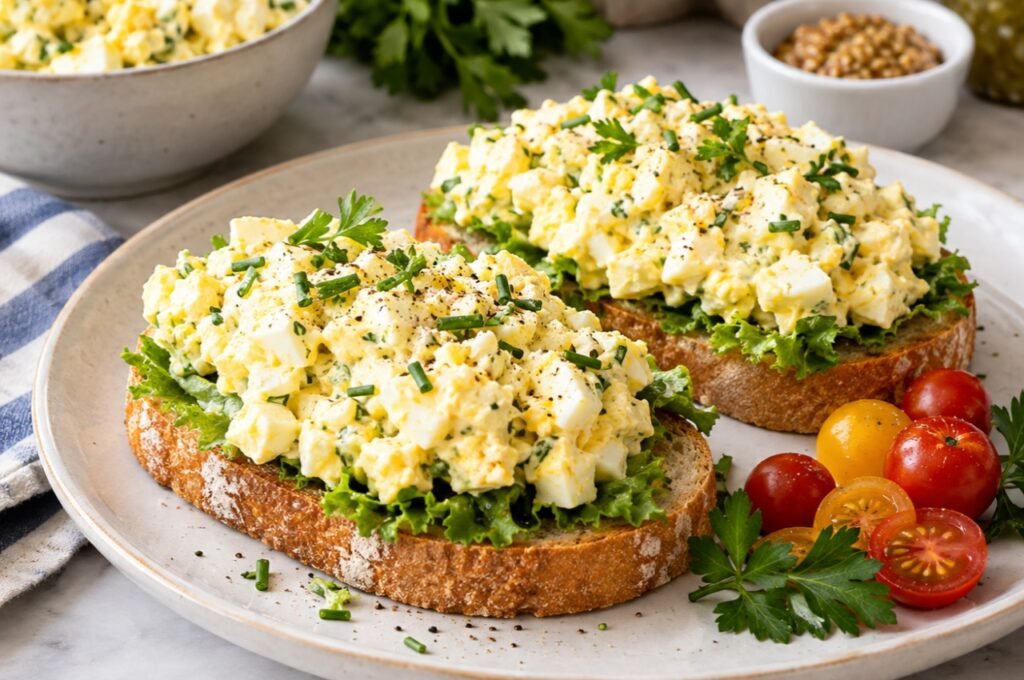

Ina Garten egg salad recipe transforms simple eggs into an elegant, satisfying meal. Creamy mayonnaise, sweet relish, whole-grain mustard, and fresh herbs create balanced flavor.
The chopped eggs remain pleasantly textured instead of becoming completely smooth This recipe works beautifully for lunch, brunch, picnics, and casual entertaining occasions.
Toasted whole-grain bread provides a sturdy base with delicious nutty flavor The finished egg salad tastes creamy, savory, tangy, fresh, and lightly sweet. Ina Garten’s method keeps preparation straightforward while emphasizing careful egg cooking.
Her official Egg Salad Tartines recipe uses twelve extra-large eggs.
It serves the salad over six slices of toasted whole-grain bread.
Recipe Information
| Recipe Information | Details |
|---|---|
| Recipe Name | Ina Garten Egg Salad Recipe |
| Official Recipe Style | Egg Salad Tartines |
| Preparation Time | About 10 minutes |
| Cooking Time | About 10 minutes |
| Cooling Time | About 10–20 minutes |
| Total Time | Approximately 30–40 minutes |
| Servings | 3–6 |
| Difficulty | Beginner |
| Cuisine | American |
| Main Method | Boiling, chopping, mixing |
| Serving Style | Tartines, sandwiches, salad |
| Main Ingredient | Extra-large eggs |
| Best Served | Cool or room temperature |
About the Ina Garten Egg Salad Recipe
The Ina Garten egg salad recipe is a refined version of familiar egg salad.
Her official recipe is presented as Egg Salad Tartines on her website.
It combines hard-boiled eggs with mayonnaise, sweet relish, and whole-grain mustard.
Fresh dill or chives add herbal freshness without overpowering the eggs.
Kosher salt and freshly ground pepper provide the essential final seasoning.
Instead of serving the mixture inside ordinary sandwich bread, Garten uses toast.
The whole-grain bread adds texture and a pleasantly nutty flavor.
The toast also provides enough structure for the creamy egg mixture.
This makes the recipe especially suitable for brunches and light lunches.
The preparation method is uncomplicated, but several details affect the final texture.
The eggs need careful cooking so their whites stay tender.
They should also cool sufficiently before peeling and chopping them.
Garten’s method then uses a food processor for controlled chopping.
The goal is chopped eggs rather than a completely smooth paste.
Sweet relish gives the recipe a subtle sweet-and-tangy character.
Whole-grain mustard contributes mild sharpness and visible mustard seeds.
Mayonnaise binds everything together while adding richness and creaminess. Fresh dill or chives provide a bright herbal note throughout.
This combination makes the salad flavorful without requiring complicated ingredients.
It also allows several easy adjustments based on personal taste.
You can change the bread, herbs, or serving presentation easily.
However, the basic ingredient balance is worth preserving for classic results.
What Makes This Egg Salad Different?
Many egg salads rely heavily on mayonnaise for their flavor.
This version creates more contrast through relish, mustard, and fresh herbs.
The relish brings sweetness while mustard contributes gentle savory sharpness.The herbs prevent the creamy mixture from tasting too heavy.
The chopped egg texture also deserves special attention during preparation.
Overprocessing can make egg salad dense, pasty, and less appealing.
Underprocessing can leave unusually large pieces that do not bind well.
Short food-processor pulses provide better control than continuous processing.
Ingredients for Ina Garten Egg Salad Recipe
The official recipe uses a relatively short ingredient list.
That simplicity makes ingredient quality particularly important for final flavor.
| Ingredient | Quantity | Purpose |
|---|---|---|
| Extra-large eggs | 12 | Main protein and salad base |
| Good mayonnaise | ⅓ cup | Creaminess and binding |
| Sweet relish | ¼ cup | Sweetness, acidity, and texture |
| Whole-grain mustard | 2 teaspoons | Tangy depth and texture |
| Fresh dill or chives | 1 tablespoon | Fresh herbal flavor |
| Kosher salt | 1½ teaspoons | Overall seasoning |
| Freshly ground black pepper | ¾ teaspoon | Gentle peppery warmth |
| Whole-grain bread | 6 slices | Toasted serving base |
| Extra dill or chives | For garnish | Fresh finishing flavor |
The official recipe specifies twelve extra-large eggs and six bread slices.
It lists good mayonnaise, sweet relish, whole-grain mustard, and fresh herbs.The recipe also uses kosher salt and freshly ground black pepper.
Eggs
Eggs provide the structure, protein, richness, and familiar flavor here.
Extra-large eggs match the quantities specified in Garten’s official recipe.
Large eggs can work, although the finished mixture may be slightly different.
Choose eggs with clean, intact shells and no unpleasant odors.
Older eggs can sometimes peel more easily after boiling.
However, proper cooling and peeling technique remain more important overall.
Mayonnaise
Mayonnaise creates the creamy base that holds the chopped eggs together.
Choose a good-quality mayonnaise with a balanced, not overly sweet flavor.
Full-fat mayonnaise generally provides the richest and smoothest texture.
Avoid adding the entire amount immediately when making personal adjustments.
Different mayonnaise brands vary considerably in thickness and seasoning. Adding gradually can help you control the final consistency.
Sweet Relish
Sweet relish is one of the recipe’s defining flavor components.
It adds small pieces of pickle with sweetness and gentle acidity.
The relish also prevents the egg mixture from tasting completely rich.
Drain excessively watery relish before adding it to the mixture.
Too much liquid can make the finished egg salad loose.
A balanced relish should contribute flavor without overwhelming the mayonnaise.
Whole-Grain Mustard
Whole-grain mustard adds tanginess without dominating the other ingredients.
Its mustard seeds also create tiny bursts of texture throughout each bite.
Do not substitute large amounts of yellow mustard without adjusting seasoning.
Fresh Dill or Chives
Fresh dill provides a grassy, slightly anise-like herbal character.
Chives provide a milder onion flavor with a fresh finish.
Both options work well, depending on your preferred flavor profile.
Whole-Grain Bread
Whole-grain bread adds structure and contrast to creamy egg salad.
Toast it enough to become firm without making it extremely hard.
A rustic loaf, country bread, or quality sandwich bread works well.
Ingredient Substitutions
Substitutions can make the recipe easier to prepare with available ingredients.
However, every substitution changes the flavor or texture slightly.
| Original Ingredient | Possible Substitute | Expected Difference |
|---|---|---|
| Extra-large eggs | Large eggs | Slightly smaller egg pieces and less volume |
| Sweet relish | Finely chopped sweet pickles | Similar flavor with more noticeable texture |
| Whole-grain mustard | Dijon mustard | Smoother texture and sharper mustard flavor |
| Fresh dill | Fresh chives | Milder, onion-like herbal flavor |
| Fresh chives | Fresh dill | More aromatic and slightly grassy flavor |
| Mayonnaise | Greek yogurt | Tangier and lighter texture |
| Whole-grain bread | Sourdough | More pronounced acidity and chew |
| Whole-grain bread | Brioche | Softer, richer, slightly sweeter serving |
Can Greek Yogurt Replace Mayonnaise?
Greek yogurt can replace some mayonnaise when a lighter dressing is preferred.
However, the resulting egg salad will taste tangier and less rich.
For the closest texture, replace only part of the mayonnaise.
Can Dijon Replace Whole-Grain Mustard?
Yes, Dijon mustard can replace whole-grain mustard when necessary.
The mixture will lose the small mustard-seed texture from the original. Dijon may also provide a somewhat sharper mustard flavor.
Can Sweet Relish Be Replaced?
Finely chopped sweet pickles provide the closest practical replacement. Drain them well before mixing them into the egg salad.
Dill pickle relish creates a less sweet, more savory result.
Equipment Needed
You do not need specialized equipment for this recipe.
- Large saucepan for boiling the eggs
- Large bowl for cooling the cooked eggs
- Colander for draining
- Cutting board for preparation
- Sharp knife for bread and garnish
- Food processor with steel blade
- Mixing bowl
- Fork for gently combining the salad
- Serving board or platter
- Toaster or skillet for preparing bread
A food processor is particularly useful for reproducing Garten’s intended texture. You can also chop the eggs manually with a sharp knife. Manual chopping gives you more direct control over egg-piece size.
Preparation Before Cooking
Good preparation makes the cooking process faster and more consistent. Measure the ingredients before beginning the egg-cooking process.
Prepare the Eggs
- Arrange the eggs carefully so their shells remain intact.
- Place the eggs where they can be transferred safely.
- Prepare a bowl or container for cooling the cooked eggs.
Prepare the Other Ingredients
- Measure the mayonnaise into a small bowl or measuring cup.
- Measure the sweet relish and drain excessive liquid.
- Measure the whole-grain mustard separately for easy mixing.
- Finely mince the dill or chives before preparing the eggs.
- Measure the salt and freshly ground black pepper.
- Prepare six bread slices for toasting later.
Prepare the Work Area
Keep the cutting board clean and completely dry before chopping.
Place the food processor near the mixing bowl for easy transfer.
Have a serving platter ready before assembling the tartines.
Preparing these items first prevents unnecessary interruptions during cooking.It also makes the recipe easier for beginners to follow confidently.
Step-by-Step Ina Garten Egg Salad Recipe
Step 1: Bring the Water to a Boil
Fill a large pot with enough water for all twelve eggs.
The water should comfortably cover the eggs during cooking.
Bring the water to a full boil over medium-high or high heat.
Watch for vigorous bubbles moving continuously across the surface.
Avoid dropping cold eggs roughly into rapidly boiling water.
Carefully lower each egg using a spoon or suitable utensil.
This reduces the chance of shells cracking from sudden impact.
Once the eggs are submerged, lower the heat slightly.
The water should continue maintaining a gentle simmer.
Step 2: Cook the Eggs
Cook the eggs at a gentle simmer for approximately ten minutes.
Keep the water hot without allowing extremely violent boiling.
A calmer simmer helps reduce unnecessary shell movement.
The eggs should remain completely submerged throughout the cooking process.
If water evaporates noticeably, add enough hot water carefully.
Avoid repeatedly stirring the eggs during cooking.
After about ten minutes, remove the pot from heat.
Drain the hot water carefully without dropping the eggs.
The centers should be fully cooked and firm.
The official recipe uses ten minutes of simmering for the eggs.
Step 3: Cool the Eggs
Refill the pot with cool tap water after draining.
This rapidly lowers the egg temperature and slows further cooking.
Allow the eggs to cool until they become comfortable to handle.
Cooling prevents the yolks from continuing to cook excessively.
It also makes the shells easier to remove without damaging whites.
Do not begin peeling while the eggs remain dangerously hot.
For an even faster cooling process, use an ice-water bath.
The eggs should feel cool before you begin peeling them.
Step 4: Peel the Eggs Carefully
Tap both ends of each egg against a board.
Roll the egg gently between your hand and the board.
Continue until the shell develops many fine cracks.
Peel the shell carefully under cool running water.
The water can help loosen small pieces of stubborn shell.
Start gently around the cracked areas rather than digging aggressively.
Rinse the peeled eggs briefly if shell fragments remain.
Pat them dry before placing them inside the food processor.
Step 5: Prepare the Egg Texture
Place the peeled eggs into the food processor bowl.
Fit the processor with its steel blade before starting.
Keep the lid securely closed during processing.
Pulse the eggs approximately ten to twelve times.
Use short pulses instead of running the machine continuously.
Stop when the eggs are chopped into small, distinct pieces.
The mixture should not become a smooth egg paste.
Visible egg pieces should remain throughout the chopped mixture.
This texture provides a more pleasant bite in the finished tartine.
The official recipe specifically recommends ten to twelve pulses.
Step 6: Combine the Main Ingredients
Transfer the chopped eggs into a clean mixing bowl.
Add the mayonnaise, sweet relish, and whole-grain mustard.
Add the minced dill or chives according to your preference.
Season with kosher salt and freshly ground black pepper.
Use a fork to combine everything gently and evenly.
Avoid vigorous stirring that can turn the eggs overly dense.
The dressing should lightly coat the chopped egg pieces.
You should still see distinct pieces throughout the mixture.
Step 7: Check the Seasoning
Taste a small amount before preparing the toast.
Check whether the salt and pepper taste balanced.
Remember that relish and mustard already provide noticeable seasoning.
Add a small amount of seasoning if necessary.
Mix gently after each small adjustment to prevent over-seasoning.
The final flavor should taste creamy, tangy, savory, and lightly sweet.
Avoid adding large quantities of mayonnaise simply for creaminess.
Too much mayonnaise can overpower the egg and mustard flavors.
Step 8: Toast the Bread
Toast six slices of whole-grain bread until lightly crisp.
Aim for a firm surface with some remaining interior softness.
Avoid burning the bread because bitterness will dominate the topping.
A toaster provides consistent results with minimal effort.
A skillet can create more pronounced browning when preferred.
Let very hot toast cool briefly before adding the salad.
This prevents excessive heat from softening the creamy mixture immediately.
Step 9: Assemble the Tartines
Place the toasted bread slices on a clean serving board.
Spread the egg salad generously across each slice.
Create an even layer rather than a tall central mound.
The official recipe recommends spreading the egg salad thickly.
Add a small amount of fresh dill or chopped chives.
A light final sprinkle of salt and pepper can finish presentation.
Keep garnishes restrained so the egg salad remains the focus.
Step 10: Serve
Serve the finished tartines at room temperature for best flavor.
You can serve them whole or cut them into halves.
Smaller pieces work particularly well for brunch and entertaining platters.
The official recipe serves six tartines and lists three to six servings.
Cooking Tips for Better Egg Salad
Small technique improvements can make this simple recipe significantly better.
- Use quality eggs because their flavor remains prominent.
- Avoid overcooking the eggs because rubbery whites reduce enjoyment.
- Cool the eggs thoroughly before peeling them.
- Drain watery relish carefully before adding it.
- Pulse the eggs instead of continuously processing them.
- Keep some visible egg pieces for a pleasant texture.
- Use fresh herbs whenever possible for brighter flavor.
- Add mayonnaise gradually if you prefer firmer egg salad.
- Taste before adding extra salt because relish contains seasoning.
- Toast bread until sturdy enough to support the filling.
- Assemble tartines shortly before serving for better bread texture.
- Keep garnishes simple so they complement rather than dominate.
Common Mistakes and How to Fix Them
| Problem | Possible Cause | Solution |
|---|---|---|
| Egg salad becomes pasty | Eggs were overprocessed | Use short pulses and stop earlier |
| Mixture becomes watery | Excess relish liquid | Drain relish thoroughly |
| Eggs become rubbery | Excessive cooking | Use the recommended cooking time |
| Shells peel poorly | Eggs were too fresh or insufficiently cooled | Cool thoroughly before peeling |
| Salad tastes bland | Insufficient seasoning | Adjust salt, pepper, mustard, or herbs |
| Salad tastes too sweet | Excess relish | Add a little more egg and mustard |
| Salad tastes too rich | Too much mayonnaise | Add chopped egg or slightly increase mustard |
| Bread becomes soggy | Salad added too early | Toast bread and assemble shortly before serving |
| Mustard dominates | Too much mustard added | Balance with additional egg and mayonnaise |
| Herbs disappear | Herbs were old or used sparingly | Use fresh herbs and chop finely |
| Large egg chunks remain | Insufficient chopping | Pulse several additional times |
| Salad lacks texture | Eggs were processed too finely | Stop processing while pieces remain visible |
Overprocessing the Eggs
This is probably the easiest texture mistake to make.
A food processor can turn chopped eggs into paste very quickly.
Use short pulses and inspect the mixture between batches.
Adding Too Much Dressing
Egg salad should be creamy without becoming loose or soupy.
Add dressing gradually when making adjustments to the recipe.
The finished mixture should hold together on toasted bread.
Making the Toast Too Soft
Soft bread can collapse under a generous layer of egg salad.
Toast until the surface feels firm but remains pleasant to bite.
Allow the toast to cool briefly before assembling the tartines.
Recipe Variations
The original combination works beautifully, but several variations remain practical.
Classic Chive Version
Use fresh chives instead of dill for a gentle onion flavor.
Chives work particularly well when serving the salad for brunch.
Their mild character keeps the overall flavor balanced.
Dill-Lovers Version
Use fresh dill generously when you prefer stronger herbal flavor.
Dill pairs naturally with eggs, mustard, and sweet pickle relish.
Chop it finely so every bite receives some fresh herb.
Extra-Tangy Version
Increase the mustard slightly for a sharper, more savory result.
You can also use a less sweet relish if preferred.
Keep adjustments modest so the eggs remain the dominant ingredient.
Crunchy Egg Salad
Add a small amount of finely diced celery.
The celery creates crisp contrast against the creamy egg mixture.
Keep the pieces small so they do not overpower the eggs.
Lighter Version
Replace part of the mayonnaise with plain Greek yogurt.
This creates a tangier flavor with a somewhat lighter mouthfeel.
Use enough mayonnaise to preserve the desired creamy consistency.
Open-Faced Brunch Version
Serve the egg salad over larger toasted bread slices.
Top each tartine with a small amount of fresh herbs.
Thin radish slices can provide attractive color and crisp texture.
Kid-Friendly Version
Reduce the mustard slightly for a milder overall flavor.
Keep the egg pieces small and the dressing creamy.
Use familiar sandwich bread when whole-grain bread seems too strong.
Spicy Version
Add a small amount of finely minced jalapeño or hot sauce.
Introduce heat gradually because the base recipe remains quite delicate.
A little smoked paprika can also provide gentle warmth.
Serving Suggestions
The egg salad can work in several different meal settings.
For Breakfast
Serve the tartines with fresh fruit and a warm beverage.
Orange slices, berries, or melon provide refreshing sweetness.
Coffee, tea, or fresh juice complements the savory eggs nicely.
For Brunch
Arrange several tartines on a large serving board.
Garnish lightly with chopped chives or small dill sprigs.
Add fresh fruit and a simple green salad alongside.
For Lunch
Pair an egg salad tartine with vegetable soup.
A crisp cucumber salad also provides useful textural contrast.
For a lighter meal, serve the egg salad over greens.
For Picnics
Prepare the egg salad separately from the bread when possible.
Keep both components properly chilled during transportation.
Assemble the sandwiches shortly before eating to prevent sogginess.
For Entertaining
Cut the tartines into smaller portions for easy serving.
Small pieces work well on appetizer boards and brunch buffets.
Keep the garnish simple and consistent across each piece.
Storage and Reheating
Egg salad contains cooked eggs and mayonnaise, requiring careful refrigeration.
Do not leave the prepared mixture sitting unrefrigerated for extended periods.
| Storage Method | Recommendation |
|---|---|
| Refrigerator | Keep covered and properly chilled |
| Best Quality | Use within about 2 days |
| Bread Storage | Keep separately to prevent sogginess |
| Freezing | Not recommended for best texture |
| Reheating | Usually unnecessary |
| Serving After Refrigeration | Serve chilled or allow briefly to temper |
The official recipe specifically states that the prepared egg salad can be refrigerated for up to two days.
Refrigerating Egg Salad
Transfer leftovers into a clean, airtight container.
Refrigerate the mixture promptly after preparation and serving.
Keep the container closed to prevent odor absorption from other foods.
For best quality, use the salad within approximately two days.
Always discard leftovers that have been mishandled or appear spoiled.
Storing the Bread
Store toasted bread separately from the egg salad whenever possible.
This keeps the bread from absorbing moisture and becoming soft.
Toast fresh bread shortly before serving leftover egg salad.
Can You Freeze Egg Salad?
Freezing is generally not recommended for this recipe.
Mayonnaise can separate during freezing and thawing processes.
The cooked egg whites can also develop an unpleasant texture.
For the best result, prepare a manageable quantity instead.
The short refrigerated storage period makes fresh preparation practical.
Does Egg Salad Need Reheating?
Egg salad is normally served chilled or at room temperature.
There is no need to reheat the mixture before serving.
Heating mayonnaise-based egg salad can negatively affect its texture.
If serving chilled leftovers, simply stir them gently before serving.
Add fresh toast separately to restore the desired contrast.
Nutrition Information
Nutrition varies depending on the specific ingredients and serving size.
The following figures are approximate estimates rather than laboratory-tested nutritional values.
| Nutrient | Approximate Amount |
|---|---|
| Calories | Varies by serving size |
| Protein | Primarily supplied by eggs |
| Carbohydrates | Mainly supplied by relish and bread |
| Fat | Primarily supplied by eggs and mayonnaise |
| Fiber | Mainly supplied by whole-grain bread |
| Sodium | Influenced by mayonnaise, relish, mustard, and salt |
Actual nutrition changes considerably with mayonnaise brands and bread choices.
Serving size also strongly affects the nutritional amount consumed.
For more precise nutritional information, calculate using your exact ingredients.
Package labels provide the most reliable values for specific commercial products.
Expert Tips for Better Results
Keep the Egg Texture Deliberately Uneven
Perfectly uniform egg pieces are not necessary for good egg salad.
Slight variation creates a more interesting and satisfying texture.
Stop processing as soon as the pieces become appropriately small.
Control Moisture From the Relish
Relish can introduce more liquid than the recipe needs.
Drain excessive liquid before combining it with the eggs.
This simple step helps maintain a thick, spreadable consistency.
Season in Stages
Eggs absorb seasoning differently depending on their temperature and moisture.
Start with the specified quantities before making personal adjustments.
Taste after mixing because all ingredients contribute their own saltiness.
Protect the Bread
Toast should remain sturdy enough to support the creamy topping.
Very thin bread can become soft quickly under the egg salad.
A moderately thick slice provides better structural support.
Avoid Excessive Mixing
Gentle mixing keeps the chopped egg pieces clearly defined.
Aggressive stirring can compress the eggs into a dense mixture.
Fold everything together until the ingredients appear evenly distributed.
Prepare the Egg Salad Ahead
The salad can be prepared before serving when convenient.
A short refrigerated rest allows the flavors to settle together.
Keep the toast separate until shortly before serving.
Use Fresh Herbs for Finishing
Fresh herbs make a noticeable difference in this simple preparation.
Their aroma provides contrast against the creamy mayonnaise mixture.
Add a small amount immediately before serving for maximum freshness.
Choose the Right Serving Temperature
Very cold egg salad can taste less aromatic and flavorful.
Allow it to sit briefly before serving when conditions permit.
However, maintain safe refrigeration throughout storage and transportation.
What is the Ina Garten egg salad recipe?
The Ina Garten egg salad recipe is her Egg Salad Tartines preparation.It combines chopped hard-boiled eggs with mayonnaise, relish, mustard, and herbs.The mixture is served generously over toasted whole-grain bread.
How long should the eggs cook for this recipe?
Garten’s official recipe cooks the eggs for approximately ten minutes.The eggs are simmered after being carefully lowered into boiling water.They are then cooled before peeling and chopping.
How many eggs does Ina Garten use?
The official recipe uses twelve extra-large eggs.Those eggs are enough to prepare six generously topped tartines.The recipe lists three to six servings depending on portion size.
Can I use large eggs instead of extra-large eggs?
Yes, large eggs can be used when extra-large eggs are unavailable.The finished quantity will be slightly smaller than the original.You may need slightly less dressing depending on the final volume.
Why is my egg salad too dry?
Dry egg salad usually needs slightly more mayonnaise or another moist ingredient.Add mayonnaise gradually rather than adding a large amount immediately.Mix gently until the desired spreadable consistency develops.
How can I make the egg salad less rich?
Replace part of the mayonnaise with plain Greek yogurt.
You can also serve smaller portions over crisp greens.
Adding crunchy vegetables can create more contrast with the creamy mixture.