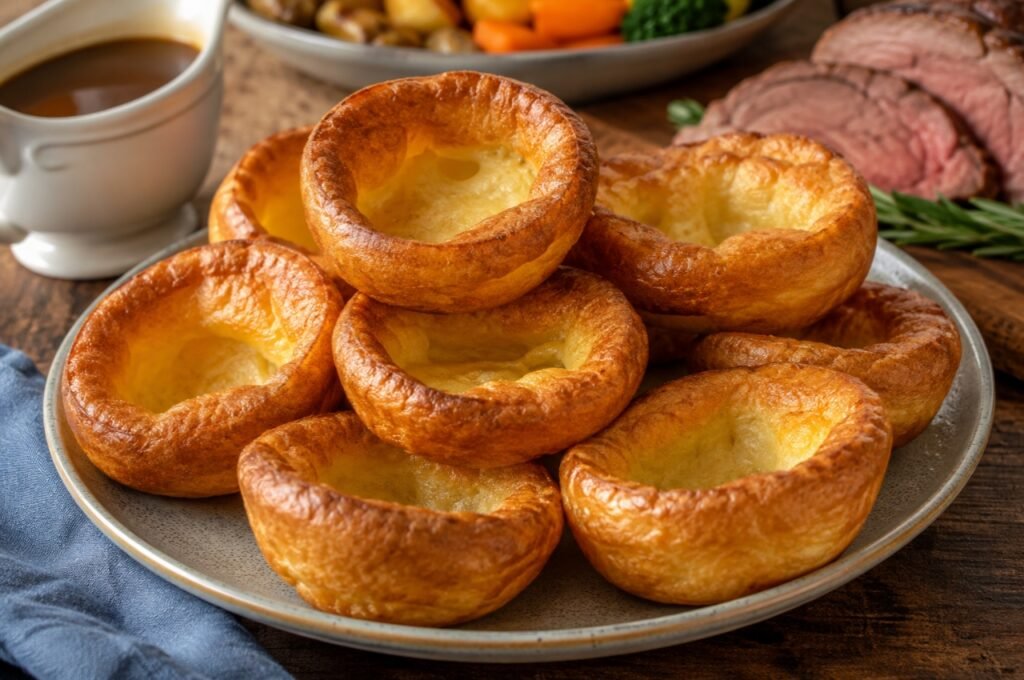

A classic Yorkshire pudding recipe is one of the simplest and most impressive dishes in British cooking. Made with just a few everyday ingredients such as flour, eggs, milk, salt, and hot cooking fat, Yorkshire pudding transforms into a beautifully crisp, golden-brown side dish with tall edges and a soft, airy center. It is traditionally served with roast beef, vegetables, and plenty of rich gravy, but it can also be enjoyed with chicken, sausages, roasted vegetables, or other savory meals.
The secret to a successful Yorkshire pudding recipe is not complicated ingredients. Instead, the most important factors are a smooth batter, a properly heated oven, extremely hot fat, and avoiding the temptation to open the oven door while the puddings are rising. Traditional recipes use a simple batter similar to pancake batter, while modern recipes often allow the batter to rest before baking for a lighter and more impressive rise.
If you have ever wondered how to make Yorkshire puddings that are crisp on the outside, light in the middle, and beautifully puffed, this detailed guide will walk you through every stage. You will learn the best ingredients, exact measurements, preparation method, baking tips, common mistakes, storage instructions, serving ideas, variations, and answers to frequently asked questions.
What Is Yorkshire Pudding?
Yorkshire pudding is a traditional British baked batter dish made primarily from flour, eggs, and milk or water. Despite its name, it is not a sweet pudding like the creamy desserts commonly associated with the word “pudding” in some countries. It is a savory accompaniment traditionally associated with roast dinners, especially roast beef.
The batter is poured into a pan containing very hot oil, beef dripping, lard, or another suitable cooking fat. When the batter meets the hot fat and enters a very hot oven, steam and expanding air help the mixture rise dramatically. The result is a pudding with crisp, browned edges and a hollow or airy center that is perfect for catching gravy.
Yorkshire pudding has a long history in British cooking. An early printed version appeared as “dripping pudding” in 1737, while Hannah Glasse published a recipe using the name “Yorkshire pudding” in 1747. The dish developed as a practical way of using the fat and juices produced while roasting meat.
Why This Yorkshire Pudding Recipe Works
This Yorkshire pudding recipe focuses on the techniques that make the biggest difference. The batter should be smooth and relatively thin, similar to a pancake batter. Resting the batter can help improve its texture, while heating the cooking tin and fat thoroughly creates the immediate burst of heat needed for a dramatic rise.
The oven should be properly preheated before the batter goes into the tin. The fat must be hot enough to sizzle when the batter is added. Once the puddings are in the oven, keeping the oven door closed is essential because a sudden drop in temperature can interfere with the rise. Many established recipes emphasize hot fat, a hot oven, and avoiding unnecessary opening of the oven door.
Yorkshire Pudding Recipe at a Glance
| Category | Details |
|---|---|
| Recipe Name | Yorkshire Pudding Recipe |
| Cuisine | British |
| Preparation Time | About 10 minutes |
| Batter Resting Time | 30 minutes to 1 hour |
| Cooking Time | About 20–30 minutes |
| Total Time | About 1 hour |
| Servings | 8 large or 12 smaller puddings |
| Difficulty | Easy |
| Main Ingredients | Flour, eggs, milk, salt, cooking fat |
| Best Oven Temperature | About 220°C–230°C |
| Best Texture | Crisp outside and light inside |
| Best Served With | Roast beef and gravy |
| Cooking Method | High-temperature oven baking |
Ingredients for Yorkshire Pudding Recipe
The ingredient list for a traditional Yorkshire pudding recipe is wonderfully short. The quality of the technique matters more than adding lots of ingredients.
Plain Flour
Use ordinary plain flour or all-purpose flour. It provides the structure that allows the pudding to rise and hold its shape. Measure the flour accurately because too much flour can produce a heavy batter.
Eggs
Eggs provide structure, richness, and lift. They also help the batter set around the edges while the interior remains light and airy. Use fresh eggs when possible.
Whole Milk
Whole milk creates a rich batter with a pleasant texture. Semi-skimmed milk can also work, but whole milk gives the pudding a fuller flavor.
Salt
A small amount of salt enhances the flavor and balances the richness of the cooking fat.
Cooking Fat
Sunflower oil, vegetable oil, beef dripping, lard, or another high-temperature cooking fat can be used. Beef dripping is especially traditional and gives the puddings a rich savory flavor. Modern recipes also commonly use vegetable or sunflower oil.
Exact Ingredients
For approximately 8 large Yorkshire puddings, use:
| Ingredient | Quantity |
|---|---|
| Plain flour | 140 g |
| Large eggs | 4 |
| Whole milk | 200 ml |
| Salt | ½ teaspoon |
| Sunflower or vegetable oil | For the tin |
This proportion creates a smooth, pourable batter that works particularly well for individual Yorkshire puddings.
How to Make Yorkshire Pudding Recipe
Step 1: Prepare the Batter
Place the plain flour into a large mixing bowl. Add the salt and make a small space in the center. Crack the eggs into the bowl and whisk them into the flour.
Gradually add the milk while continuing to whisk. Adding the milk slowly helps prevent lumps from forming. Keep whisking until you have a smooth batter with no visible pockets of flour.
The finished batter should be fairly thin and pourable. It should resemble a smooth pancake batter rather than a thick cake mixture.
Step 2: Rest the Batter
Cover the batter and allow it to rest for at least 30 minutes. If you have more time, resting it for around an hour can be helpful.
Resting allows the flour to absorb the liquid and gives the batter time to settle. Some professional recipes specifically recommend resting Yorkshire pudding batter for at least an hour for a good rise.
You do not necessarily need to leave the batter overnight, but preparing it in advance can make the cooking process easier when you are preparing a large Sunday roast.
Step 3: Preheat the Oven
Preheat your oven to approximately 220°C to 230°C. A fan oven generally requires a slightly lower temperature than a conventional oven.
The oven needs to be completely hot before you begin baking. Yorkshire pudding depends heavily on high heat, especially during the first part of cooking.
Step 4: Heat the Cooking Tin
Add a small amount of oil or another suitable cooking fat to each section of a Yorkshire pudding tin or deep muffin tin.
Place the empty tin containing the fat into the hot oven and heat it for several minutes. The fat needs to become extremely hot before the batter is added.
This is one of the most important stages of the entire Yorkshire pudding recipe. If the fat is lukewarm, the batter may absorb the oil instead of immediately beginning to cook and rise.
Step 5: Pour in the Batter
Carefully remove the hot tin from the oven. Pour the rested batter into the hot fat, filling each section approximately one-third to halfway full.
You should hear a noticeable sizzle when the batter touches the hot fat. That sound is a good indication that the tin is hot enough.
Work quickly but carefully. The tin and fat are extremely hot, so avoid splashing the oil.
Step 6: Bake Without Opening the Oven
Return the tin to the oven immediately. Bake until the Yorkshire puddings are dramatically risen, golden brown, and crisp.
Depending on the size of your puddings and the exact oven temperature, this can take around 20–30 minutes. Smaller puddings may cook more quickly.
Most importantly, do not repeatedly open the oven door. The sudden temperature change can cause the puddings to lose their height.
Step 7: Serve Immediately
Yorkshire puddings are best served hot and fresh from the oven. Transfer them to a serving plate and serve immediately with roast meat, vegetables, and gravy.
The hollow center is perfect for holding gravy, making every bite crisp, savory, and delicious.
The Secret to Tall Yorkshire Puddings
The biggest question surrounding a Yorkshire pudding recipe is how to make the puddings rise high. Several factors work together.
First, the oven must be hot. Second, the cooking fat must be very hot. Third, the batter should be smooth and preferably rested. Fourth, the tin should not be overcrowded. Finally, the oven door should remain closed during baking.
The combination of hot fat and high oven temperature gives the batter an immediate burst of heat. Moisture in the batter turns into steam, helping expand the structure. As the outside cooks and becomes firm, the pudding holds its dramatic shape.
A good Yorkshire pudding should have crisp edges and a lighter center rather than being dense throughout.
Why Did My Yorkshire Puddings Not Rise?
There are several possible reasons.
The Fat Was Not Hot Enough
This is one of the most common problems. If the oil is not properly heated, the batter will begin cooking slowly rather than receiving the strong initial heat it needs.
The Oven Was Too Cool
Yorkshire puddings require a hot oven. Always preheat the oven fully before baking.
You Opened the Oven Door
Opening the door too early can release heat and interrupt the cooking process. Keep the door closed until the puddings have had enough time to set.
The Batter Was Too Thick
A very thick batter may produce heavy puddings. Add the milk gradually and aim for a smooth, pourable consistency.
The Tin Was Not Preheated
Putting batter into a cold tin can significantly reduce the initial heat needed for good expansion.
Too Much Batter Was Used
Overfilling each section can prevent the pudding from developing the classic shape. Leave sufficient space for the batter to expand.
Should Yorkshire Pudding Batter Be Rested?
Yes, resting is highly recommended for a reliable Yorkshire pudding recipe. A resting period of around 30 minutes to 1 hour gives the flour time to hydrate and allows the batter to become more uniform.
Some recipes recommend longer resting periods, including preparing the batter ahead of time. However, you do not need an elaborate process to make good Yorkshire puddings.
For home cooking, making the batter before preparing the rest of the meal and allowing it to rest while you prepare the roast is a practical approach.
Best Fat for Yorkshire Pudding
The cooking fat affects both flavor and texture.
Beef Dripping
Beef dripping is an excellent choice when serving Yorkshire puddings with roast beef. It creates a deeply savory flavor and connects the dish with its traditional roast-dinner roots.
Sunflower Oil
Sunflower oil is neutral in flavor and performs well at high temperatures. It is an easy choice for everyday cooking.
Vegetable Oil
Vegetable oil is another practical option. Its relatively neutral flavor allows the eggs and flour to remain the main flavors.
Lard
Lard can produce flavorful and crisp puddings and has a long history in British cooking.
Olive Oil
Some modern recipes use olive oil, but choose an oil suitable for the high temperature required. A neutral high-heat oil is often easier for achieving a traditional flavor.
Yorkshire Pudding Tin vs Muffin Tin
A dedicated Yorkshire pudding tin is ideal because its shape is designed for individual puddings. However, a standard deep muffin tin can also work very well.
A muffin tin produces smaller individual puddings that are excellent for family dinners or parties. A larger tin can produce bigger puddings with a wider hollow center.
If you use a muffin tin, make sure it can safely handle the high temperature required for the recipe.
Large Yorkshire Pudding
For a large family-style Yorkshire pudding, pour the batter into a larger roasting dish containing hot fat. This creates a large pudding that can be cut into portions.
The traditional style was historically associated with larger pans and roasting meat, while individual round puddings became increasingly common over time.
A large Yorkshire pudding is particularly impressive when served as part of a Sunday roast.
Mini Yorkshire Puddings
Mini Yorkshire puddings are perfect for appetizers, parties, and buffet-style meals. Use a smaller muffin tin and reduce the cooking time accordingly.
Fill each section with a modest amount of batter and watch them closely because smaller puddings can brown faster.
They can be filled with gravy, shredded beef, caramelized onions, or small pieces of roasted meat.
Yorkshire Pudding With Roast Beef
The classic pairing is roast beef, Yorkshire pudding, vegetables, and gravy. The crisp pudding provides texture while the gravy softens the center and adds rich flavor.
A traditional Sunday roast can include roast beef, crispy potatoes, carrots, peas, parsnips, cauliflower, green vegetables, and a generous amount of gravy.
The beauty of Yorkshire pudding is that its neutral savory batter works as a vehicle for the flavors surrounding it.
Yorkshire Pudding With Chicken
Although roast beef is the traditional partner, chicken works beautifully with Yorkshire pudding. Serve the puddings alongside roast chicken, crispy potatoes, vegetables, and chicken gravy.
The lighter flavor of chicken allows the crisp texture of the pudding to stand out.
Yorkshire Pudding With Sausages
Yorkshire pudding batter can also be used to create toad in the hole. Sausages are placed in a hot baking dish and surrounded with batter before being baked until the batter rises and becomes golden.
This is one of the most comforting ways to enjoy the same basic batter.
Vegetarian Yorkshire Pudding Meal
You can make a delicious vegetarian meal by serving Yorkshire puddings with roasted vegetables, onion gravy, mashed potatoes, peas, carrots, and cauliflower.
If you want the entire meal to be vegetarian, choose a suitable vegetable oil rather than beef dripping.
Common Yorkshire Pudding Mistakes
Using Cold Fat
Cold fat is one of the easiest ways to end up with flat, greasy puddings.
Using a Cold Tin
The cooking tin should be heated along with the fat.
Making the Batter Too Thick
A thick batter can produce a heavy result.
Overmixing After Resting
Whisk the batter enough to make it smooth, but there is no need for excessive mixing once the flour is fully incorporated.
Opening the Oven Too Soon
This can cause the puddings to collapse before their structure has set.
Removing Them Too Early
The outside may look brown while the center is still soft. Give the puddings enough time to become crisp and properly cooked.
How to Make Yorkshire Pudding Ahead of Time
You can prepare the batter ahead of time and keep it covered until you are ready to cook. This is particularly convenient when preparing a large Sunday roast.
The puddings themselves are best freshly baked, but they can also be reheated when necessary.
For the best texture, serve them as soon as possible after baking.
Can Yorkshire Puddings Be Frozen?
Yes, Yorkshire puddings can be frozen after baking. Allow them to cool completely before placing them in an airtight freezer-safe container or bag.
When you are ready to serve them, reheat them in a hot oven until crisp and warmed through.
Freezing is useful when making a large batch for future meals. It can also save time during busy holidays or family gatherings.
How to Store Yorkshire Puddings
Allow leftover puddings to cool before storing them in an airtight container. Refrigerate them and use them within a few days for the best quality.
When reheating, use an oven rather than a microwave if possible. The oven helps restore some of the crispness that can be lost during refrigeration.
How to Reheat Yorkshire Puddings
Preheat the oven to a high temperature and place the puddings on a baking tray. Heat until they are hot and crisp.
Avoid excessive reheating because the edges can become overly dry.
The microwave is convenient but usually produces a softer texture rather than the crisp exterior associated with a freshly baked Yorkshire pudding.
Tips for Perfect Yorkshire Pudding Recipe
- Use accurate ingredient measurements.
- Whisk the batter until completely smooth.
- Let the batter rest before cooking.
- Preheat the oven thoroughly.
- Heat the oil or dripping until very hot.
- Use a suitable deep tin.
- Pour the batter quickly into the hot fat.
- Return the tin to the oven immediately.
- Do not open the oven door too early.
- Bake until deeply golden and crisp.
- Serve immediately for the best texture.
- Experiment with different fats for different flavors.
Yorkshire Pudding Recipe Troubleshooting Table
| Problem | Possible Cause | Solution |
|---|---|---|
| Puddings did not rise | Oven or fat not hot enough | Preheat both thoroughly |
| Puddings are greasy | Fat was not hot | Heat the fat until sizzling |
| Puddings are dense | Batter too thick | Add enough milk for a pourable batter |
| Puddings collapsed | Oven opened too early | Keep the oven door closed |
| Bottom is soggy | Not baked long enough | Continue baking until crisp |
| Puddings are pale | Insufficient heat or time | Bake until deeply golden |
| Batter has lumps | Milk added too quickly | Add milk gradually while whisking |
| Puddings stick | Insufficient fat or unsuitable tin | Grease the tin properly |
| Uneven puddings | Uneven batter distribution | Divide batter evenly |
| Burnt edges | Oven too hot or cooking too long | Adjust temperature and cooking time |
How to Get Crispy Yorkshire Puddings
Crispiness begins with the cooking fat. The fat must be hot before the batter is introduced. The oven must also be hot enough to create rapid expansion.
Do not overcrowd the oven if your appliance struggles to maintain temperature. Consistent heat is important.
Once the puddings have risen, continue baking until the edges become a rich golden brown. The longer they cook, the more the outer shell dries and crisps, although you should avoid burning them.
How to Make Yorkshire Puddings Without Beef Dripping
You do not need beef dripping to make a delicious Yorkshire pudding recipe. Sunflower oil and vegetable oil are practical alternatives.
Using neutral oil creates puddings that are crisp and flavorful without adding a strong meat flavor. This makes them suitable for vegetarian meals.
The key is the temperature rather than the specific type of fat.
Can You Make Yorkshire Pudding Without Whole Milk?
Whole milk gives a rich texture, but other milk options can sometimes be used. The consistency of the batter is more important than choosing an expensive ingredient.
If using a lower-fat milk, the final result may be slightly different in richness, but the puddings can still rise successfully when the batter and cooking technique are correct.
Can Yorkshire Pudding Batter Be Made the Night Before?
Yes, preparing the batter in advance can be convenient. Keep it covered and refrigerated if making it ahead, then allow it to return toward a suitable cooking temperature before baking according to your preferred method.
A rested batter can be particularly useful when preparing a large meal because most of the preparation is finished before the oven becomes busy.
How to Make Gluten-Free Yorkshire Pudding
A gluten-free version can be made by replacing regular plain flour with a suitable gluten-free flour blend designed for baking.
The texture may differ slightly from traditional Yorkshire puddings, so testing the flour blend is recommended before making a large batch for guests.
Use a gluten-free flour blend that provides a similar consistency to ordinary flour and make sure all other ingredients are suitable for your dietary requirements.
Yorkshire Pudding Flavor Variations
Although the classic recipe is delicious on its own, you can add subtle flavors.
Herb Yorkshire Puddings
Add finely chopped rosemary, thyme, or parsley to the batter for a fragrant variation.
Mustard Yorkshire Puddings
A small amount of mustard can provide a gentle savory kick, particularly when the puddings are served with beef.
Black Pepper Yorkshire Puddings
Freshly ground black pepper adds warmth without changing the basic character of the recipe.
Horseradish Yorkshire Puddings
Horseradish pairs naturally with roast beef and can be incorporated into the batter for a stronger savory flavor. Some professional recipes use horseradish as an optional variation.
Nutrition and Portion Considerations
Yorkshire pudding is primarily made from flour, eggs, milk, and cooking fat, so its nutritional profile depends heavily on the amount of fat used and the size of each pudding.
Because puddings vary considerably in size, nutrition information can also vary. For a balanced meal, serve a moderate portion with plenty of vegetables and a suitable protein source.
Remember that gravy and additional cooking fat also contribute to the overall nutritional value of the meal.
Why Yorkshire Pudding Is So Popular
The popularity of Yorkshire pudding comes from its combination of simplicity and texture. It uses inexpensive ingredients but creates something visually impressive.
The contrast between crisp edges and soft interior makes it especially satisfying with gravy. It also fits naturally into the traditional British roast dinner, where it provides a delicious way to enjoy the juices and sauces from the meal.
Historically, its economical ingredients made it practical for households, while its ability to absorb gravy made it filling and flavorful.
The History of Yorkshire Pudding
The history of Yorkshire pudding is closely connected to traditional British roasting. Early versions were cooked beneath roasting meat so that the batter could capture the dripping fat.
A recipe for a similar “dripping pudding” appeared in 1737. Hannah Glasse later published a recipe called Yorkshire pudding in 1747, helping establish the name that remains familiar today.
Originally, the pudding could be served before the meat. The idea was practical: a filling batter pudding could help satisfy diners before the more expensive meat was served.
Over time, the dish became strongly associated with roast beef and eventually became one of the most recognizable parts of a British Sunday roast.
Yorkshire Pudding vs Popovers
Yorkshire pudding and American popovers share similarities because both rely on an egg-rich batter that expands dramatically during baking.
The major difference is culinary tradition. Yorkshire pudding is strongly associated with British roast dinners and is commonly cooked in hot fat, while popovers are usually baked as individual breads.
Both have airy interiors and crisp exteriors, but their serving traditions are different.
Yorkshire Pudding vs Pancakes
The batter for Yorkshire pudding resembles pancake batter, which is why the two foods can appear similar before cooking.
The major difference is the cooking method. Pancakes are generally cooked on a flat surface, while Yorkshire pudding is poured into extremely hot fat and baked at high temperature.
This intense oven heat allows the batter to rise dramatically and develop crisp edges.
Best Way to Serve Yorkshire Pudding
The traditional way to serve Yorkshire pudding is alongside roast beef, roasted potatoes, vegetables, and gravy.
Pour the gravy into the hollow center or around the pudding. The crisp exterior absorbs some of the gravy while retaining enough structure to provide texture.
For a classic plate, try:
- Roast beef
- Yorkshire pudding
- Roast potatoes
- Carrots
- Peas
- Parsnips
- Cauliflower
- Onion gravy
- Horseradish sauce
Yorkshire Pudding for Sunday Roast
A Sunday roast is one of the best occasions for making this recipe. Prepare the batter early, allow it to rest, and then bake the puddings while the meat rests.
Timing is important because Yorkshire puddings are best served hot. Having the batter ready ahead of time makes the final stage much easier.
If you are serving several people, make enough puddings so everyone receives at least one generous portion.
Yorkshire Pudding for Christmas Dinner
Yorkshire puddings can also be served during Christmas dinner. They work especially well with roast beef, although many families enjoy them alongside other roasted meats.
For a large gathering, mini Yorkshire puddings are convenient because they are easy to portion and can be reheated when necessary.
Expert Tips for Restaurant-Style Yorkshire Puddings
Use a metal tin that conducts heat efficiently. Make sure the tin and oil are thoroughly hot before adding the batter.
Keep the batter smooth and pourable. Rest it before cooking when possible.
Use a jug for pouring the batter because it allows you to distribute the mixture quickly and evenly.
Do not leave the oven door open while transferring the tin. The batter needs to go from the bowl to the hot fat and then back into the oven as quickly and safely as possible.
Most importantly, do not become discouraged if your first batch is not perfect. Small differences in oven temperature, tin size, batter quantity, and cooking fat can affect the final result.
A Simple Yorkshire Pudding Recipe for Beginners
If you are making Yorkshire puddings for the first time, keep the process simple.
Combine 140 grams of plain flour with four eggs and half a teaspoon of salt. Gradually whisk in 200 ml of whole milk until smooth. Rest the batter for about 30 minutes to one hour.
Heat the oven to approximately 220°C–230°C. Add oil to the tin and heat it until very hot. Carefully pour the batter into the hot oil and bake until the puddings are tall, golden, and crisp.
Do not open the oven during the early cooking stage. Serve immediately with gravy.
This straightforward method gives beginners a reliable starting point and can be adjusted after you become familiar with your oven.
What is the secret to a good Yorkshire pudding recipe?
The main secrets are a smooth batter, a properly preheated oven, very hot cooking fat, and avoiding opening the oven door too early. Resting the batter before baking can also help create a lighter and better-risen Yorkshire pudding.
Should Yorkshire pudding batter be thick or thin?
Yorkshire pudding batter should be smooth and fairly thin, similar to pancake batter. A batter that is too thick can result in dense or heavy puddings.
How long should Yorkshire pudding batter rest?
For a reliable Yorkshire pudding recipe, allow the batter to rest for at least 30 minutes. Resting it for around 1 hour is also a convenient option and can improve the texture.
Why did my Yorkshire puddings not rise?
The most common reasons are that the oven was not hot enough, the cooking fat was not sufficiently heated, the batter was too thick, or the oven door was opened too early. Make sure the oven and fat are thoroughly hot before adding the batter.
What temperature is best for Yorkshire pudding?
A high temperature of around 220°C to 230°C is commonly suitable for Yorkshire pudding. Fan ovens may require a slightly lower setting, depending on the appliance.
Can I use beef dripping for Yorkshire pudding?
Yes. Beef dripping is a traditional choice and works particularly well when Yorkshire puddings are served with roast beef and gravy. It gives the puddings a rich, savory flavor.
Why are my Yorkshire puddings greasy?
Greasy Yorkshire puddings can result from using fat that was not hot enough when the batter was added. Make sure the cooking fat is thoroughly heated before pouring in the batter.
Can Yorkshire puddings be frozen?
Yes. Allow cooked Yorkshire puddings to cool completely before freezing them in an airtight container or freezer-safe bag. Reheat them in a hot oven to help restore their crisp texture.
Can I make Yorkshire pudding without beef dripping?
Absolutely. Sunflower oil, vegetable oil, or another suitable high-temperature cooking oil can be used. This also makes it easier to serve Yorkshire puddings with vegetarian meals.
How do I make Yorkshire puddings extra crispy?
Use very hot cooking fat, a fully preheated oven, and enough baking time. Do not open the oven door during the early stages of cooking, and serve the puddings immediately after baking.