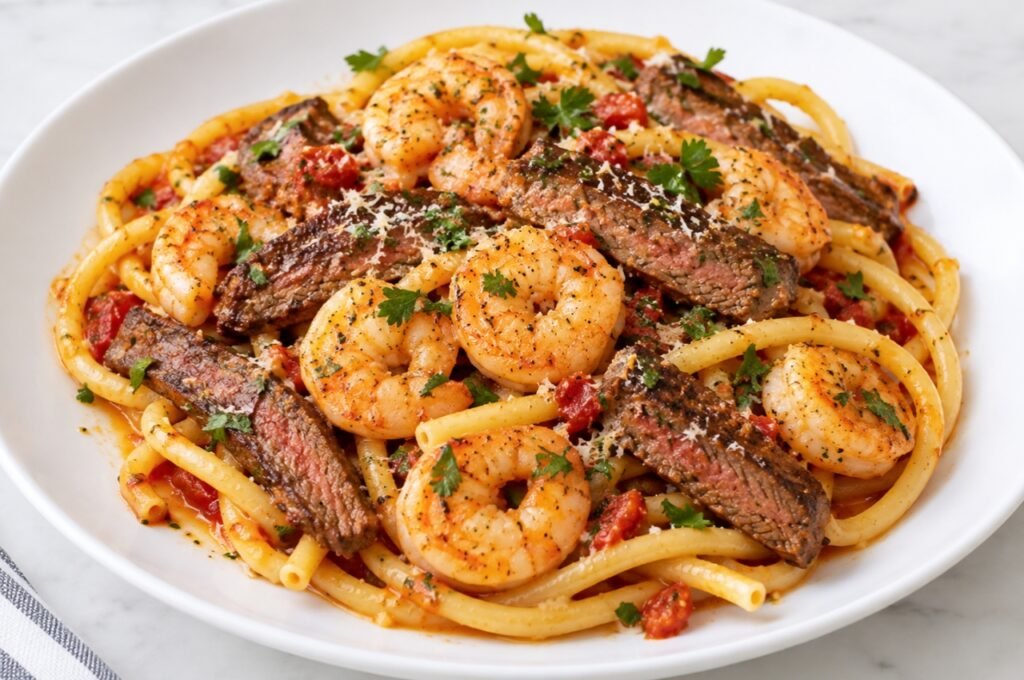

This recipe is designed for home cooks who want maximum flavor with straightforward ingredients. The steak brings a deep, savory bite, while shrimp adds a delicate sweetness that balances the spicy Calabrian-inspired sauce. Bucatini is especially useful because its hollow center captures the creamy sauce, giving every forkful plenty of flavor.
Alongside this indulgent dinner recipe, many people also enjoy simple self-care routines after a long day. That is where Glow Recipe Eye Patches can fit naturally into an evening routine. After preparing dinner and cleaning the kitchen, a cooling eye patch routine can be a relaxing way to transition into a slower nighttime routine.
Calabrian Steak and Shrimp Bucatini Recipe at a Glance
| Recipe Detail | Information |
|---|---|
| Recipe Name | Calabrian Steak and Shrimp Bucatini |
| Cuisine Inspiration | Italian-inspired |
| Main Protein | Steak and shrimp |
| Pasta | Bucatini |
| Main Flavor | Spicy, creamy, garlicky, savory |
| Preparation Time | About 20 minutes |
| Cooking Time | About 25 minutes |
| Total Time | About 45 minutes |
| Servings | 4 |
| Difficulty | Intermediate |
| Best For | Dinner, date night, family meals, entertaining |
| Flavor Profile | Creamy, spicy, savory, slightly tangy |
Why You’ll Love This Calabrian Steak and Shrimp Bucatini Recipe
The biggest attraction of this Calabrian Steak and Shrimp Bucatini Recipe is the combination of textures and flavors. You get juicy pieces of steak, tender shrimp, chewy bucatini, and a creamy sauce that brings everything together.
The Calabrian chili element gives the dish a noticeable kick. You can control the heat according to your preference, making the recipe mild, medium, or fiery. Garlic adds warmth, tomato provides acidity, cream creates richness, and Parmesan gives the sauce a salty, nutty finish.
Another advantage is that the recipe feels sophisticated without requiring a long list of complicated steps. Once your ingredients are prepared, the meal comes together quickly in one main cooking sequence.
What Is Calabrian Chili Flavor?
Calabrian chili peppers are associated with Calabria in southern Italy. They are known for their spicy, fruity, slightly smoky character and are frequently used to add heat and depth to Italian-inspired dishes.
For this Calabrian Steak and Shrimp Bucatini Recipe, the chili component is not simply about making the pasta hot. It should add complexity. The goal is to create a sauce where spicy pepper, garlic, tomato, cream, cheese, steak, and shrimp work together.
If you are sensitive to spicy food, begin with a small amount of Calabrian chili paste or chopped Calabrian chilies. You can always add more toward the end of cooking.
Ingredients for Calabrian Steak and Shrimp Bucatini
For the best result, prepare all your ingredients before turning on the stove. This recipe moves fairly quickly once the cooking begins.
Main Ingredients
| Ingredient | Suggested Amount | Purpose |
|---|---|---|
| Bucatini | 12 ounces | Main pasta |
| Sirloin or strip steak | 10–12 ounces | Savory protein |
| Large shrimp | 12–16 ounces | Sweet, tender seafood |
| Olive oil | 2 tablespoons | Cooking |
| Butter | 1 tablespoon | Richness |
| Garlic | 4 cloves | Aromatic base |
| Calabrian chili paste | 1–2 tablespoons | Heat and flavor |
| Crushed tomatoes | 1 cup | Tomato foundation |
| Heavy cream | ¾ cup | Creamy texture |
| Parmesan cheese | ½ cup, finely grated | Saltiness and body |
| Pasta water | ½–1 cup as needed | Sauce consistency |
| Lemon juice | 1 tablespoon | Freshness |
| Parsley | 2 tablespoons | Fresh garnish |
| Salt | To taste | Seasoning |
| Black pepper | To taste | Seasoning |
Choosing the Right Steak
You do not need an expensive steak for this recipe. Sirloin is a practical option because it cooks quickly and has enough flavor to stand up to the creamy sauce.
Strip steak is another excellent choice if you want a richer beef flavor. Ribeye can also work, although its higher fat content can make the finished dish feel heavier.
For the best texture, remove the steak from the refrigerator shortly before cooking and pat it dry with paper towels. Excess moisture can prevent proper browning.
Slice the steak into bite-sized strips or thin pieces. Try to keep the pieces relatively similar in size so they cook evenly.
Choosing Shrimp for the Recipe
Large or extra-large shrimp work particularly well because they remain substantial after cooking. Fresh or properly thawed frozen shrimp can be used.
Peel and devein the shrimp before cooking if necessary. Pat them dry so they sear rather than steam.
Avoid overcooking shrimp. They generally need only a few minutes, depending on their size and the heat of your pan. Properly cooked shrimp should be opaque and firm without becoming rubbery.
Choosing Bucatini Pasta
Bucatini is an ideal pasta shape for this recipe because it resembles thick spaghetti but has a hollow center. That center helps hold onto the creamy Calabrian sauce.
If you cannot find bucatini, spaghetti, linguine, fettuccine, or another long pasta can be substituted. However, bucatini gives this particular recipe a satisfying bite and excellent sauce coverage.
Cook the pasta until it is al dente. Since the pasta will finish in the sauce, slightly undercooking it in the initial boiling stage helps prevent a mushy final texture.
How to Make Calabrian Steak and Shrimp Bucatini Recipe Step by Step
Step 1: Prepare the Ingredients
Start by preparing the steak, shrimp, garlic, parsley, Parmesan, and other ingredients. Grate the Parmesan rather than relying on large pre-shredded pieces because freshly grated cheese melts more smoothly into the sauce.
Bring a large pot of salted water to a boil for the bucatini.
Preparing everything first makes the cooking process much easier because steak, shrimp, and sauce ingredients can cook quickly.
Step 2: Season the Steak
Place the sliced steak in a bowl and season it with salt and black pepper. You can also add a small amount of garlic powder if desired.
Do not heavily season the steak with salt at this stage because Parmesan and the pasta water will contribute additional salt to the finished sauce.
Toss the steak gently until the seasoning is evenly distributed.
Step 3: Season the Shrimp
Pat the shrimp dry and season lightly with salt and black pepper.
For additional flavor, a small pinch of paprika or Italian seasoning can be used. Keep the seasoning relatively simple because the sauce will provide most of the dish’s flavor.
Step 4: Cook the Bucatini
Add the bucatini to the boiling salted water and cook according to the package directions.
Before draining the pasta, reserve at least one cup of pasta water. This starchy water is one of the most important ingredients for creating a smooth sauce.
Do not rinse the pasta. The starch remaining on the surface helps the sauce cling to the noodles.
Step 5: Sear the Steak
Heat a large skillet over medium-high heat. Add olive oil and allow it to become hot.
Add the steak in a single layer. Avoid overcrowding the pan because too many pieces at once can cause the steak to release moisture and steam instead of developing a flavorful seared surface.
Cook the steak until browned on the outside and cooked to your preferred level of doneness.
Transfer the steak to a plate and set it aside.
Step 6: Cook the Shrimp
Using the same skillet, add the shrimp.
Cook the shrimp for roughly one to two minutes on each side, depending on size. When the shrimp become opaque and firm, remove them from the pan.
Do not worry if small browned bits remain in the skillet. Those bits contain concentrated flavor and will become part of the sauce.
Step 7: Build the Garlic and Calabrian Chili Base
Reduce the heat to medium and add butter.
Add minced garlic and cook briefly until fragrant. Be careful not to burn the garlic because burnt garlic can become bitter.
Add the Calabrian chili paste and stir it into the butter and garlic. Let it cook briefly so the chili flavor spreads through the oil.
This is where the characteristic spicy foundation of the Calabrian Steak and Shrimp Bucatini Recipe begins to develop.
Step 8: Add the Tomatoes
Add the crushed tomatoes to the skillet and stir well.
Allow the tomatoes to simmer for several minutes. This helps concentrate their flavor and soften their acidity.
Taste carefully and adjust the seasoning if necessary.
Step 9: Add the Cream
Lower the heat and slowly stir in the heavy cream.
The sauce should become a warm orange-red color with a smooth, creamy consistency.
Avoid boiling the cream aggressively. A gentle simmer is enough to combine the ingredients while maintaining a smooth sauce.
Step 10: Add Parmesan
Add freshly grated Parmesan gradually while stirring.
The cheese will help thicken the sauce and add a savory, nutty flavor.
If the sauce becomes too thick, add a small splash of reserved pasta water.
Step 11: Add the Bucatini
Transfer the cooked bucatini directly into the skillet.
Use tongs to toss the pasta through the sauce. Add reserved pasta water a little at a time until the sauce coats the noodles evenly.
The sauce should cling to the bucatini rather than pool heavily at the bottom of the skillet.
Step 12: Return the Steak and Shrimp
Add the cooked steak and shrimp back into the skillet.
Toss everything together gently for about one minute, just long enough to warm the proteins and distribute them throughout the pasta.
Avoid prolonged cooking at this stage because shrimp can become tough if overheated.
Step 13: Finish with Lemon and Herbs
Turn off the heat and add a small amount of fresh lemon juice.
Lemon is especially helpful in a rich creamy pasta because its acidity brightens the sauce.
Add chopped fresh parsley and a little additional Parmesan if desired.
Taste the final dish and adjust salt, black pepper, chili, or lemon according to your preference.
The Secret to a Creamy Bucatini Sauce
A great creamy pasta sauce is not necessarily about adding more cream. The texture comes from combining cream, cheese, tomato, butter, and starchy pasta water.
Pasta water contains starch released from the noodles during cooking. When tossed with the sauce, it can help create a smoother consistency and encourage the sauce to cling to the pasta.
Add pasta water gradually rather than pouring in a large amount at once. You can always add more, but it is harder to correct a sauce that has become too thin.
How Spicy Should Calabrian Steak and Shrimp Bucatini Be?
The heat level is completely adjustable.
For a mild version, start with about one teaspoon of Calabrian chili paste.
For medium heat, use around one tablespoon.
For a stronger spicy flavor, use closer to two tablespoons or adjust according to the strength of your chili paste.
Remember that different Calabrian chili products can vary in heat, saltiness, and intensity. Taste as you go rather than relying entirely on a fixed measurement.
How to Prevent Tough Steak
One of the easiest ways to improve steak texture is to avoid overcooking it.
Use a hot skillet so the steak develops a browned exterior quickly. Cook the pieces in batches if your skillet is small.
Allow the steak to rest briefly after searing before slicing or returning it to the pasta.
Because the steak will be warmed again in the sauce, there is no need to cook it aggressively during the final stage.
How to Prevent Rubbery Shrimp
Shrimp cook quickly, so they should be watched carefully.
Remove them from the skillet as soon as they are opaque and cooked through. They will return to the warm sauce later.
The biggest mistake is leaving shrimp in the hot pan while preparing the rest of the dish.
Cooking the shrimp separately also allows you to control their texture more precisely.
Common Mistakes to Avoid
| Mistake | What Happens | Better Approach |
|---|---|---|
| Overcooking shrimp | Shrimp become rubbery | Cook briefly and remove early |
| Overcooking steak | Steak becomes dry | Sear quickly and finish gently |
| Skipping pasta water | Sauce may not cling well | Reserve starchy water |
| Burning garlic | Bitter flavor | Cook garlic briefly |
| Using too much chili | Heat overwhelms other flavors | Add gradually |
| Overboiling cream | Sauce can become less smooth | Use gentle heat |
| Rinsing pasta | Removes useful surface starch | Drain without rinsing |
| Overcrowding steak | Steak may steam | Cook in batches |
| Adding all Parmesan at once | Sauce may become clumpy | Add gradually |
| Not tasting before serving | Seasoning may be unbalanced | Taste and adjust |
Best Side Dishes for Calabrian Steak and Shrimp Bucatini
Because this pasta is creamy and filling, simple side dishes work best.
A crisp green salad with lemon vinaigrette provides freshness and acidity.
Roasted vegetables such as asparagus, zucchini, broccoli, or bell peppers can add color and texture.
Garlic bread is another popular choice, although you may want a lighter portion because the pasta itself is already rich.
For a more elegant dinner, serve the bucatini with a simple arugula salad dressed with olive oil and lemon.
How to Store Leftovers
Allow leftover pasta to cool before placing it in an airtight container.
Refrigerate the leftovers promptly and use them within a few days.
Creamy pasta can thicken considerably after refrigeration. When reheating, add a small splash of water, broth, or milk to loosen the sauce.
Reheat gently on the stovetop or in the microwave, stirring occasionally.
Because shrimp can become firm when reheated repeatedly, avoid heating the leftovers more than necessary.
Can You Make This Recipe Ahead of Time?
You can prepare several components ahead of time, but the best texture comes from assembling the dish shortly before serving.
The steak can be sliced and seasoned in advance.
The shrimp can be cleaned and dried ahead of time.
The garlic can be minced and the Parmesan grated before cooking.
The complete pasta dish is best served fresh because bucatini continues to absorb sauce as it sits.
Easy Ingredient Substitutions
If you cannot find bucatini, spaghetti or linguine is an easy substitute.
If you do not eat steak, chicken can be used instead.
For a seafood-focused version, increase the shrimp and omit the steak.
If you prefer a lighter sauce, reduce the cream and use more pasta water.
For extra tomato flavor, add additional crushed tomatoes.
For a stronger cheese flavor, use more Parmesan at the end.
Nutrition Considerations
This is a rich dinner containing pasta, steak, shrimp, cream, cheese, and oil. Exact nutritional values depend on the specific ingredients and quantities used.
If you want a lighter version, reduce the amount of cream and butter, increase vegetables, and use a slightly smaller pasta portion.
For more protein, increase the steak or shrimp while keeping the pasta quantity moderate.
For additional fiber, serve the meal with vegetables or a fresh salad.
How to Make the Recipe More Restaurant-Style
Restaurant-style pasta is often about technique rather than expensive ingredients.
Use a large skillet so the ingredients have enough room to cook properly.
Fresh garlic provides a stronger aroma than pre-minced garlic.
Freshly grated Parmesan melts more smoothly.
Fresh lemon juice provides a brighter finish than bottled lemon juice.
Finally, toss the pasta directly in the sauce instead of simply pouring sauce over cooked noodles. This helps distribute the sauce evenly.
Calabrian Steak and Shrimp Bucatini Presentation Tips
Presentation can make a simple homemade pasta look much more impressive.
Twirl the bucatini with tongs and place it in the center of each plate.
Arrange several shrimp visibly on top.
Add a few pieces of steak around the pasta.
Finish with grated Parmesan, chopped parsley, a small drizzle of olive oil, and a pinch of Calabrian chili if desired.
Wipe the edges of the plate before serving for a cleaner presentation.
Dinner Pairing Ideas
This pasta works especially well for date nights, weekend dinners, family meals, and small gatherings.
Because the dish already has strong flavors, keep additional dishes relatively simple.
A crisp salad, roasted vegetables, or lightly dressed greens can balance the richness.
If you are serving several people, prepare the pasta immediately before sitting down so the sauce remains creamy.
A 45-Minute Cooking Timeline
| Time | Task |
|---|---|
| 0–5 minutes | Prepare steak, shrimp, garlic, cheese, and herbs |
| 5–10 minutes | Bring pasta water to a boil |
| 10–20 minutes | Cook bucatini |
| 15–22 minutes | Sear steak |
| 20–25 minutes | Cook shrimp |
| 23–32 minutes | Prepare chili-tomato cream sauce |
| 30–37 minutes | Combine pasta and sauce |
| 37–40 minutes | Add steak and shrimp |
| 40–45 minutes | Finish, garnish, and serve |
Ultimately, great food and simple self-care do not need to be complicated. A flavorful bowl of homemade bucatini followed by a few quiet minutes for yourself can create an enjoyable end to a busy day.
What is a Calabrian Steak and Shrimp Bucatini Recipe?
A Calabrian Steak and Shrimp Bucatini Recipe is a creamy Italian-inspired pasta dish made with tender steak, juicy shrimp, bucatini pasta, garlic, tomatoes, Parmesan cheese, and spicy Calabrian chili. It combines rich, savory flavors with a touch of heat for an impressive dinner.
What kind of steak is best for Calabrian Steak and Shrimp Bucatini?
Sirloin or strip steak works especially well because both can be quickly seared and sliced into bite-sized pieces. Ribeye can also be used if you prefer a richer and more flavorful steak.
How spicy is Calabrian Steak and Shrimp Bucatini?
The spice level depends on how much Calabrian chili paste you use. Start with a small amount and gradually add more until the sauce reaches your preferred level of heat.
What can I substitute for bucatini?
Spaghetti, linguine, fettuccine, or another long pasta can be substituted for bucatini. Bucatini is particularly good because its hollow center holds the creamy sauce.
How do I make the sauce thicker?
Freshly grated Parmesan and reserved pasta water help create a smooth, thick sauce. Simmer the sauce gently and add pasta water gradually until you reach the desired consistency.
Can I make this recipe less spicy?
Yes. Use less Calabrian chili paste for a milder version. You can also increase the tomato and cream components slightly to balance the heat.
Is Calabrian chili paste necessary?
It provides the signature spicy flavor, but you can substitute another chili paste or crushed red pepper if Calabrian chili paste is unavailable. The flavor profile will be slightly different.