
Roasted vegetables are one of the easiest ways to turn simple fresh produce into a delicious, colorful, and satisfying side dish. Learning how to roast vegetables properly can help you create vegetables that are tender inside, beautifully browned outside, and full of rich flavor. The best part is that you do not need complicated ingredients or advanced cooking skills.
Whether you are preparing a quick weeknight dinner, a healthy lunch, a holiday meal, or meal-prep dishes for the week, oven-roasted vegetables are incredibly versatile. You can roast potatoes, carrots, broccoli, cauliflower, bell peppers, zucchini, onions, Brussels sprouts, sweet potatoes, and many other vegetables.
This complete guide explains how to roast vegetables step by step, including choosing vegetables, cutting them correctly, seasoning them, selecting the right oven temperature, avoiding common mistakes, and knowing when they are perfectly roasted.
How to Roast Vegetables to Perfection
The secret to learning how to roast vegetables is surprisingly simple: use enough heat, avoid overcrowding the pan, coat the vegetables lightly with oil, and cut them into similar-sized pieces. These basic steps encourage browning while allowing the vegetables to cook evenly.
For most vegetables, an oven temperature between 400°F and 425°F works very well. Higher heat helps the natural sugars in vegetables caramelize, creating golden edges and a deeper flavor.
Before roasting, wash and dry the vegetables thoroughly. Excess water can create steam, which may prevent the vegetables from becoming nicely browned. After drying, cut the vegetables into pieces that are relatively similar in size.
Toss the vegetables with a small amount of oil, salt, pepper, and your favorite seasonings. Spread them across a large baking sheet in a single layer, leaving some space between the pieces.
Roast until the vegetables are tender and browned. Depending on the type and size of the vegetables, cooking time can range from about 15 to 45 minutes.
Easy Roasted Vegetables at Home
Making easy roasted vegetables at home requires only a few basic ingredients and a baking sheet. You can use whatever vegetables you already have in your refrigerator.
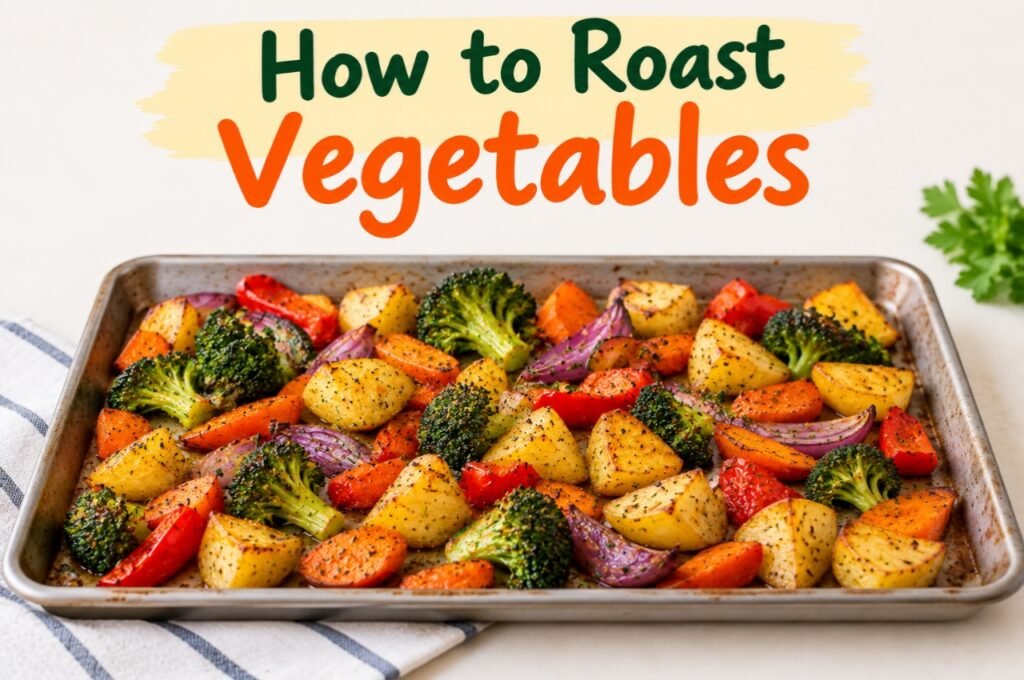
A simple combination of carrots, potatoes, broccoli, onions, and bell peppers creates a colorful side dish with different textures and flavors. You can also roast one vegetable at a time when you want a simple accompaniment to a main course.
The basic ingredients are vegetables, cooking oil, salt, and black pepper. Garlic powder, paprika, Italian seasoning, dried herbs, chili flakes, cumin, rosemary, thyme, or Parmesan cheese can be added for extra flavor.
One useful tip is to avoid adding too much oil. Vegetables need enough oil to help with browning and prevent sticking, but excessive oil can make them greasy instead of crisp.
Simple Steps for Perfectly Roasted Vegetables
Follow these simple steps when learning how to roast vegetables.
Step 1: Choose Fresh Vegetables
Start with fresh vegetables that are firm and free from significant bruising or spoilage. Fresh vegetables generally provide better texture and flavor after roasting.
You can choose one vegetable or create a colorful mixture. Consider combining vegetables with similar cooking times so everything finishes together.
Step 2: Wash and Dry the Vegetables
Wash the vegetables under cool running water and remove dirt or debris. After washing, dry them thoroughly with a clean kitchen towel or paper towel.
Dry vegetables roast better because excess moisture can create steam on the baking sheet.
Step 3: Cut the Vegetables Evenly
Cut the vegetables into similar-sized pieces. This is particularly important when roasting several vegetables together.
Large pieces take longer to cook, while small pieces cook quickly and may become too dark before larger pieces are tender.
Step 4: Preheat the Oven
Preheat the oven before adding the vegetables. A properly heated oven helps the vegetables begin roasting immediately.
For general-purpose roasting, 425°F is an excellent starting temperature. If your vegetables brown too quickly, you can reduce the temperature slightly.
Step 5: Add Oil and Seasonings
Place the vegetables in a large bowl and add a light coating of oil. Olive oil works particularly well, but other cooking oils can also be used.
Add salt and pepper along with your preferred herbs and spices. Toss everything thoroughly so the seasoning is distributed evenly.
Step 6: Arrange the Vegetables on a Baking Sheet
Spread the vegetables over a large baking sheet. Keep them in one layer and avoid piling them on top of one another.
Crowded vegetables release moisture and steam instead of roasting properly. If necessary, use two baking sheets.
Step 7: Roast Until Golden and Tender
Place the baking sheet in the preheated oven. Roast until the vegetables develop browned edges and become tender when pierced with a fork.
Turn or stir the vegetables halfway through cooking to encourage even browning.
Step 8: Finish and Serve
Once the vegetables are roasted, taste them and adjust the seasoning if needed. A squeeze of fresh lemon juice, a sprinkle of Parmesan, fresh herbs, or a drizzle of balsamic glaze can add a final burst of flavor.
Serve the vegetables while they are warm for the best texture.
The Best Way to Roast Vegetables
The best way to roast vegetables depends on the type of vegetable, its moisture content, and the size of the pieces. However, a few general techniques work consistently well.
First, use a large baking sheet. A larger surface gives the vegetables enough room to brown instead of steaming.
Second, preheat the oven thoroughly. Starting with a hot oven helps create the high heat needed for caramelization.
Third, do not soak vegetables unnecessarily. While washing is important, vegetables should be dried before seasoning.
Fourth, use a moderate amount of oil. The vegetables should look lightly coated rather than drenched.
Finally, give the vegetables enough time to develop color. Pale vegetables may be cooked, but browned edges generally provide the deeper flavor associated with excellent roasting.
Crispy & Flavorful Roasted Vegetables
If you want crispy and flavorful roasted vegetables, focus on moisture control and spacing.
Vegetables with high water content, such as zucchini and mushrooms, naturally release more moisture. They need plenty of space on the baking sheet so the moisture can escape.
For extra crispiness, preheat the baking sheet in the oven before adding the vegetables. Carefully transfer the seasoned vegetables onto the hot surface and return the pan to the oven.
Another useful technique is cutting vegetables into moderately small pieces. Smaller surfaces allow more edges to come into contact with the hot pan.
However, do not cut everything too small. Very small pieces can burn quickly, especially at high temperatures.
How to Make Oven-Roasted Vegetables
Oven-roasted vegetables are easy to customize according to the meal you are preparing.
For a Mediterranean-style combination, try zucchini, bell peppers, red onions, tomatoes, and eggplant. Season them with olive oil, garlic, oregano, salt, and black pepper.
For a hearty winter combination, roast potatoes, carrots, parsnips, onions, and Brussels sprouts with rosemary and thyme.
For a slightly sweet combination, use sweet potatoes, carrots, red onions, and bell peppers. A touch of smoked paprika or cinnamon can create an interesting flavor.
The oven does most of the work, making roasted vegetables a convenient option for busy cooks.
Perfectly Roasted Vegetables: A Simple Guide
Perfectly roasted vegetables should have a combination of textures. The outside should be browned and slightly crisp, while the inside should be tender enough to eat comfortably.
The vegetables should not be watery or mushy. They should also have enough seasoning to bring out their natural flavors.
The following table provides general roasting guidelines.
| Vegetable | Suggested Oven Temperature | Approximate Roasting Time | Best Texture |
|---|---|---|---|
| Potatoes | 425°F | 30–45 minutes | Crisp outside, fluffy inside |
| Sweet Potatoes | 425°F | 25–40 minutes | Tender and caramelized |
| Carrots | 425°F | 25–35 minutes | Tender with browned edges |
| Broccoli | 425°F | 18–25 minutes | Crisp edges, tender stems |
| Cauliflower | 425°F | 25–35 minutes | Golden and tender |
| Brussels Sprouts | 425°F | 25–35 minutes | Crisp leaves, tender center |
| Bell Peppers | 425°F | 18–25 minutes | Soft and lightly charred |
| Zucchini | 425°F | 15–25 minutes | Tender with browned edges |
| Red Onion | 425°F | 20–30 minutes | Soft and caramelized |
| Asparagus | 425°F | 12–20 minutes | Tender and slightly crisp |
| Mushrooms | 425°F | 20–30 minutes | Browned and juicy |
| Butternut Squash | 425°F | 30–40 minutes | Soft and caramelized |
Cooking times are approximate because vegetable size, oven performance, and moisture levels can vary.
What Vegetables Are Best for Roasting?
Almost any vegetable can be roasted, but some are especially well suited to high-heat cooking.
Root vegetables are excellent choices because they become tender while their natural sugars caramelize. Potatoes, sweet potatoes, carrots, parsnips, and beets are popular roasting vegetables.
Cruciferous vegetables such as broccoli, cauliflower, and Brussels sprouts also roast beautifully. Their edges can become deeply browned and slightly crisp while the centers remain tender.
Peppers and onions are ideal for adding sweetness and color. Zucchini, mushrooms, and asparagus cook quickly and work well when paired with vegetables that have similar cooking times.
Best Vegetables for Roasting
| Vegetable Group | Examples | Main Benefit |
|---|---|---|
| Root Vegetables | Potatoes, carrots, beets | Become tender and caramelized |
| Cruciferous Vegetables | Broccoli, cauliflower, Brussels sprouts | Develop crisp browned edges |
| Squash | Butternut squash, acorn squash | Naturally sweet and creamy |
| Peppers | Bell peppers | Add sweetness and color |
| Onions | Red, yellow, white onions | Become sweet and caramelized |
| Green Vegetables | Asparagus, green beans | Cook quickly |
| Mushrooms | Cremini, button mushrooms | Develop rich savory flavor |
How to Prepare Vegetables for Roasting
Proper preparation makes a major difference in the final result.
Begin by washing the vegetables. Remove stems, leaves, seeds, tough skins, or damaged portions as needed.
Potatoes can be peeled or left unpeeled depending on the variety and your preference. Carrots can also be peeled or simply scrubbed clean.
For broccoli and cauliflower, cut the florets into medium-sized pieces. Try to keep them similar in size so they cook at the same rate.
For onions, cut them into wedges rather than tiny pieces. Larger pieces retain their shape and develop beautifully caramelized edges.
For bell peppers, remove the seeds and membranes before cutting them into thick strips or chunks.
How to Cut Vegetables for Even Roasting
Uniform cutting is one of the most important techniques when learning how to roast vegetables.
If you combine large potato chunks with tiny pieces of zucchini, the zucchini may be overcooked before the potatoes become tender.
Instead, cut each vegetable according to its cooking time. Dense vegetables can be cut smaller, while fast-cooking vegetables can be left slightly larger.
For mixed vegetable trays, start slower-cooking vegetables first and add faster-cooking vegetables later if necessary.
Choosing the Right Oil
Oil helps vegetables brown and prevents them from sticking to the pan. Olive oil is a popular option because it adds a mild, pleasant flavor.
Avocado oil, canola oil, sunflower oil, and other suitable cooking oils can also be used.
The goal is not to soak the vegetables. Add enough oil to lightly coat the surfaces.
For approximately 2 pounds of vegetables, a few tablespoons of oil are usually sufficient, although the exact amount depends on the vegetables and your preference.
Seasoning Roasted Vegetables
Simple seasoning can make roasted vegetables taste extraordinary.
Salt and black pepper provide a basic foundation. From there, you can add different herbs and spices to create completely different flavor profiles.
Classic Herb Seasoning
Use olive oil, salt, black pepper, garlic powder, dried thyme, and rosemary.
Smoky Seasoning
Try smoked paprika, garlic powder, black pepper, salt, and a small amount of chili powder.
Mediterranean Seasoning
Use oregano, garlic, black pepper, olive oil, and lemon zest.
Spicy Seasoning
Combine chili flakes, paprika, garlic powder, black pepper, and salt.
Cheesy Finish
After roasting, add grated Parmesan cheese and fresh parsley.
When Should You Add Garlic?
Fresh garlic can burn when exposed to high heat for a long time. If you are using minced fresh garlic, consider adding it during the final portion of cooking rather than at the beginning.
Garlic powder is easier to use for long roasting because it is less likely to burn quickly.
Whole garlic cloves can be roasted alongside vegetables for a sweeter, softer flavor.
Should You Cover Vegetables While Roasting?
In most cases, vegetables should not be covered when roasting.
Covering the baking sheet traps steam and can make vegetables soft rather than browned.
If you want tender vegetables with a little color, covering may occasionally be useful during part of the cooking process, but for crispy roasted vegetables, leave them uncovered.
Why Do My Roasted Vegetables Become Soggy?
Soggy vegetables are usually caused by excess moisture, overcrowding, insufficient oven heat, or too much oil.
If the vegetables are packed tightly onto the pan, steam becomes trapped between the pieces.
Use a larger baking sheet or divide the vegetables between two pans.
Make sure the vegetables are dry before adding oil and seasonings. Also, avoid adding sauces with a lot of liquid before roasting.
Why Are My Vegetables Burning?
Burning can happen when vegetables are cut too small, the oven temperature is too high, or the vegetables remain in the oven too long.
Check the vegetables regularly near the end of the recommended cooking time.
If the outside is becoming too dark while the inside remains firm, reduce the oven temperature slightly and continue cooking.
Should You Flip Vegetables While Roasting?
Flipping or stirring vegetables halfway through cooking can promote even browning.
However, you do not need to constantly move them. Excessive stirring can prevent the vegetables from developing a good crust.
For many vegetables, one turn halfway through cooking is enough.
How to Roast Potatoes
Potatoes are among the most popular vegetables for roasting.
Cut potatoes into evenly sized chunks. If desired, soak them briefly in water to remove some surface starch, then dry them extremely well before seasoning.
Toss them with oil, salt, pepper, garlic powder, and herbs.
Roast at approximately 425°F until the outside is golden and crisp and the center is tender.
Do not overcrowd the baking sheet. Potatoes need space around them to brown properly.
How to Roast Carrots
Roasted carrots develop a naturally sweet flavor as their sugars caramelize.
Cut carrots into similar-sized sticks or diagonal pieces. Toss them with oil, salt, pepper, and herbs.
Roast at approximately 425°F until tender and browned around the edges.
For additional flavor, finish roasted carrots with honey, maple syrup, fresh herbs, or a small squeeze of lemon.
How to Roast Broccoli
Broccoli is excellent for high-heat roasting.
Cut the broccoli into medium-sized florets and include some of the tender stem if desired.
Dry the broccoli well before seasoning. Toss it with oil, salt, pepper, and garlic powder.
Roast until the edges become browned and slightly crisp. A squeeze of lemon juice after roasting can brighten the flavor.
How to Roast Cauliflower
Cauliflower becomes nutty and flavorful when roasted at high heat.
Cut the cauliflower into evenly sized florets and coat them lightly with oil.
Season with salt, pepper, garlic powder, paprika, or curry powder.
Roast until the florets become tender and golden brown.
For a richer finish, sprinkle roasted cauliflower with Parmesan cheese or fresh herbs.
How to Roast Brussels Sprouts
Trim the ends of Brussels sprouts and cut larger sprouts in half.
Place them cut-side down on the baking sheet whenever possible. The flat surface can develop excellent browning against the hot pan.
Season with oil, salt, and pepper.
Roast until the outer leaves are crisp and the centers are tender.
How to Roast Sweet Potatoes
Sweet potatoes are naturally sweet and become even more flavorful when roasted.
Cut them into cubes or wedges of similar size. Toss with oil, salt, pepper, and spices such as paprika or cinnamon.
Roast until tender and caramelized.
Sweet potatoes work well as a side dish, salad topping, grain-bowl ingredient, or filling for wraps.
How to Roast Bell Peppers
Bell peppers roast quickly and become soft, sweet, and slightly charred.
Remove the seeds and cut the peppers into large strips or chunks.
Toss them with oil, salt, and pepper.
Roast until the edges develop some color and the peppers become tender.
Roasted peppers can be served as a side dish or added to pasta, sandwiches, salads, pizzas, and grain bowls.
How to Roast Zucchini
Zucchini contains a considerable amount of water, so spacing is especially important.
Cut zucchini into thick rounds, half-moons, or sticks rather than very thin pieces.
Dry the pieces thoroughly and coat them lightly with oil.
Roast until the edges become golden and the center is tender.
Avoid overcooking because zucchini can become soft quickly.
How to Roast Mushrooms
Mushrooms release moisture as they cook, so they should have plenty of space.
Clean the mushrooms and dry them well. Cut larger mushrooms into halves or quarters while leaving smaller mushrooms whole.
Toss with oil, salt, pepper, and garlic.
Roast until the mushrooms are browned and their excess moisture has evaporated.
How to Roast Asparagus
Asparagus is one of the quickest vegetables to roast.
Trim the woody ends and arrange the asparagus in a single layer.
Add olive oil, salt, pepper, and garlic powder.
Roast for roughly 12 to 20 minutes depending on thickness.
Finish with lemon juice or Parmesan cheese for extra flavor.
Roasting Mixed Vegetables
Roasting several vegetables together is convenient, but different vegetables cook at different speeds.
Dense vegetables such as potatoes and carrots usually need more time than zucchini, peppers, or asparagus.
One solution is to start the dense vegetables first and add faster-cooking vegetables later.
Another solution is to cut dense vegetables smaller and fast-cooking vegetables larger.
This allows the vegetables to finish at approximately the same time.
Roasting Vegetables on One Pan
A one-pan vegetable dinner is perfect for busy days.
Choose vegetables with compatible cooking times, coat them with oil and seasoning, and spread everything across a large baking sheet.
You can add chicken, tofu, chickpeas, or another suitable protein to make the meal more filling.
When adding protein, make sure everything is arranged with enough space for proper cooking and browning.
Roasted Vegetables for Meal Prep
Roasted vegetables are excellent for meal preparation.
Prepare a large batch and store the cooked vegetables in airtight containers after they have cooled appropriately.
They can be used throughout the week in salads, wraps, sandwiches, bowls, pasta dishes, omelets, and grain-based meals.
For the best texture when reheating, use an oven, toaster oven, or air fryer rather than relying only on a microwave.
How to Store Roasted Vegetables
Allow roasted vegetables to cool before placing them in storage containers.
Store them in airtight containers in the refrigerator.
Keep different vegetables separate if you want to maintain their individual textures.
When reheating, spread them across a baking sheet and heat until warm. This can help restore some of the roasted texture.
How to Reheat Roasted Vegetables
The oven is one of the best methods for reheating roasted vegetables.
Place the vegetables on a baking sheet and heat them until warmed through. An air fryer can also provide excellent results for smaller portions.
Microwaving is convenient, but it can make some vegetables softer.
If using a microwave, heat in short intervals and avoid overheating.
Common Roasting Mistakes to Avoid
Overcrowding the Pan
Too many vegetables on one pan create steam and reduce browning.
Using Too Much Oil
Excess oil can make vegetables greasy and interfere with crisp edges.
Not Drying Vegetables
Wet vegetables tend to steam rather than roast.
Cutting Pieces Unevenly
Different-sized pieces cook at different rates.
Starting With a Cold Oven
A properly preheated oven provides more consistent results.
Adding Too Much Liquid
Sauces and watery marinades can prevent browning.
Constantly Stirring
Moving vegetables too often can interfere with crust formation.
Underseasoning
Vegetables benefit from adequate salt and seasoning. Taste after cooking and adjust if needed.
Easy Tips for Delicious Roasted Vegetables
Use a large baking sheet whenever possible.
Dry vegetables thoroughly after washing.
Cut vegetables into similar-sized pieces.
Preheat the oven before roasting.
Use enough oil to lightly coat the vegetables.
Season before roasting and adjust afterward.
Leave space between the vegetables.
Roast at a sufficiently high temperature.
Turn the vegetables once during cooking.
Check vegetables near the end of the cooking time.
Finish with fresh herbs, lemon juice, cheese, or a flavorful drizzle.
How to Make Roasted Vegetables More Flavorful
Roasting naturally intensifies vegetable flavor, but finishing ingredients can take the dish to another level.
Fresh lemon juice adds brightness. Balsamic glaze provides sweetness and acidity. Parmesan adds salty richness. Fresh herbs provide freshness.
You can also add toasted nuts, seeds, crumbled feta, yogurt sauce, tahini dressing, or a simple herb sauce.
The key is to balance flavors rather than adding too many ingredients.
Roasted Vegetable Flavor Combinations
| Vegetable Combination | Seasoning Ideas | Finishing Touch |
|---|---|---|
| Potatoes + Carrots | Rosemary, garlic, pepper | Fresh parsley |
| Broccoli + Cauliflower | Garlic, paprika, pepper | Parmesan |
| Sweet Potato + Onion | Paprika, cumin | Lime juice |
| Brussels Sprouts + Carrots | Thyme, garlic | Balsamic glaze |
| Zucchini + Peppers | Italian herbs | Lemon juice |
| Butternut Squash + Onion | Sage, black pepper | Pumpkin seeds |
| Asparagus + Mushrooms | Garlic, thyme | Parmesan |
| Beets + Carrots | Rosemary, pepper | Goat cheese |
How to Tell When Vegetables Are Done
Visual appearance is one of the best indicators.
Look for browned edges, slight caramelization, and a tender interior.
You can test larger pieces with a fork. The fork should enter easily without the vegetable falling apart completely.
Remember that different vegetables have different ideal textures. Broccoli can have crisp edges, while roasted potatoes should be tender inside.
What is the best temperature for roasting vegetables?
The best general temperature for roasting vegetables is around 425°F (220°C). This high heat helps vegetables become tender inside while developing golden-brown and slightly crispy edges.
How long does it take to roast vegetables?
Most vegetables take between 15 and 45 minutes to roast. Smaller or softer vegetables cook faster, while dense vegetables such as potatoes, carrots, and squash usually require more time.
Why are my roasted vegetables soggy?
Vegetables can become soggy when the baking sheet is overcrowded, the vegetables are wet, or the oven temperature is too low. Dry the vegetables thoroughly and spread them in a single layer with enough space between each piece.
Should I preheat the oven before roasting vegetables?
Yes. Preheating the oven is important because vegetables begin cooking immediately when placed in a hot oven. A properly preheated oven helps create better browning and texture.
Do I need to flip vegetables while roasting?
Flipping vegetables once during roasting can help them brown more evenly. You generally do not need to turn them repeatedly because too much movement can prevent good browning.
Can I roast different vegetables together?
Yes, but choose vegetables with similar cooking times or adjust their sizes. Dense vegetables such as potatoes and carrots may need to start roasting before faster-cooking vegetables such as zucchini and peppers.
Can I roast vegetables without oil?
Yes, vegetables can be roasted without oil. However, oil helps with browning, flavor, and preventing sticking. If you do not use oil, use a suitable baking surface and watch the vegetables carefully.
Should vegetables be covered when roasting?
Usually, no. Leaving vegetables uncovered allows moisture to escape and encourages browning. Covering them can trap steam and make them softer.