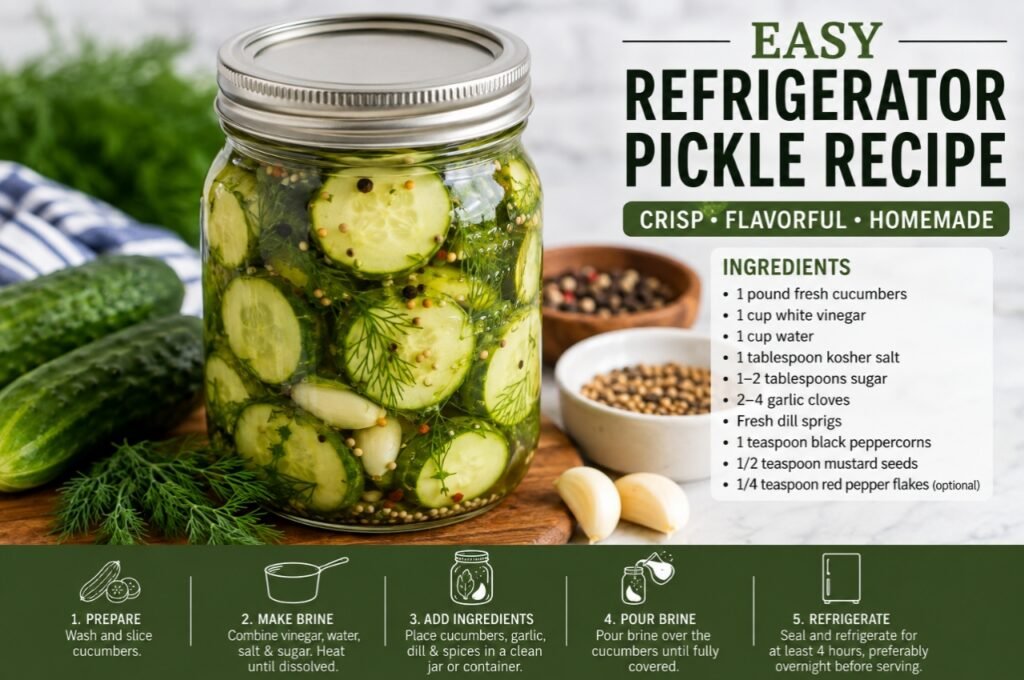

If you love crunchy, tangy, and refreshing pickles, this refrigerator pickle recipe is one of the easiest ways to make them at home. Unlike traditional canned pickles, refrigerator pickles do not require complicated canning equipment or a long preservation process. Fresh cucumbers are simply soaked in a flavorful vinegar brine with garlic, dill, spices, and a few basic ingredients, then chilled in the refrigerator until they develop that classic pickle taste.
This homemade recipe is perfect for beginners because it requires minimal preparation and no special canning skills. The result is a batch of crisp pickles that can be enjoyed with burgers, sandwiches, grilled foods, salads, snacks, or straight from the jar.
What Is a Refrigerator Pickle Recipe?
A refrigerator pickle recipe is a simple method of making pickles without traditional water-bath canning. Instead of processing sealed jars at high temperatures, sliced or whole cucumbers are placed in a vinegar-based brine and stored in the refrigerator.
The cold environment helps keep the cucumbers fresh while the vinegar, salt, herbs, garlic, and seasonings create the familiar sweet, sour, salty, and savory pickle flavor.
Refrigerator pickles are especially popular because they are quick to prepare. You can usually have the ingredients assembled in a short amount of time, although allowing the cucumbers to sit in the brine for several hours or overnight gives them a much stronger flavor.
Why You’ll Love This Refrigerator Pickle Recipe
There are plenty of reasons to make homemade refrigerator pickles instead of buying a jar from the grocery store. This refrigerator pickle recipe is simple, customizable, inexpensive, and perfect for small batches.
The pickles have a fresh crunch that can be difficult to achieve with some commercially processed varieties. You can also control the amount of garlic, dill, salt, sugar, and spices according to your personal preference.
Another advantage is that you do not need to spend hours sterilizing jars and processing them in a boiling-water bath. Everything is prepared using basic kitchen equipment.
Main Benefits
| Benefit | Why It Matters |
|---|---|
| Easy preparation | Suitable for beginners |
| No traditional canning | No water-bath processing required |
| Crisp texture | Fresh cucumbers retain their crunch |
| Customizable | Adjust herbs, spices, salt, and sweetness |
| Small-batch friendly | Make only as much as you need |
| Budget-friendly | Uses simple grocery-store ingredients |
| Fresh flavor | Garlic and dill provide a bright homemade taste |
| Convenient storage | Keep the pickles chilled in the refrigerator |
Ingredients for Refrigerator Pickles
The ingredients for this refrigerator pickle recipe are straightforward. Fresh cucumbers form the foundation, while vinegar, water, salt, garlic, dill, and spices create the brine.
Ingredient Table
| Ingredient | Approximate Amount | Purpose |
|---|---|---|
| Fresh cucumbers | 1 pound | Main ingredient |
| White vinegar | 1 cup | Provides acidity and tang |
| Water | 1 cup | Balances the vinegar |
| Kosher salt | 1 tablespoon | Adds flavor and helps pickle the cucumbers |
| Granulated sugar | 1–2 tablespoons | Balances acidity |
| Fresh dill | Several sprigs | Classic dill flavor |
| Garlic cloves | 2–4 | Adds savory flavor |
| Black peppercorns | 1 teaspoon | Adds mild spice |
| Red pepper flakes | ¼–½ teaspoon | Optional heat |
| Mustard seeds | ½ teaspoon | Optional pickle flavor |
| Onion slices | Optional | Adds additional flavor |
The quantities can be adjusted depending on how many cucumbers you are preparing and how strong you want the brine to taste.
Choosing the Best Cucumbers
The cucumber you choose can make a major difference in the final texture of your pickles. For the best refrigerator pickle recipe, choose firm, fresh cucumbers with thin or relatively tender skins.
Small pickling cucumbers are an excellent choice because they tend to have a firm texture and fewer large seeds. Persian or similar small cucumbers can also work well.
Avoid cucumbers that are soft, wrinkled, bruised, or overly mature. Very large cucumbers may contain more seeds and water, which can make refrigerator pickles less crisp.
Best Cucumber Options
| Cucumber Type | Result |
|---|---|
| Pickling cucumbers | Excellent |
| Persian cucumbers | Excellent |
| Small garden cucumbers | Very good |
| English cucumbers | Good |
| Large slicing cucumbers | Acceptable |
| Soft or overripe cucumbers | Not recommended |
How to Make Refrigerator Pickle Recipe
Making a refrigerator pickle recipe is much easier than traditional canned pickles. The basic process involves preparing the cucumbers, making the brine, combining everything, and refrigerating the mixture.
Step 1: Wash the Cucumbers
Start by washing the cucumbers thoroughly under cool running water. Remove any dirt or residue from the surface.
Pat them dry with a clean kitchen towel. Keeping the cucumbers clean before adding them to the brine helps maintain good quality.
Step 2: Slice the Cucumbers
Decide how you want to cut your cucumbers. You can make pickle chips, spears, halves, or leave very small cucumbers whole.
For sandwiches and burgers, thin rounds are convenient. Spears are excellent for snacking.
Try to cut the cucumbers into pieces of similar thickness. Uniform pieces absorb the brine more evenly.
Step 3: Prepare the Garlic and Dill
Peel the garlic cloves and lightly crush them if desired. Fresh dill gives the pickles a particularly bright and aromatic flavor.
You can use fresh dill sprigs or dill heads. If fresh dill is unavailable, dried dill can be used, although the flavor will be somewhat different.
Step 4: Make the Pickling Brine
Combine vinegar, water, salt, and sugar in a saucepan or mixing bowl, depending on the method you prefer.
For a warm brine, gently heat the mixture until the salt and sugar dissolve. You do not need to boil the brine aggressively.
Allow the brine to cool before pouring it over delicate fresh cucumbers if you are especially focused on maintaining maximum crunch.
Step 5: Add the Seasonings
Place garlic, dill, peppercorns, and any optional spices into a clean food-safe container or jar.
This is where you can customize your refrigerator pickle recipe. Add red pepper flakes for heat, mustard seeds for additional spice, or thinly sliced onions for extra flavor.
Step 6: Add the Cucumbers
Pack the cucumber slices or spears into the container. Do not crush or tightly compress them.
Leave enough space for the brine to circulate around the cucumbers.
Step 7: Pour in the Brine
Pour the prepared brine over the cucumbers until they are covered.
Make sure the cucumbers are exposed to the brine as evenly as possible. If necessary, gently press them down with a clean utensil.
Step 8: Refrigerate
Seal the container and place it in the refrigerator.
The pickles can begin developing flavor after a few hours, but overnight refrigeration generally gives them a deeper pickle taste.
For stronger flavor, allow them to rest longer in the refrigerator before serving.
How Long Do Refrigerator Pickles Take?
One of the biggest advantages of a refrigerator pickle recipe is that you do not have to wait weeks for the pickles to become flavorful.
The exact timing depends on the thickness of the cucumbers and your preferred flavor intensity.
| Refrigeration Time | Expected Result |
|---|---|
| 2–4 hours | Lightly pickled |
| 8–12 hours | Noticeably pickled |
| 24 hours | Stronger flavor |
| 2–3 days | Deep pickle flavor |
| Several days | More developed flavor |
Thin cucumber slices generally absorb flavor faster than thick spears or whole cucumbers.
How to Keep Refrigerator Pickles Crisp
Crunch is one of the most important qualities of a good pickle. Fortunately, there are several ways to improve the texture of homemade refrigerator pickles.
Start with very fresh, firm cucumbers. Older cucumbers naturally have a softer texture.
Keeping the cucumbers cold before preparation can also help. Avoid using cucumbers that have already become soft.
Do not overcook the cucumbers. Refrigerator pickles generally do not need prolonged heating.
Cutting cucumbers into thicker spears rather than extremely thin slices can also help preserve a satisfying bite.
Tips for Extra-Crisp Pickles
- Choose very fresh cucumbers.
- Use small pickling cucumbers when possible.
- Keep cucumbers refrigerated.
- Avoid overripe produce.
- Do not boil the cucumbers.
- Cut pieces evenly.
- Do not leave prepared pickles at room temperature for extended periods.
- Store them submerged in their brine.
- Keep the refrigerator cold and consistent.
Refrigerator Pickle Recipe Without Canning
A major reason people search for a refrigerator pickle recipe is because they want homemade pickles without traditional canning.
Traditional shelf-stable pickles require controlled acidity, appropriate processing, and proper canning procedures. Refrigerator pickles are different because they are intended to remain refrigerated.
This method is convenient for home cooks who want a fresh pickle without preparing a large pantry supply.
However, refrigerator pickles should not be treated as shelf-stable canned food. Keep them refrigerated and follow safe food-storage practices.
Refrigerator Dill Pickles
Dill is one of the most popular flavors for homemade refrigerator pickles.
Fresh dill provides a fragrant herbal character that pairs beautifully with vinegar and garlic. For a classic refrigerator pickle recipe, fresh dill, garlic, black peppercorns, and a balanced vinegar brine make an excellent combination.
You can increase or decrease the amount of dill according to your taste.
For a stronger dill flavor, add additional fresh dill sprigs or use dill heads when available.
Garlic Refrigerator Pickles
Garlic adds a savory and slightly spicy quality to refrigerator pickles.
Fresh garlic cloves work particularly well because their flavor gradually spreads through the brine while the pickles rest.
If you love garlic, you can add several cloves to your container. If you prefer a subtle garlic flavor, use fewer cloves.
Avoid finely mincing a large amount of garlic unless you specifically want a very strong garlic presence.
Spicy Refrigerator Pickles
If you enjoy spicy snacks, turning a basic refrigerator pickle recipe into a spicy version is easy.
Add red pepper flakes, sliced jalapeños, fresh chili peppers, or other preferred spices to the brine.
Start with a small amount of heat and increase it in future batches. The flavor can become stronger as the pickles sit.
Spicy Additions
| Ingredient | Flavor |
|---|---|
| Red pepper flakes | Simple dried heat |
| Jalapeño | Fresh, moderate heat |
| Serrano pepper | Sharper heat |
| Black peppercorns | Mild peppery flavor |
| Mustard seeds | Warm, slightly spicy flavor |
Sweet Refrigerator Pickles
Not everyone prefers intensely sour pickles. If you like a sweeter pickle, add a little extra sugar to the brine.
Sweetness should balance the vinegar rather than completely overpower it.
You can experiment with the amount of sugar until you find the flavor that suits your family.
Bread and Butter Style Refrigerator Pickles
For a sweeter pickle inspired by bread-and-butter flavors, combine cucumbers with vinegar, sugar, onions, and spices.
Thin cucumber slices work particularly well because they absorb the sweet-and-tangy brine quickly.
These pickles make an excellent topping for sandwiches, burgers, grilled meats, and snack plates.
Refrigerator Pickles With Onions
Adding thinly sliced onions can create another layer of flavor.
The onions absorb some of the vinegar brine while releasing their own savory sweetness into the mixture.
Red onions can add attractive color, while yellow or white onions provide a more traditional savory taste.
Refrigerator Pickle Recipe Variations
Once you understand the basic technique, you can create many variations.
Classic Dill
Use fresh dill, garlic, black peppercorns, vinegar, salt, and water.
Spicy Dill
Add red pepper flakes or sliced fresh chili peppers to the classic recipe.
Garlic Pickles
Increase the garlic and keep the rest of the seasoning simple.
Sweet Pickles
Increase the sugar slightly to create a sweeter flavor.
Onion Pickles
Add thinly sliced onions for additional texture and flavor.
Mustard Pickles
Add mustard seeds for a warm, slightly spicy note.
Lemon-Herb Pickles
A small amount of lemon zest can add a bright citrus aroma. Use it as a flavor addition rather than replacing the vinegar needed for the pickling process.
Refrigerator Pickle Recipe vs Canned Pickles
Although both methods produce pickled cucumbers, refrigerator pickles and canned pickles are not the same.
| Feature | Refrigerator Pickles | Canned Pickles |
|---|---|---|
| Storage | Refrigerator | Properly processed shelf storage |
| Canning equipment | Not usually required | Required |
| Preparation | Simple | More involved |
| Processing | Refrigeration | Heat processing |
| Small batches | Excellent | Less convenient |
| Beginner friendly | Very | Moderate |
| Long-term pantry storage | No | Yes, when properly processed |
The biggest difference is storage. A refrigerator pickle recipe is designed for refrigerated storage rather than pantry storage.
What Vinegar Is Best for Refrigerator Pickles?
White distilled vinegar is a common choice because it has a clean, sharp flavor and does not significantly change the color of the cucumbers.
Apple cider vinegar can also be used if you prefer a slightly fruity and mellow flavor.
Other vinegars may work for flavor variations, but when following a tested preservation formula, it is important not to casually change the acidity of the recipe.
Vinegar Comparison
| Vinegar | Flavor Profile | Best Use |
|---|---|---|
| White distilled vinegar | Clean and sharp | Classic pickles |
| Apple cider vinegar | Fruity and mellow | Sweet-style pickles |
| Rice vinegar | Mild | Gentle flavor variations |
| Red wine vinegar | Rich and fruity | Specialty variations |
Can You Use Apple Cider Vinegar?
Yes, apple cider vinegar can create a delicious variation of refrigerator pickles.
It has a softer, slightly fruity flavor compared with distilled white vinegar. The finished pickles may also have a darker or warmer appearance.
For a traditional bright pickle flavor, distilled white vinegar remains a straightforward choice.
Can You Reduce the Vinegar?
It is important to distinguish flavor adjustments from food-safety adjustments.
If you are simply making refrigerated pickles for short-term use, changing the recipe can affect flavor and quality. However, vinegar concentration is also an important part of the acidity of pickled foods.
For that reason, avoid substantially reducing vinegar or making major changes to a tested preservation recipe if you are relying on it for food safety.
Can You Add Sugar to Refrigerator Pickles?
Yes. Sugar is commonly used to balance the acidity of vinegar.
It does not have to make the pickles taste sweet. A small quantity can simply soften the sharpness of the vinegar.
If you prefer sweet pickles, increase the sugar gradually.
Can You Make Refrigerator Pickles Without Sugar?
Absolutely.
Sugar is primarily a flavor component in this style of recipe. If you prefer a sharper, more savory pickle, you can omit it.
The result will have a stronger vinegar-forward flavor.
Can You Make Refrigerator Pickles Without Dill?
Yes.
Dill provides a classic pickle flavor, but it is not the only option.
You can make garlic pickles, spicy pickles, mustard pickles, onion pickles, or herb-infused versions without dill.
Can You Use Dried Dill?
Yes, dried dill can be used when fresh dill is unavailable.
Fresh dill generally gives a brighter herbal aroma, while dried dill provides a more concentrated but somewhat different flavor.
If using dried herbs, start with a smaller amount and adjust according to taste.
The Best Container for Refrigerator Pickles
Glass jars with tight-fitting lids are convenient for refrigerator pickles because they are easy to clean and do not absorb strong aromas.
Food-safe plastic containers can also work, provided they are designed for food storage and have a secure lid.
Choose a container that allows the cucumbers to remain submerged in the brine.
How to Store Refrigerator Pickles
After preparation, place the pickles directly into the refrigerator.
Keep the container tightly covered when not serving. Always use a clean utensil when removing pickles from the container.
Do not leave the jar sitting at room temperature for prolonged periods.
Because homemade refrigerator pickles are not shelf-stable canned products, refrigeration is an essential part of their storage.
How Long Do Refrigerator Pickles Last?
The exact storage period depends on the recipe, ingredients, preparation, refrigerator temperature, and hygiene.
For the best quality, use refrigerator pickles while they remain crisp, fresh-smelling, and visually normal.
If you notice mold, unusual discoloration, an unpleasant odor, sliminess, or other signs of spoilage, discard the pickles.
When preparing homemade pickles for long-term storage, follow a tested refrigerator-pickle recipe and established food-safety guidance rather than relying only on general estimates.
Common Mistakes When Making Refrigerator Pickles
Even though a refrigerator pickle recipe is easy, a few common mistakes can affect the final result.
Using Soft Cucumbers
Soft cucumbers usually produce soft pickles. Always start with firm, fresh cucumbers.
Cutting Uneven Pieces
Very different cucumber sizes can pickle at different rates. Try to keep the pieces relatively uniform.
Too Much Sugar
Excessive sugar can overpower the vinegar and dill flavors.
Too Much Salt
Salt is important for flavor, but too much can make the brine unpleasantly salty.
Not Enough Brine
Cucumbers should have sufficient brine surrounding them. Proper coverage helps distribute flavor.
Storing at Room Temperature
Refrigerator pickles are designed for refrigerated storage. Do not treat them like shelf-stable canned pickles.
Using Old Spices
Old spices can produce a dull flavor. Fresh garlic, dill, and reasonably fresh spices provide better results.
How to Serve Refrigerator Pickles
Homemade refrigerator pickles are incredibly versatile.
Serve them alongside hamburgers, grilled cheese sandwiches, fried chicken, barbecue, wraps, or deli sandwiches.
They can also be chopped and added to potato salad, tuna salad, chicken salad, or homemade sauces.
For a simple snack, eat them straight from the refrigerator.
Serving Ideas
| Dish | How to Use Pickles |
|---|---|
| Burgers | Add pickle slices on top |
| Sandwiches | Layer with cheese and meat |
| Hot dogs | Add chopped pickles |
| Fried chicken | Serve on the side |
| Barbecue | Serve as a tangy side |
| Potato salad | Chop and mix in |
| Tuna salad | Add finely chopped pickles |
| Cheese board | Serve as a tangy accompaniment |
| Wraps | Add slices for crunch |
| Salads | Chop and sprinkle over greens |
How to Make Refrigerator Pickle Spears
Pickle spears are excellent for snacking.
Cut each cucumber lengthwise into halves or quarters, depending on its size.
Place the spears into the container with garlic and dill. Pour the cooled brine over them and refrigerate.
Because spears are thicker than slices, they may require more time to develop a strong pickle flavor.
How to Make Refrigerator Pickle Chips
Pickle chips are perfect for burgers and sandwiches.
Slice cucumbers into rounds of similar thickness. Thin slices absorb brine quickly, while thicker slices retain more crunch.
Add the slices to your brine with dill, garlic, and spices.
After refrigeration, use the pickle chips as a topping or snack.
How to Make Refrigerator Pickles Extra Flavorful
The secret to flavorful pickles is balance.
You want enough vinegar for tanginess, enough salt for savory depth, enough herbs for aroma, and enough garlic and spices to make the flavor interesting.
Allowing the cucumbers enough time to absorb the brine is equally important.
A freshly mixed jar may taste mostly like vinegar at first. After resting in the refrigerator, the individual flavors become more integrated.
Refrigerator Pickle Recipe for Beginners
If this is your first time making pickles, keep your first batch simple.
Use fresh cucumbers, distilled white vinegar, water, salt, a small amount of sugar, fresh dill, garlic, and black peppercorns.
Once you understand the basic flavor profile, you can experiment with chili peppers, mustard seeds, onions, or different vinegar choices.
Starting simple makes it easier to understand which ingredients affect the final flavor.
Refrigerator Pickle Recipe Nutrition
The nutritional value of homemade pickles depends on the exact ingredients and portion size.
Cucumbers are naturally low in calories, while the brine contributes sodium and potentially sugar depending on the recipe.
Because pickles can contain significant sodium, people who are watching their sodium intake may want to control the amount of salt used and consider appropriate dietary guidance.
| Nutritional Factor | Main Source |
|---|---|
| Calories | Mostly cucumber and added sugar |
| Sodium | Salt |
| Carbohydrates | Cucumber and sugar |
| Fat | Usually very low |
| Fiber | Cucumbers |
| Flavor compounds | Garlic, dill, spices |
Exact nutrition should be calculated from the specific quantities used.
For anyone looking for a simple homemade pickle method, a refrigerator pickle recipe is an excellent place to start.
What is a refrigerator pickle recipe?
A refrigerator pickle recipe is a simple way to make homemade pickles without traditional canning. Fresh cucumbers are placed in a vinegar-based brine with ingredients such as salt, dill, garlic, and spices, then stored in the refrigerator while the cucumbers absorb the flavors.
How long do refrigerator pickles need to sit?
Refrigerator pickles can start developing flavor after a few hours, but leaving them in the refrigerator overnight usually produces a more noticeable pickle flavor. Thicker cucumber spears may need additional time compared with thin pickle slices.
Do refrigerator pickles need to be refrigerated?
Yes. Refrigerator pickles must be kept refrigerated because they are not processed as shelf-stable canned pickles. Store them in a clean, covered container inside the refrigerator.
How long do homemade refrigerator pickles last?
Their storage life depends on the ingredients, preparation, refrigerator temperature, and cleanliness. For the best quality, monitor the pickles for changes in smell, appearance, texture, or mold and discard them if they show signs of spoilage.
What cucumbers are best for refrigerator pickles?
Small, fresh, firm pickling cucumbers are an excellent choice. Persian-style cucumbers can also work well. Avoid cucumbers that are soft, bruised, wrinkled, or overripe because they may produce softer pickles
Can I make refrigerator pickles without sugar?
Yes. Sugar is primarily used for flavor, so you can leave it out if you prefer a sharper, more savory pickle.
Why are my refrigerator pickles soft?
Soft cucumbers are often caused by using older or overripe cucumbers. Excessive heating and prolonged storage can also affect texture. Start with fresh, firm cucumbers and avoid cooking them unnecessarily.
Can I add garlic to a refrigerator pickle recipe?
Fresh garlic is one of the most popular additions to homemade pickles. It provides a savory flavor that pairs especially well with dill and vinegar.
What can I serve with refrigerator pickles?
Refrigerator pickles are excellent with burgers, sandwiches, wraps, grilled foods, fried chicken, barbecue, cheese boards, salads, and snack plates. They can also be chopped and added to potato, tuna, or chicken salad.